
INTRO TO HOSPITALITY & PROFESSIONALISM
Course Reference
These educational summaries reflect concepts explored in Introduction to Hospitality & Professionalism at St. Philip's College, using Introduction to Hospitality, Sixth Edition, by John R. Walker (Pearson, 2012). The content has been adapted into original explanations and practical examples to support my continuing education in culinary arts and hospitality management.
Introduction to Hospitality & Professionalism
Exploring the people, businesses, and experiences that make up the hospitality industry.
Hospitality is one of the world's most diverse and people-centered industries. It includes restaurants, hotels, resorts, cruise ships, event venues, theme parks, private clubs, and countless other businesses dedicated to serving guests and creating memorable experiences.
Although these businesses operate differently, they share a common purpose: providing products, services, and experiences that meet the needs of others. Success depends not only on what an organization offers, but also on how its employees interact with guests, solve problems, and deliver consistent service.
Introduction to Hospitality & Professionalism explores the industry's major sectors, their operations, and the professional practices that help them succeed. From the front desk of a luxury hotel to the kitchen of a neighborhood restaurant, the principles of hospitality connect nearly every aspect of the guest experience.
Hospitality Spirit
The hospitality spirit is the foundation of the industry. It represents a genuine commitment to welcoming others, anticipating their needs, and providing service that makes people feel comfortable, respected, and appreciated.
Hospitality goes beyond completing transactions or performing assigned duties. It involves creating a positive emotional experience through attentiveness, courtesy, professionalism, and thoughtful interactions. A guest may forget specific details of a meal or hotel room but remember how employees made them feel.
An important concept in hospitality is the moment of truth, an interaction during which a guest forms an impression of an organization. These moments can occur during a reservation, at check-in, while ordering a meal, or when an employee responds to a concern.
Professionalism supports the hospitality spirit through appropriate appearance, communication, dependability, teamwork, cultural awareness, and ethical behavior. Employees who demonstrate these qualities help establish trust and reinforce an organization's reputation.
Key concepts: Guest satisfaction, service excellence, moments of truth, professionalism, service recovery, and exceeding expectations.
Hospitality in Practice
A guest arriving at a restaurant may encounter a host, server, bartender, food runner, and manager. Each interaction contributes to the overall experience. A welcoming greeting, attentive service, and sincere farewell can be just as memorable as the food itself.
Tourism
Tourism involves people traveling outside their usual environments for leisure, business, personal interests, or other purposes. It supports a network of businesses, including hotels, restaurants, transportation providers, attractions, entertainment venues, and travel services.
Tourism is commonly divided into domestic, inbound, and outbound travel. Domestic tourism occurs within a traveler's home country, inbound tourism involves visitors arriving from another country, and outbound tourism refers to residents traveling internationally.
Destinations attract visitors through natural features, cultural heritage, recreational activities, business opportunities, special events, and unique experiences. Tourism can generate employment, increase consumer spending, support small businesses, and encourage investment in transportation and infrastructure.
However, destinations must also consider the effects of tourism on their communities. Environmental pressures, overcrowding, seasonal employment, and increased demand for local resources can create challenges. Sustainable tourism seeks to balance economic benefits with environmental protection, cultural preservation, and residents' quality of life.
Key concepts: Domestic and international tourism, destination marketing, economic impact, seasonality, sustainable tourism, and visitor experience.
Hospitality in Practice
A major convention held in San Antonio can generate business for hotels, restaurants, transportation providers, entertainment venues, and local attractions. The economic effects extend well beyond the convention center itself.
Loding
The lodging industry provides temporary accommodations for travelers and represents one of hospitality's most recognizable sectors. Properties range from small bed-and-breakfast establishments and economy hotels to luxury resorts, extended-stay accommodations, and large convention hotels.
Hotels can be classified by their location, service level, target market, size, ownership structure, and amenities. A limited-service hotel may offer basic accommodations and breakfast, while a full-service resort may include multiple restaurants, event spaces, recreational facilities, and extensive guest services.
Lodging businesses often operate under independent ownership, franchise agreements, or hotel management companies. A hotel's brand helps communicate standards and guest expectations, while its ownership and management structure determine how the property operates.
Because hotel rooms represent perishable inventory—a room that goes unsold tonight cannot be sold for that same night tomorrow—lodging operations depend heavily on forecasting demand and managing room rates.
Important performance measurements include occupancy percentage, Average Daily Rate (ADR), and Revenue per Available Room (RevPAR).
Key concepts: Hotel classifications, ownership and franchising, occupancy, ADR, RevPAR, guest segmentation, and revenue management.
Hospitality in Practice
A downtown hotel may experience high demand during a major conference but lower occupancy during other periods. Revenue managers adjust pricing and availability based on anticipated demand, local events, booking patterns, and competition.
Lodging Operations
Lodging operations involve the departments responsible for delivering a safe, comfortable, and efficient hotel experience. While organizational structures vary, major departments commonly include front office, housekeeping, reservations, guest services, engineering, security, and sales.
The rooms division is particularly important because it manages the core lodging product: the guest room. Front-office employees handle reservations, registration, room assignments, guest inquiries, and check-out procedures. Housekeeping maintains cleanliness, sanitation, room readiness, and the overall appearance of the property.
Successful lodging operations require close coordination between departments. A room cannot be assigned to an arriving guest until housekeeping has prepared it and the property's system reflects its availability. Engineering must address maintenance problems, while guest services and management respond to special requests and complaints.
Hotels must also manage labor, operating expenses, guest safety, inventory, and service standards while maintaining profitability.
Key concepts: Rooms division, front-office operations, housekeeping, property management systems, guest cycle, security, and departmental coordination.
Hospitality in Practice
When a guest requests an early check-in, the front desk may need to coordinate with housekeeping to locate an available room. Prompt communication between departments can turn a routine operational challenge into a positive guest experience.
Cruising
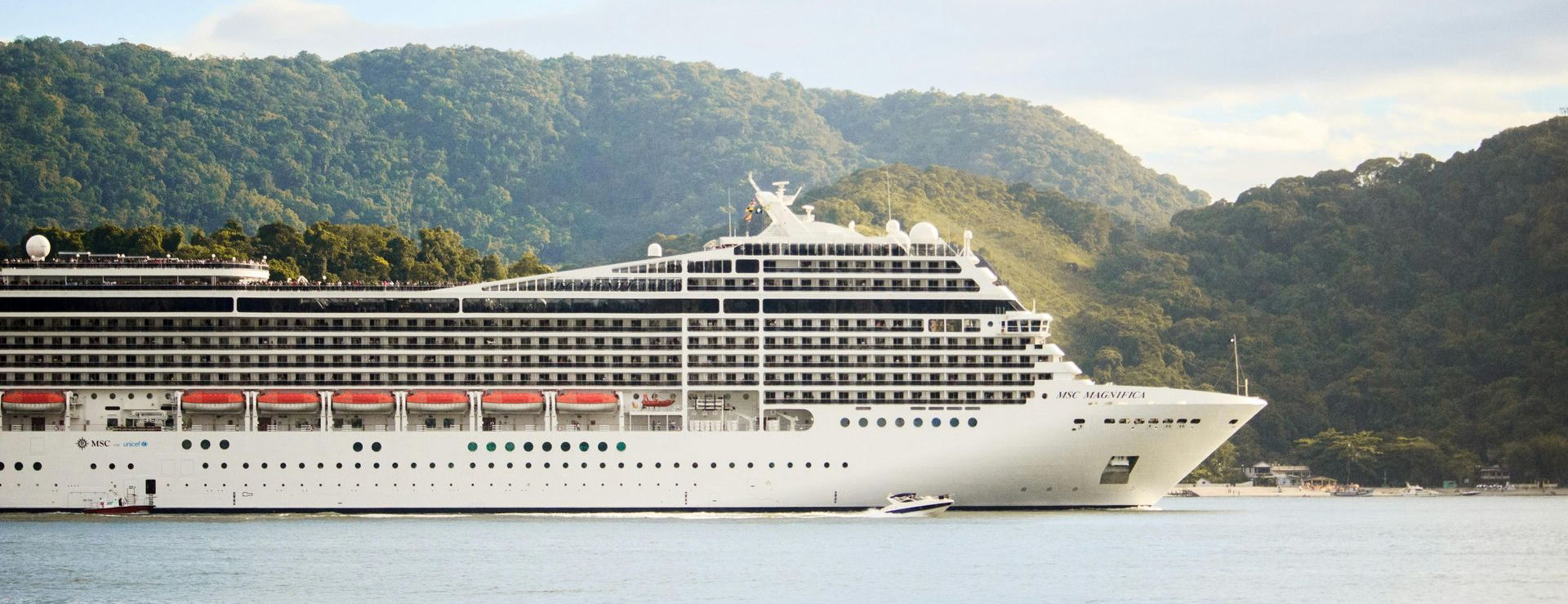
The cruise industry combines transportation, lodging, dining, entertainment, recreation, and tourism into a single hospitality experience. Modern cruise ships function much like floating resorts, offering accommodations, restaurants, lounges, theaters, recreational facilities, and organized activities.
Cruise companies operate itineraries that may include multiple destinations, allowing passengers to experience different ports while returning to the same accommodations each evening. The industry serves several markets, including family vacations, luxury travel, expedition cruises, and themed experiences.
Cruise operations require extensive coordination among hotel services, food and beverage, housekeeping, entertainment, marine operations, security, and guest relations. Unlike a traditional hotel, a cruise ship must also manage navigation, maritime regulations, emergency preparedness, and the logistical challenges of operating at sea.
Food and beverage operations are especially complex because ships must forecast passenger consumption, purchase provisions, manage storage space, maintain food safety, and prepare large quantities of meals while traveling.
Environmental concerns, waste management, fuel consumption, and the effects of cruise tourism on port communities are also significant industry considerations.
Key concepts: Cruise itineraries, onboard hospitality, provisioning, maritime safety, passenger experience, and cruise operations.
Hospitality in Practice
A cruise ship serving thousands of passengers must coordinate restaurant production, buffet service, specialty dining, and room service while maintaining consistent food quality and managing a finite inventory of provisions between ports.
Restaurants
Restaurants are among the most visible and diverse businesses in the hospitality industry. They provide food and beverages while offering experiences shaped by service, atmosphere, convenience, cuisine, and value.
Restaurant concepts range from quick-service and fast-casual establishments to family dining, casual dining, fine dining, and specialty restaurants. Each concept targets particular guest expectations and operates with different menus, service methods, staffing requirements, and pricing strategies.
Successful restaurants begin with a clearly defined concept. The menu, location, décor, service style, and target market should support a consistent identity. A casual neighborhood café and an upscale tasting-menu restaurant may both be successful, but their operating models and guest expectations are very different.
Restaurants must balance culinary creativity with sound business management. Food quality, sanitation, customer service, labor efficiency, purchasing, inventory control, and marketing all contribute to financial performance.
Because restaurants operate in a competitive environment, consistency and the ability to build relationships with returning guests are especially important.
Key concepts: Restaurant classifications, concept development, target market, menu design, service styles, and guest satisfaction.
Hospitality in Practice
A restaurant specializing in locally sourced seasonal cuisine must consider more than its recipes. Menu pricing, ingredient availability, staff training, branding, and the dining room experience should all support the restaurant's overall concept.
Restaurant Operations
Restaurant operations encompass the systems, people, and processes necessary to deliver food and beverage service consistently and profitably.
Operations are generally divided into front-of-house (FOH) and back-of-house (BOH) responsibilities. Front-of-house employees interact directly with guests, manage reservations, provide table service, and maintain the dining environment. Back-of-house employees handle food preparation, cooking, sanitation, receiving, and kitchen production.
Managers coordinate both areas while establishing service standards, controlling costs, scheduling employees, maintaining food safety, and ensuring that the menu can be executed efficiently.
A restaurant's financial success depends heavily on managing food and labor costs. Food cost percentage measures the relationship between ingredient costs and food sales, while labor cost percentage evaluates staffing expenses relative to revenue. Prime cost combines the cost of goods sold with labor costs and is a major indicator of operating efficiency.
Effective restaurant operations also rely on standard recipes, portion control, proper purchasing, inventory management, and clear communication during service.
Key concepts: FOH and BOH, mise en place, standard recipes, portion control, food cost, labor cost, prime cost, and inventory management.
Hospitality in Practice
During a busy dinner service, communication among the servers, line cooks, expeditor, and dishwashing team is essential. A delay in one station can affect ticket times throughout the restaurant, demonstrating why successful service depends on coordination rather than individual performance alone.
Managed Services
Managed services refer to hospitality and foodservice operations provided within organizations whose primary purpose is something other than serving meals or accommodating guests. Examples include hospitals, schools, universities, corporate offices, correctional facilities, and military installations.
Unlike independent restaurants, managed foodservice operations often serve a defined population and must work within specific budgets, nutritional requirements, contracts, and institutional policies.
Some organizations operate their own foodservice departments, while others contract with specialized companies to manage dining programs. Contract foodservice providers may oversee staffing, purchasing, menu development, production, sanitation, and financial management.
These operations face unique responsibilities. School dining programs must meet applicable nutrition standards, hospitals provide specialized therapeutic diets, and corporate dining facilities may focus on convenience, employee satisfaction, and wellness.
Managing these services requires knowledge of large-scale food production, purchasing, labor management, nutrition, sanitation, and customer service. Consistency and efficiency are especially important because many facilities serve hundreds or thousands of meals daily.
Key concepts: Contract foodservice, self-operated dining, institutional foodservice, nutrition standards, large-scale production, and cost control.
Hospitality in Practice
A hospital foodservice department must prepare meals that meet patients' nutritional and medical requirements while also providing food that is appetizing and appropriately served. Coordination among dietitians, culinary employees, and nursing staff is essential to patient safety and satisfaction.
Beverages
Beverage service is an important component of the hospitality industry, contributing to guest satisfaction, restaurant profitability, and the overall dining experience.
Beverage operations include alcoholic and nonalcoholic offerings such as coffee, tea, juices, soft drinks, beer, wine, spirits, and mixed drinks. Each category requires knowledge of preparation, storage, presentation, service, and cost control.
Wine service involves understanding grape varieties, growing regions, production methods, and food pairings. Beer production centers on the fermentation of grains, while distilled spirits undergo fermentation followed by distillation. Coffee and tea preparation involve careful attention to sourcing, extraction, temperature, and flavor.
Beverage managers oversee purchasing, inventory, pricing, employee training, and responsible service. Beverage programs can have strong profit potential, but they also require careful controls to prevent waste, overpouring, theft, and inventory discrepancies.
Alcoholic beverage service introduces additional legal and ethical responsibilities, including compliance with licensing requirements, age restrictions, and responsible alcohol service standards.
Key concepts: Beverage classifications, fermentation, distillation, beverage costing, inventory control, wine service, and responsible alcohol service.
Hospitality in Practice
A restaurant's beverage program should complement its cuisine and concept. A fine dining restaurant might emphasize wine pairings and professional tableside service, while a neighborhood café may distinguish itself through specialty coffees, teas, and creative nonalcoholic beverages.
Clubs
Private clubs provide recreational, social, dining, and other services to individuals who generally participate through membership arrangements. Common examples include country clubs, golf clubs, city clubs, yacht clubs, and athletic clubs.
Unlike traditional restaurants or hotels, clubs often focus on maintaining long-term relationships with members rather than serving primarily one-time or occasional guests. Members may pay initiation fees, recurring dues, and additional charges for dining, recreation, and special services.
Club management involves food and beverage operations, event planning, recreation, facility maintenance, financial management, and member relations. Many clubs also operate under boards of directors or committees that help establish organizational policies and priorities.
Because members have an ongoing relationship with the organization, club employees must learn individual preferences and consistently deliver personalized service. Maintaining member satisfaction is essential to retention and financial stability.
Club managers must balance service expectations with operating costs, capital improvements, membership recruitment, and the overall financial health of the organization.
Key concepts: Membership structures, club governance, member relations, dues, recreational operations, and personalized service.
Hospitality in Practice
A country club may operate restaurants, banquet facilities, golf courses, swimming pools, and fitness facilities. Club management must coordinate these services while responding to member preferences and maintaining consistent standards across multiple departments.
Theme Parks & Attractions
Theme parks and attractions are part of the hospitality and tourism industries because they provide recreational experiences designed to entertain, educate, or engage visitors.
Attractions include amusement parks, museums, zoos, aquariums, cultural sites, historic landmarks, and destination entertainment facilities. While these businesses offer different experiences, they share the responsibility of managing guest expectations, safety, accessibility, and service quality.
Theme parks frequently use storytelling, design, technology, entertainment, and carefully planned environments to create immersive experiences. Every element, from landscaping and signage to employee interactions and foodservice, contributes to the attraction's identity.
Managing a theme park or major attraction requires significant operational coordination. Staffing, crowd management, ride maintenance, sanitation, ticketing, merchandise, food and beverage, and emergency preparedness must operate together.
Guest flow is particularly important. Long lines, confusing layouts, or inadequate facilities can negatively affect an otherwise enjoyable visit. Attractions therefore use technology, scheduling, and operational planning to manage visitor demand.
Key concepts: Guest experience design, visitor flow, themed environments, safety management, attraction operations, and revenue diversification.
Hospitality in Practice
A theme park may use mobile ordering, timed-entry reservations, and strategically located dining facilities to reduce congestion and improve the guest experience. These operational decisions help guests spend more time enjoying attractions and less time waiting for services.
Gaming & Entertainment
Gaming and entertainment represent a specialized segment of hospitality that combines recreation, lodging, dining, live entertainment, and regulated gaming activities.
Casino resorts often operate as integrated destinations, offering guest rooms, restaurants, theaters, retail shops, convention spaces, and recreational facilities in addition to gaming. These amenities help attract a broader range of visitors and encourage longer stays.
Gaming operations are highly regulated and must comply with applicable laws governing licensing, financial transactions, security, gaming integrity, and responsible gambling practices. Managers must also establish procedures to protect guests, employees, and the organization.
Entertainment venues, including theaters, concert halls, arenas, and performance spaces, depend on efficient ticketing, crowd management, guest services, event production, and food and beverage operations.
As with other hospitality businesses, the quality of the overall guest experience depends on coordination among multiple departments.
Key concepts: Integrated resorts, gaming regulation, responsible gambling, entertainment operations, security, and guest experience management.
Hospitality in Practice
A casino resort hosting a major concert must coordinate hotel reservations, restaurant staffing, transportation, security, ticketing, and venue operations. A successful event depends on far more than the entertainment taking place onstage.
Meetings, Conventions, & Expositions
Meetings, conventions, and expositions are an important segment of the hospitality industry, generating demand for hotels, restaurants, transportation, event venues, and destination services.
This sector is often associated with MICE, an acronym for Meetings, Incentives, Conferences, and Exhibitions. Organizations use these events to conduct business, provide professional education, build relationships, recognize achievements, and showcase products or services.
Meetings may involve small groups gathering for a specific purpose, while conventions often bring together members of professional associations or industries. Expositions and trade shows provide opportunities for organizations to display products, demonstrate services, and connect with potential customers.
Planning these events involves selecting venues, negotiating contracts, developing budgets, coordinating transportation, arranging food and beverage service, managing audiovisual requirements, and overseeing registration.
Convention and visitors bureaus, destination marketing organizations, convention centers, hotels, and professional meeting planners all play important roles in attracting and executing successful events.
Key concepts: MICE, convention services, trade shows, destination marketing, room blocks, banquet event orders, and event logistics.
Hospitality in Practice
A national professional association holding its annual convention may reserve hundreds of hotel rooms, schedule educational sessions, organize receptions, and coordinate exhibition space. The event creates business opportunities throughout the host city while requiring extensive coordination among hospitality providers.
Event Management
Event management involves planning, organizing, coordinating, and evaluating experiences created for a specific purpose or audience.
Events may include weddings, fundraisers, festivals, corporate celebrations, concerts, conferences, community gatherings, and private parties. Although their purposes vary, successful events require careful attention to logistics, budgets, scheduling, guest expectations, and risk management.
The planning process generally begins by establishing the event's objectives, audience, scope, and budget. Event professionals then develop timelines, select venues, coordinate vendors, arrange catering, manage registration or invitations, and prepare contingency plans.
Food and beverage services are frequently central to event success. Caterers and banquet teams must plan menus, establish guest counts, calculate food quantities, coordinate service styles, and maintain food safety while working within specific timelines.
Event managers must also consider accessibility, security, weather, transportation, audiovisual production, and emergency procedures. Effective communication is essential because numerous vendors and employees may be involved in delivering a single event.
After an event, evaluating guest feedback, financial results, and operational performance helps identify improvements for future occasions.
Key concepts: Event planning, budgeting, catering, vendor coordination, banquet event orders, timelines, risk management, and post-event evaluation.
Hospitality in Practice
Planning a wedding reception for 150 guests involves coordinating the venue, catering, rentals, entertainment, floral arrangements, transportation, and service staff. Even a small scheduling change can affect several vendors, making detailed planning and communication essential.
Bringing It All Together: The Hospitality Industry
The hospitality industry encompasses an extraordinary range of businesses and professional opportunities, yet every sector shares a fundamental commitment to serving people.
Restaurants provide nourishment and dining experiences. Hotels offer accommodations and comfort. Tourism introduces travelers to new destinations and cultures. Attractions create opportunities for recreation and entertainment, while events bring people together for celebrations, education, and business.
Behind these experiences are professionals responsible for operations, marketing, finance, culinary production, guest services, and leadership. Their work requires technical knowledge, communication, adaptability, teamwork, and a commitment to quality.
One of the most valuable lessons in studying hospitality is recognizing how interconnected these sectors are. A successful convention benefits hotels and restaurants. A thriving tourism destination supports local attractions and businesses. An exceptional restaurant can become a reason travelers choose to visit a particular city.
Hospitality is ultimately about people. The businesses, facilities, and services may differ, but the goal remains the same: creating experiences that make guests feel welcomed, valued, and cared for.