PRACTICUM (CHEF-2264)
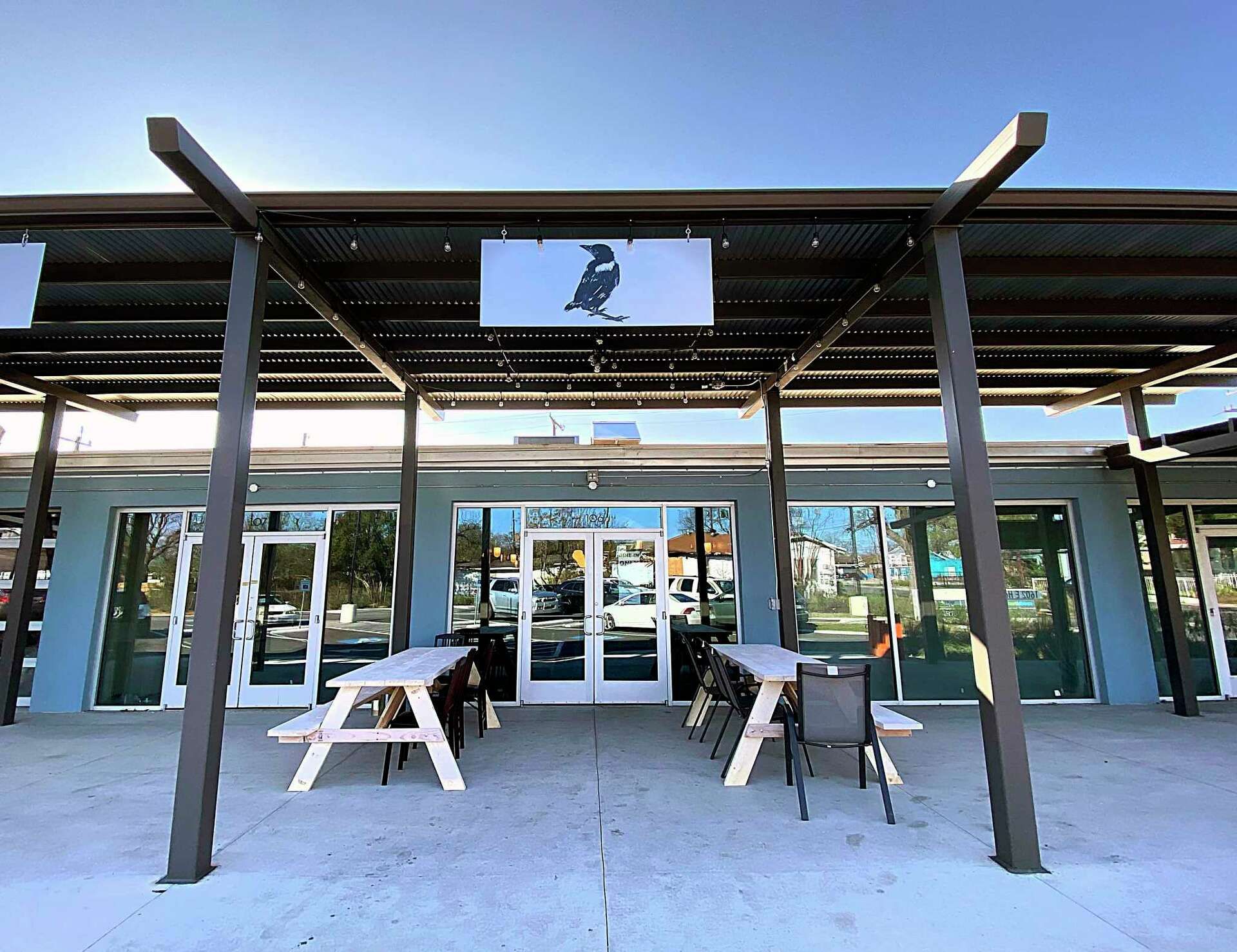
The Magpie

about this project
This practicum is a real-world, hands-on experience in a kitchen with the best chefs in the business. It's a chance to learn, do, and grow as a culinarian.
At the outset, the goal is to come up with six objectives to outline what I would like to learn by the end of the practicum.
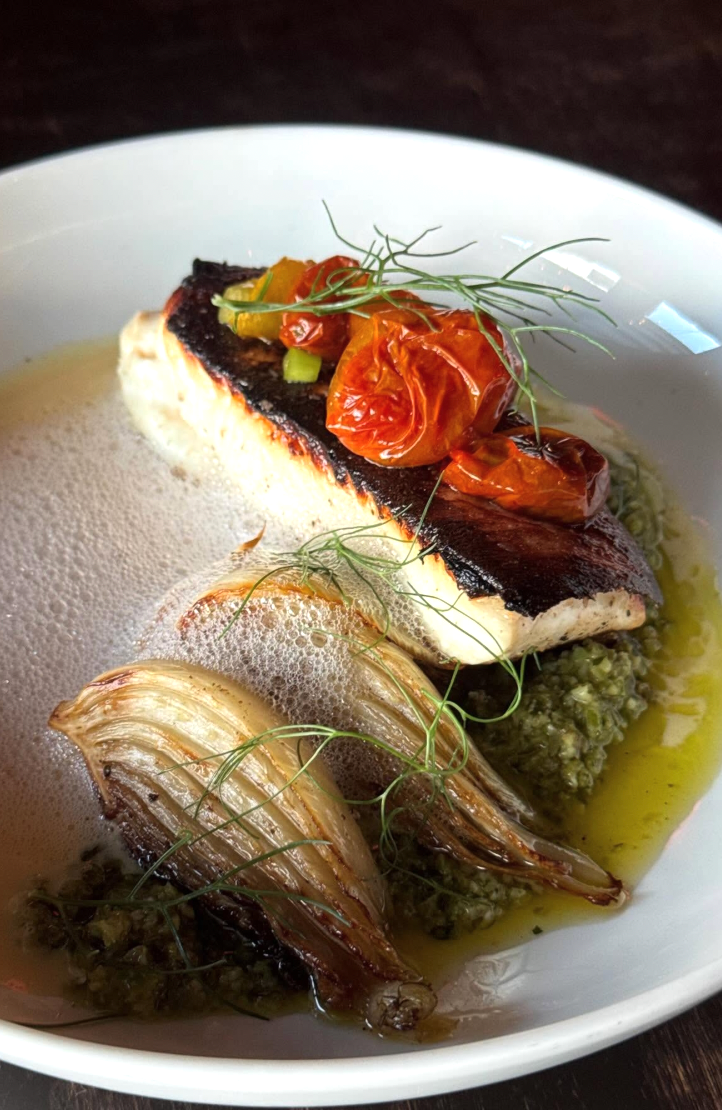
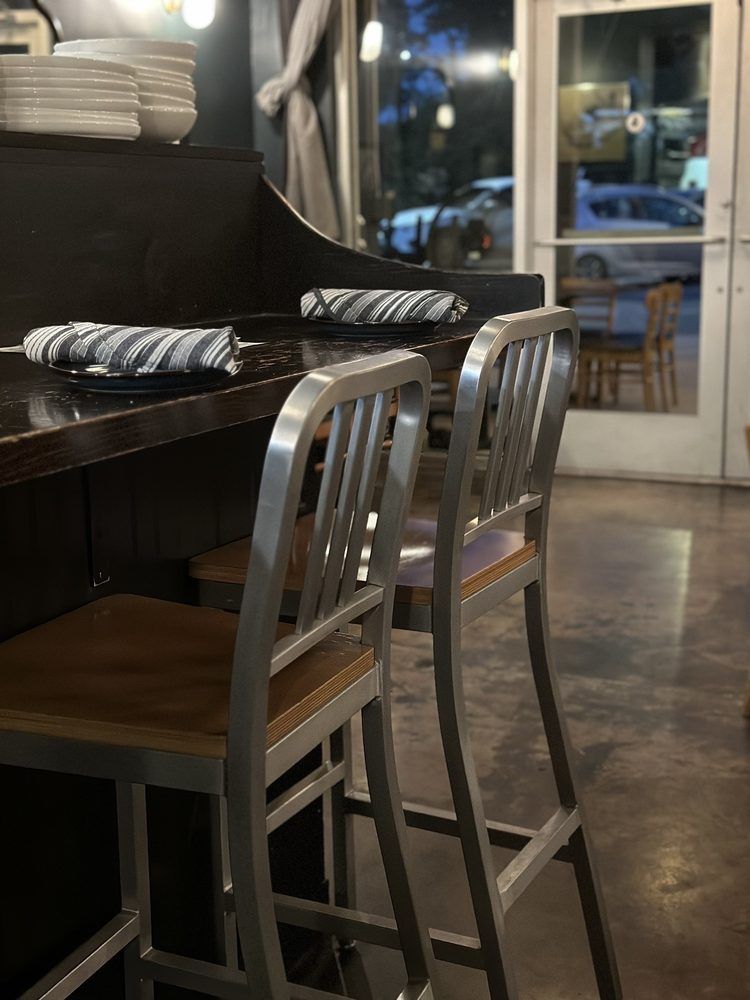
What a journey! I began seeking out my practicum by reaching out to Chef Chris Cullum at Cullum's Attaboy -- probably in the Summer or Fall of 2025. Fast forward to 2026 and planning to take the practicum in Summer, I really needed to work to secure the externship opportunity.
Getting this set up has been no small task. I have thought about it often and have been in touch with so many chefs around town.
They include:
- Chef Alysha, Cullum's Attaboy
- Chef Giuseppi, Piatti
- Chef Alan, Best Quality Daughter
- GM Dorian, Bliss
- Chef Max, Mezquite
- Chef Rob, Dough
- Chef Michael, Il Forno
- Chef Ed, Maverick Brasserie
- Battalion management
- Chef Ron, The Westin Riverwalk
I experienced varying degrees of responses from them, and for a little while I had full intention to head to one of these restaurants with enthusiasm from their chef who seemed excited to mentor a student like me. But once I sent in my objectives, I believe the owner got a little hesitant that I wouldn't be able to accomplish my goals there. I had felt a bit of hesitation anyway, so it seems to have worked out.
OBJECTIVES
- By the end of the practicum, I will demonstrate successful integration into a professional kitchen by consistently completing assigned prep, service, FOH, and BOH tasks – including portioning, running plates, setting/cleaning tables, washing dishes, and communicating effectively with team members.
- By the end of the practicum, I will operate a kitchen station with minimal supervision during service.
- By the end of the practicum, I will apply professional plating techniques by executing at least three assigned dishes with consistent portioning, clean presentation, and attention to detail during service, with minimal corrective feedback from supervising chefs.
- By the end of the practicum, I will maintain a service-ready station by consistently practicing clean-as-you-go, maintaining organized mise en place, and upholding sanitation standards throughout each shift.
- By the end of the practicum, I will demonstrate proper use of professional kitchen equipment by executing assigned tasks safely, efficiently, and in accordance with kitchen standards, with minimal corrective feedback from supervising chefs.
- By the end of the practicum, I will develop proficiency in dough, bread, dessert, and garde manger production by assisting with the preparation and execution of assigned items according to kitchen standards.
Weekly Reports
| Element | What to Include |
|---|---|
| Reference Your Objectives | Connect every entry to one or more of your Objectives — note them clearly, e.g., (Objective 2) |
| Abundant Detail | Describe what you did, how you did it, what you learned, and any challenges you faced |
| Complete Sentences | Use proper grammar; run spell-check before every submission |
| Weekly Photo | Include at least one photo per week that relates to your work activities |
| Zero-Hour Weeks | Still submit a report — note 0 hours and briefly explain why you did not work |
The Start
I guess I'll treat this area kind of like a blog, journaling my thoughts as this process unfolds. I am dressed for my practicum. Chef Brian is expecting me around 5. There will be 10 fun-filled weeks. It's funny how I got to this day. I started off searching for a practicum in 2025, probably around August. I had reached out to Chef Chris from Cullum's Attaboy. I started up the conversation again this past spring and he put me in touch with his Chef de Cuisine, Alysha. I went to talk to her (a very thorough conversation), as well as chef's from around town. I have probably spoken to nearly a dozen folks to secure a practicum. In the end, Dough had offered me a spot, but then when I sent my objectives, they said I wouldn't be able to meet my goals there. Coincidentally, I had emailed The Magpie a day before Dough pulled out. I heard back from Chef Brian. I went in to speak to him and discovered this could work well for him, too, because he can't hire a full-time person and my part-time situation is a great fit.
So here I am. Got my new Lugz non-slip shoes on, a new black tech shirt (I am loving that The Magpie seems very casual), some new chef pants, and a new black apron from the Ace Mart Restaurant Supply. It sort of does feel... official. And there's another great thing about it. I think anywhere else, I'd be working A LOT. But this is probably three days a week with Tuesdays being prep day only, and I'm sure I'll also be working Fridays and Saturdays.
Wish me luck! I am nervous.
Week 1
Tuesday, June 9, 2026
(Objectives 1, 4 & 5)
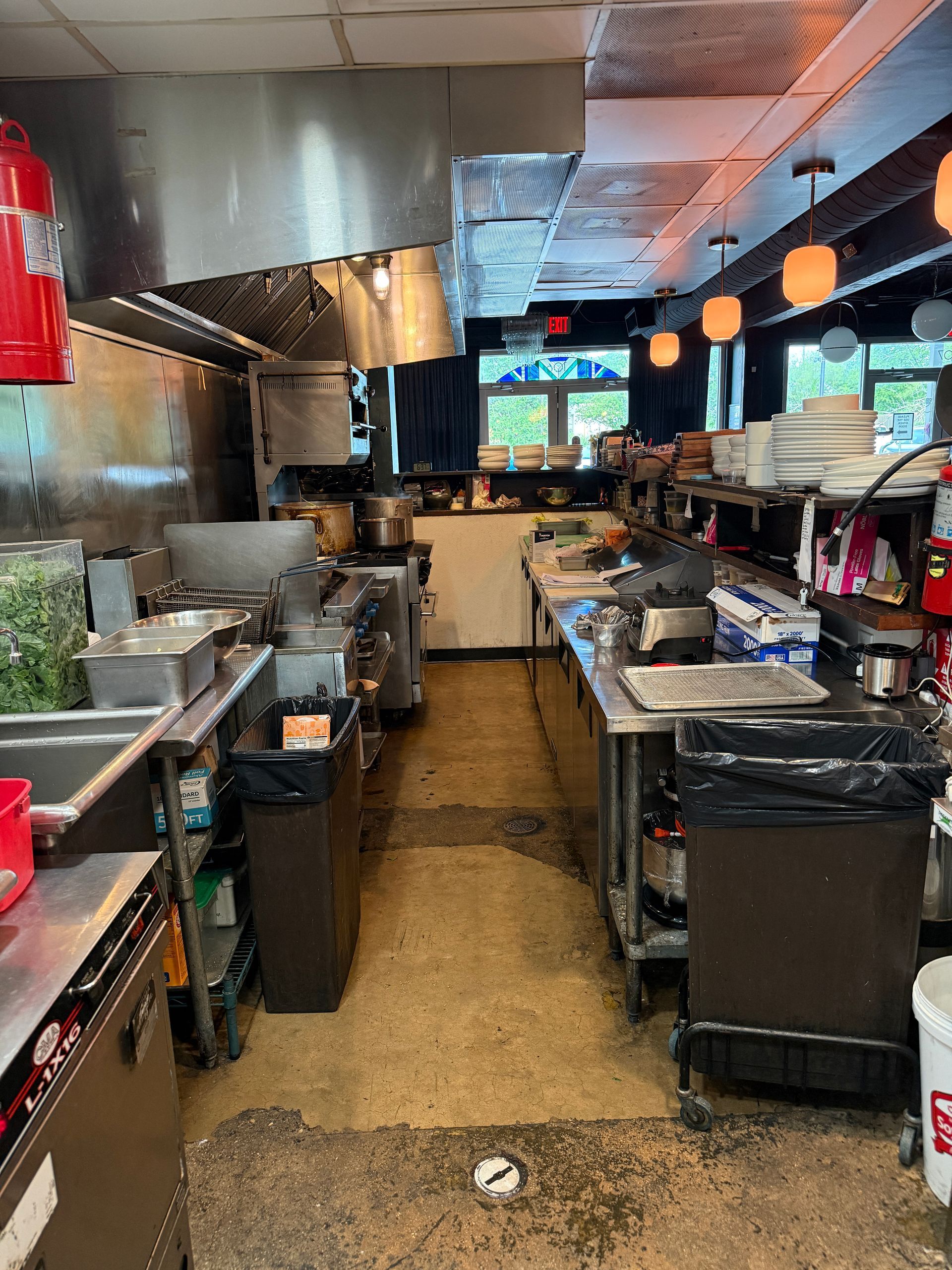
Tuesdays are prep days, so I get one-on-one time with the Chef himself. Prep involves getting ready for the week ahead, and today I helped several tasks:
• De-stemming kale and broccolo fiolarlo (an Italian leaf), shocking it, draining it, and placing in a hotel pan with a kitchen towel on the bottom to store in the cooler
• Cleaning onions for pickling
• Cutting green onions
• Slicing garlic using the mandoline for later frying the slivers
• Slicing discs of sweet potatoes
• Portioning Casareccia and Orecchiett pastas (160 grams per serving)
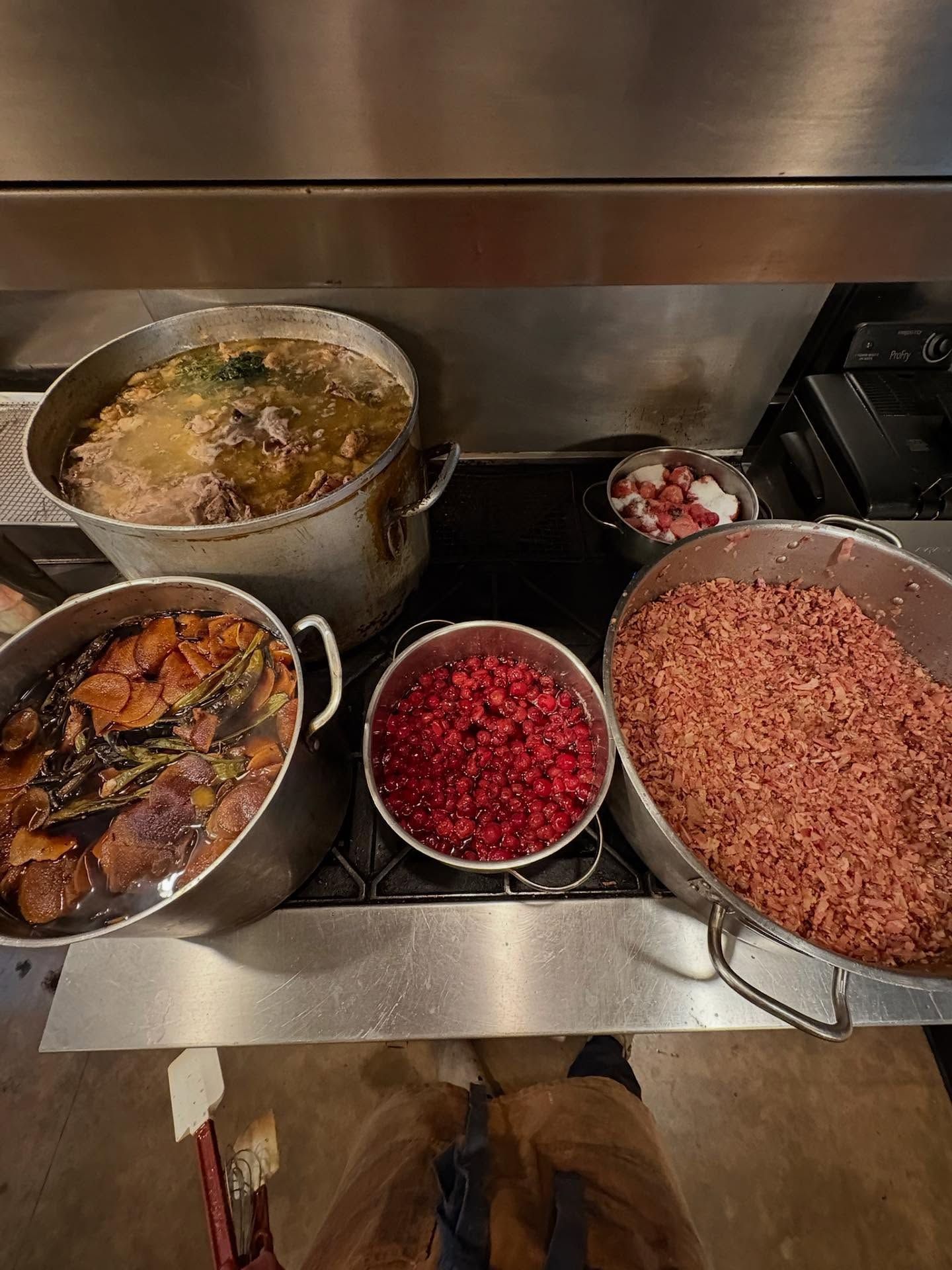
• Observing the Chef with multiple tasks such as finishing off his chicken stock (“If a restaurant doesn’t make its own chicken stock, I don’t know what to tell you”), simmering risotto, making mascarpone from scratch, prepping his Halibut and making other sauces such as Cheong, a Korean syrup made with sugar and in this case watermelon rinds, and Kombu, a seaweed that he soaks and then thickens. (For the Halibut, Chef soaks with sake instead of wine for a higher alcohol content that burns off cleaner than wine. He says that the sugar in the wine tends to burn so he likes using sake instead.)
As I get settled in, we have talked a lot about sanitation and safety as well as other topics that he asks if we have covered in school (i.e. using parchment to help with funneling flour or other things). We talked about wiping the stations down, especially when switching tasks. I had cut myself with his super sharp scissors when trimming the kale stems and went into action by telling him “cut” and heading to the handwashing station. He brought out the first aid kit while I cleaned my cut with the alcohol wipe and put a band aid on, followed by a glove. (CHEF-1205)
Prep is also about keeping things clean, tidy, and everything in its place such as the sanitation buckets, cutting boards, chinois, China cap, hotel pans, sheet pans, walk-in cooler, dry storage, backup cooler and other things. (CHEF-1301)
This week I learned that even pickling veggies involves a HAACP plan that must submitted to the City for approval. At the end of the night, Chef finished off the chicken stock after simmering for seven hours. He placed it in an ice bath to bring the temperature down out of the danger zone. (CHEF-1205/FDNS-1301)
Tools used this week:
• Paring knife
• Chef’s knife
• Peeler
• Scale
• Kitchen shears
• Cutting board
Friday, June 12, 2026
(Objective 1)
Chef wants me to experience the entire operation, and that is perfect for tying into my objectives. It’s been great working with the FOH staff, as they have been instrumental in helping me understand what is required for excellent service and to keep the restaurant running smoothly. This includes setting the tables properly, placing the menus on the tables, cleaning the dining room, noting the attire for FOH. (HAMG-1170).
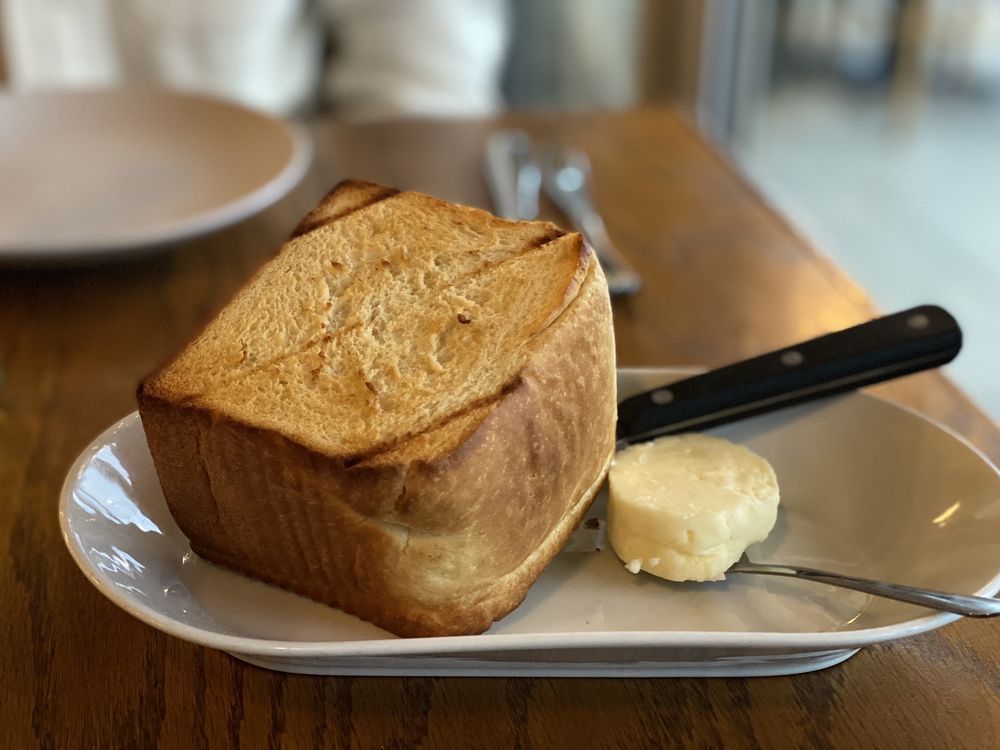
Right when the restaurant opened, customers began arriving. Soon enough, Chef and his sous began cranking out appetizers, most notably the signature milk bread with 3-year aged Korean sea salt. I greeted guests as they arrived and took some of the appetizers to the tables. (CHEF-1300).
Once the evening began winding down, Chef brought me in BOH to help his dishwasher with the start of cleanup, having all the dishes brought to the back to the dish pit so we could begin the process of shutting down. I worked side by side with the dishwasher to accomplish the task, running the dishwasher, cleaning off the dishes, getting the silverware through and back to the front along with the plates. (CHEF-1300).
Saturday, June 13, 2026
(Objective 1)
I am settling in nicely to the swing and rhythm of the restaurant. I’m continuing to work on my FOH skills, while also helping in the BOH in the dish pit so that everything runs smoothly. (CHEF-1205)
One of the most important things that I would like to work on in the near term is memorizing the menu items with respect to the specifics about the dishes. For example, the “watermelon salad” (not really a true salad, according to Chef Sue, the owner of the restaurant, but something that Chef Brian thinks is a fun twist on a salad) consists of a whipped goat cheese and the watermelon Cheong that I learned about on prep day. It is important to me to be able to communicate with customers about the dishes they’re receiving so that they can note that (if they wish) as they experience the dish. I also think it helps me so that once I can move to the line on service days, I can create with ease and be efficient with timing so that customers receive their dishes promptly.
I am also learning which pieces of silverware goes with which plates. While the tables are already equipped with a fork and knife, plates like the pork belly come with a set of tongs. The pasta dishes come with a spoon. For the milk bread, a knife is tucked underneath the loaf before being brought to the table. The steak, duck, and dak galbi (fried chicken) are brought to the table with a knife and a spoon.
Lessons from the Chef:
• Risotto hack: Add milk powder while browning butter in the pan to supercharge the nutty, caramel-like flavor, creating more of the toasted notes.
• Cleaning onions: Chef taught me a cool trick. Throw the dirty onions in a bowl, fill with water, salt, baking soda and ice to create an abrasive that knocks all the dirt off which allows you to peel the skin and discoloration off. Since he would be pickling these later, he wanted them to look very white and clean.
• Slicing green onions: Use knuckles as the guide to slice uniformly, cutting the whites to an almost transparent state as well as the greens. Complete the cut. Keep knife sharp.
• Mascarpone is apparently easy to make! It only requires heavy cream and lemon juice. It’s versatile enough to use in stuffed ravioli, a dip, or as Chef likes, on toast with berries.
• Observation: I noticed that a restaurant shelf has two Wiley textbooks that belong to Chef Sue: Sauces: Classical and Contemporary Sauce Making and Mastering the Art and Craft of Baking and Pastry. These books in the restaurant add a certain kind of gravity to what the chefs do here. (Chef Sue won the CultureMap Tastemaker Award for Best Chef 2026 this year.)
Week 2
Tuesday, June 16, 2026
(Objectives 1, 4 & 5)
Continuing to work one-on-one with the Chef, Tuesdays are the start of the work week. While the restaurant is closed, it is a good opportunity to prepare the week’s storable items. The chef is a big fan of lists so that keeps us organized and on task. For prep day, I:
• Portioned pasta
• Chiffonade kale
• Store the chiffonade kale in a hotel pan
• De-stemmed and cleaned more kale
• Shocked the kale in an ice bath
• Drained the kale and prepared for storage
• Sliced garlic using a mandoline
• Regularly cleaned the kitchen
The chef is working with me to help me increase my knife skills. His cuts are immaculate. He informed me that my technique involved my arm pulling outward. He would like to see me cutting using an up-and-down motion, cutting consistently and completing the cut. I found that my chiffonade was producing irregular cuts that did not look pleasing. I pulled several pieces from the hotel pan that were not complete cuts. Chef said to take my time and practice so that in time, I will begin to get faster. I noticed that it takes me a while to do the chiffonade, but as the night went on, I started to quicken the pace a bit. Focusing on the form and using the proper technique helped increase my ability to do the job right.
One of the cool little lessons was that with everything you do in the kitchen – cutting, portioning, mixing, storing – you should have a landing pad. While that sounds simple, it’s a great thing to keep in mind when busy in the kitchen.
Tools used this week:
• Chef’s knife
• Scale
• Kitchen towel
• Cutting board
• Hotel pan
• Kitchen shears
• Deli bowls
Thursday, June 18, 2026
(Objectives 1, 4, 5)
A busy night is always a good thing. It’s an opportunity to experience new things and gain hours. Today I continued working on front of house, running plates, polishing silverware and plates, folding the napkins and wrapping the silverware in them, practicing how I place the plates on the tables by keeping a hand open to the guest, picking up plates from the table, clearing dishes from the empty tables, bringing them back to back of house for dishwashing, and resetting the tables. (CHEF-1300)
At the beginning of the shift, I walked in, and a social media team was on site shooting video and photos for the restaurant’s website and social media channels.
Promotion is highly important in this business. So much competition exists, and customers have many options from which to choose. But as I learned in Hospitality Marketing, the four P’s come into play: product, place, promotion, and price. You have a product to sell, in this case, it is the new American/Korean fusion dishes of The Magpie. The place is in a quirky spot, and I was thinking a lot about how it looks like maybe it didn’t take much thought. But it was likely the result of a lot of time and effort. You’ve got the moody blue walls, the stained floor, the eclectic wall scones, the quiet luxury. It’s got a small parking lot but there are more options available on the street and caddy-cornered to the little complex that it’s in. The promotion is what the crew is helping with, although the social media of the restaurant boasts some great looking pictures of the food as it is. We’ll see what other concepts the marketers come up with to promote The Magpie. Another promotion is the Chef/owner herself, Sue Kim. She won the 2026 Tastemaker Chef of the Year award. That’s got to help business quite a bit. Who doesn’t want to eat at a restaurant whose Chef is Chef of the Year? Then there’s price. We talked about this in Principles of Food and Beverage Costs Controls, as well as Hospitality Marketing. Is the price worth it? Does the customer find value in it? If the price is on the more expensive side, there are expectations that the service will be great, the food will be delicious, and the right mood will be offered for the occasion. (HAMG-2307, CHEF-1345, RSTO-2301)
I also worked in back of house with Chef Brian and the sous, Jack. While the Chef fires off the some of the mains and the milk bread, Jack is busy with many of the other items: salads, steak, lamb, and the desserts. After a bit of running in FOH I am brought back to the kitchen to assist. Jack has been teaching me about his tasks and giving me the step-by-step on how to complete them.
One of them is cutting a few of the mains, including the lamb and the pork belly. For the rack of lamb, we cut between the bones and separate them out. Guests who choose this dish can get the plate with two lamb cuts or add a third. The pork belly is weighed out at about 6.5-7 oz. per serving. I’ve also helped cut the hearts of romaine that goes with the dish for the pork belly. (CHEF-1300/FDNS-1301/CHEF-1301)
I noticed that there is a dehydrator in the office. The tomatoes that were in the dehydrator are used on the halibut dish. It’s interesting to note how the restaurant uses all of its spaces to do the job. The restaurant has to be clever in how it operates since the kitchen is quite small as is the dining room. My shaving the garlic into slivers is also noticeable on the pasta dish, which is exciting to see as it goes out to guests.
Friday, June 19, 2026
(Objectives 1, 6)
Jack has emphasized setting up stations to make them as efficient as possible. If we are going to pickle green bean or cut scallions, we’ll do all of one part of the task all at once, then move on to the next. It’s not as efficient to complete the whole task, then have to go back and do it all again if you’re doing the same task more than once. Chef Brian made that point about plating. We were talking about plating the butter cake dessert. He made the comment that what makes a chef is doing the same thing over and over with precision and artistic ability. Crank them all out at once in a timely fashion. That’s what makes a chef.
Jack asked me to help with pickling the green beans. He pulled up the recipe, but we doubled it for two bags of green beans. We included water, pickling spices, sugar, vinegar, and red chili flakes. We boiled the water and the spices and only later added the vinegar. The reason is because boiling the vinegar with the rest of the mixture will weaken the flavor, so we added the vinegar after taking the rest of it off the heat. Jack also asked me to grab the ribeye cuts from the cooler, noting that we need to use the ones dated first before the newer ones which follows the first in first out method. Jack asked me to chiffonade the store-bought crystalized ginger also. I then took the pickled onions and sliced them thinly so that they would be ready for when we needed to plate the steaks. (CHEF-1300, CHEF-1310, RSTO-2307)
I helped in the front of house as well for the shift, making sure the tables were set and clean, plates arrived at the correct tables, and that guests were happy. (CHEF-1300)
Saturday, June 20, 2026
(Objective 1, 5, 6)
Today I mostly filled in on dishwashing duty. Before that, though, I was able to slice some radishes using the mandoline for the watermelon salad dish. Jack showed me a few of his techniques and tasks that he performs daily. One included grilling the ribeye and the ribeye plating setup. Grilling this cut of meat involves wiping the moisture away, seasoning it with salt, pepper, and MSG, and grilling it to match the temperature the customer requests, keeping in mind carryover cooking. The chef and sous both checked the meat for doneness by visual cues but also by touching it to see how it felt to determine the right temp. (CHEF-1300, CHEF-1310, CHEF-1301, FDNS-1301)
I also was asked to help portion out the fruit for the butter cake dessert. Each butter cake receives a strawberry quartered, along with two blackberries, and a handful of blueberries. The deli cups are then stored in the sous chef’s station’s refrigerator until the dish is ordered. (PSTR-1301)
As I worked on the dishes, one of the jobs to keep the kitchen running is to clean the fry pans after each use. The job involved me thinking about the different kinds of cooking methods. The dry cooking method includes cooking with air or fat: pan frying, stir frying, sauteing, broiling, grilling, baking, roasting, and deep frying. Wet cooking methods include boiling, simmering, braising, poaching, and steaming. (CHEF-1301, FDNS-1301)
The Week in Review: Lessons from the Chef
• Adding milk solids to butter to increase the nutty flavor
• Shocking the greens help increase the pressure of the cells inside to keep the leaves crisp
• Knife skills: work on completing the cut, especially with the kale
Week 3
Tuesday, June 23, 2026
(Objectives 1, 4 & 5)
Today I continued working on my knife skills. The peach salad, which includes grilled Fredericksburg peaches with smoked salt, candied ginger, almonds, and a sesame sauce, is made with a base of chiffonade kale. I am trying to improve my knife skills, and the chef is demonstrating the proper ways to do cuts to not only the kale but other products as well.
In a similar fashion to the kale, we shock other leafy greens to clean them as well as build that pressure inside the structure of the leaf, so they stay crisp when cut up and stored.
I am working to get faster, while maintaining focus on doing the cuts correctly. I feel like I have not improved much with the greens. My cuts seem to come out incomplete in some cases. I see some consistency in the cuts, but it’s not 100% yet. (CHEF-1300, CHEF-1301, CHEF-1310)
In addition to my other tasks, the chef showed me some techniques for butchering a halibut. He does not normally buy the whole fish, but rather the individual filets because that is what the owner prefers. He explained that the individual portions are about $25/lb, whereas the whole fish comes out to about $15/lb. That is a significant cost savings and a great way to increase the margins on a single dish. The halibut dish at The Magpie sells for $44. I asked him how many individual portions he could get from the halibut and he said perhaps about 20 per side. (RSTO-2301, CHEF-1301, CHEF-1345, RSTO-2405)
Thursday, June 25, 2026
(Objectives 1, 5)
One of the things I have been focusing on is getting faster at completing tasks in steps. I believe that when I started using the mandoline to slice a quart full of the garlic slivers, I took about an hour and a half. I have gotten faster now, and it will take me 45 minutes to an hour. Chef will usually have me do a quart during prep, but also another quart during a service day. It seems that he goes through them quickly as they are a part of the preserved lemon pasta dish with Casarecce pasta, fresh mascarpone, preserved lemon, broccollo fiolaro, Aleppo chili oil, and crispy garlic that I’m slicing that he’ll pan fry and put on top of the dish. The Casarecce pasta is a short twisted pasta with about two pieces on each bundle. The groove makes is a great way to catch sauces, whether chunky or oil based. This Sicilian pasta means “homestyle.” (CHEF-1301, RSTO-2301, FDNS-1305)
Another service day task that I am helping with is taking fennel bulbs that are packed in a sous vide pouch and patting them dry from the butter/oil mixture. That way, when it’s cooked it doesn’t scorch. I’ll cut each of the bulbs in half and then cut each of those halves into thirds. Out of one bulb, I will get two servings.
I am also helping to portion out the pastas, both the Casarecce and the Orecchiette (known as “little ears” shaped like small domes and perfect for scooping up sauces and fillings). The Summer Orecchiette includes English peas, tarragon crème, pistachio, and fennel pollen.
Saturday, June 27, 2026
(Objective 1, 6)
The service days are getting busier, especially on Fridays and Saturdays. The chef and sous, Jack, have been bringing me back of house increasingly, with brief help in front of house as well as I assist the service staff with clearing tables, resetting tables, putting away silverware, getting water for guests, and helping the front run smoothly. (CHEF-1300, CHEF-1345)
Jack’s station consists of several mains, like pork belly, steak, and lamb. But he also is responsible for the desserts, salads, and components of dishes such as the barley arancini that is weighed out to about 6.5 oz and shaped into a patty and covered in panko breadcrumbs. The patty is stored in the cooler until ordered and then Jack fries it in the fryer. (CHEF-1310, CHEF-1300)
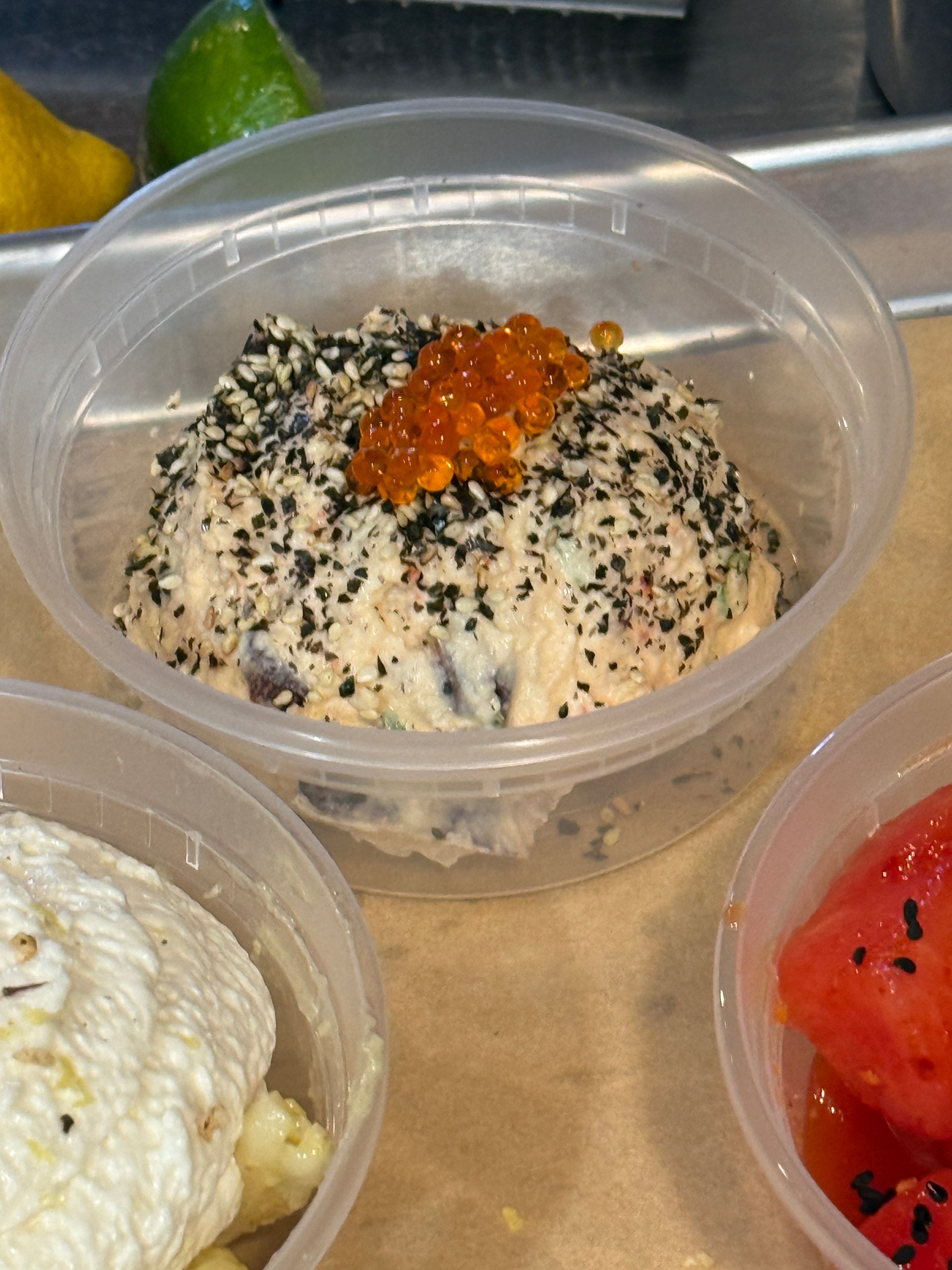
I am now helping to make complete dishes like the watermelon salad. This is a compressed watermelon circle that’s cut out from big watermelon discs with a goat cheese whip on top, salted watermelon cheong that I talked about on my first week, thai basil, basil oil, black sesame, sumac, and lime. It’s a beautiful dish and so far it is one of my favorites to help make. (CHEF-1310)
Jack is giving me lessons in plating as well, especially when it comes to the butter cake dessert. The blueberry compote is squeezed from the bottle onto the bowl, and we take a spoon and do a smear around the edge which creates this comet-like design. We also make a little paste spot for the butter cake to sit. Afterward, the fruit (strawberries, blackberries, and blueberries) is placed on top of the smear. The butter cake goes on top of the compote paste spot. And the entire thing is sprinkled with powdered sugar. It looks amazing, and tastes even better. (PSTR-1301, PSTR-2331)
All in all, a great week. I am learning so much. I feel like the chef really loves to teach, and he is taking his time to help me out. On Saturday, he said that I am doing a great job but that we’ll work on time management to help me improve urgency and completing tasks quicker so that I can pack more into my time with him. This helps him out because it gives him more prep tasks that get him further along in his week. (RSTO-2405, CHEF-1300, RSTO-2301)
Week 4
Tuesday, June 30, 2026
(Objectives 1, 5)
This is the week before the restaurant goes on vacation. Therefore, we aren’t prepping as much but instead focusing on maintaining a good level to get through the week and cleaning or tossing items.
I did focus on my main prep areas so far, including chopping the kale into a chiffonade. I had been frustrated with my chiffonade. I thought back to my Basic Food Prep class with Chef Blome. You roll them into a cigar very tightly and chop so that you get thin strands of the leaf. Originally, the chef had me rolling on the short end. I feel like I never quite got that down pat. At home, I watched a video on doing a chiffonade cut to kale, and one explained that they rolled on the long end. (Rolling from the short end produced a very long cigar, but rolling on the long side rolls the kale up into a shorter cigar shape.) Because of that video, I started doing the cuts from the long end and rolling it up. I started getting better results. I even bought some kale at the grocery store to practice at home (the third picture below) so that I could perform the task better at the restaurant. At home, I also de-stemmed the kale, placed into a Cambro, and shocked with ice water. I then did the chiffonade cut and stored in a container for the week’s meal prep. I am impressed with the outcome and the science behind this process. Submerging the leaves into a Cambro full of ice water forces the pressure back into the structure of the leaf so that it stays crispy and increases the shelf life. (CHEF-1301)
I also used the mandoline to cut the garlic as well as the sweet potatoes. The sweet potatoes, unlike the kale, stay in the ice bath. (CHEF-1301)
Thursday, July 2, 2026
(Objectives 1, 5)
As I get more integrated into the kitchen, I feel trust is forming. The Chef and Sous can hand me tasks to complete, whether that’s being on the line with them and serving up orders as they come in or prepping during the service hours. Prep during service hours could either be in the form of getting something ready for that day or working ahead so that we can maintain a consistent stock.
On this day, likely one of the busiest days of the week due to the holiday, I worked in front of house. I enjoy the front of house because it fits into the hospitality objectives that I have for culinary school and for potential goals in the future related to the industry. I enjoy talking with guests, answering questions they may have about the food, and focusing on the hospitality mindset. (CHEF-1300, HAMG-2307)
Once I got to the kitchen later in the evening, I helped to prep some of the lamb chops and other dishes from mains to sides, including the plating of those dishes. I also helped out making the ssamjang sauce that accompanies the pork belly dish. I was quite impressed with the result of that, and then the Chef tasted it and liked it! That gave me a huge smile on my face and helped me to know I’m heading in the right direction. (CHEF-1345)
Friday, July 3, 2026
(Objectives 1, 2)
As some of the service days slow down, or when the front of house is fully staffed, I will spend more time in the kitchen. That was the case on Friday and Saturday this week. I am getting faster with some of the tasks. Jack, the Sous, has even started challenging me with timing. He set a timer for three minutes when I portioned out the fruit for the butter cake dish. He did it again when I prepped another sauce. Both times, I completed well within three minutes. (CHEF-1301)
Jack also asks me great questions like what my five-year goals are, explain emulsification since one of the sauces involves emulsifying, and how I might explain what being at the restaurant is like using a “TED Talk” speech.
Saturday, July 4, 2026
(Objective 1, 5, 6)
I got to help the Chef with making a pickling recipe, a parsnip puree he uses on the ribeye dish, and once again helped out with plating the desserts. The smear on the butter cake is still difficult, although I am getting better. I haven’t been able to do a satisfactory quenelle on the whipped cream. While I think my quenelle is OK at times, it hasn’t passed the standards of the Chef and Sous yet. I will keep working on that. (PSTR-2331, CHEF-1310)
This is also the day before the week-long break that the restaurant is taking. We cleared out many of the stored items (sauces, greens, etc) and did a deeper clean on the kitchen by removing the fryer, range, and prep station away from the wall to mop behind it. (RSTO-2307)
Dishes continue to be a big part of the job that I have right now. It depends on the night, but sometimes I will spend a lot of time on dishes helping the dish washer. Other times I will help out at the end of the night so that we can get all of the dishes done, have family meal, and hopefully get out at a decent time. (CHEF-1205)
Another prep item I helped with was burnt lemon gel. We de-seed the lemons, spray the pan with Pam, roast them for 25 minutes. Once that’s done, they cool. Then we combine the roasted lemon with the other ingredients in the Vitamix. The outcome is a thick paste-like gel. The Chef uses this on the plating of the ribeye, where the acidic taste of the gel combines with the meaty, earthy, and salty taste of the steak.
Week 5
No hours this week with the restaurant taking a vacation period.
Week 6
Tuesday, June 14, 2026
(Objective 5)
Speed is the name of the game. Since this week marks the start of the second half of the practicum, I'm at an interesting crossroads. I am no longer the new guy (in fact, there is a server who is newer than me now!), but I still have a lot to learn. My concentration is with speeding up, doing the tasks efficiently, practicing what I’ve been taught so far, and being a helpful member of the kitchen.
That said, coming back this week after a week off, I needed to re-focus myself as a chef. There were several things the chef said to me that needed correcting. One was that when I put away the kale, I placed the washed kale on the shelf at about eye level. The hotel plan with the chopped kale, I placed on a rack near the floor. The chef reminded me about the placement of things I the walk-in, where whole or ground poultry goes on the bottom, with ground meat and fish next up, beef and pork whole cuts next, then seafood, and finally salads and other ready to eat foods on top. It is a great reminder of the proper storage and a throwback to Basic Food Prep, Intro to Food, and Sanitation and Safety. (CHEF-1205, CHEF-1301, FDNS-1301)
Another throwback to a class was when I mised out the milk bread ingredients. When we mise the ingredients, we do them 5 at a time: 5-quart containers of the dry ingredients, 5 containers of the cream and milk, and 5-pint containers with the eggs, with five eggs per container.
While I was gathering the ingredients, I found two-quart containers with the dry ingredients in them (sugar, milk powder, and yeast). Since there were two already, the chef said I’d just need three more. However, I started doing three containers of everything. What I needed were three more dry but still needed 5 containers for the wet ingredients and eggs. The chef said that would bring us up to par level, which I immediately recognized and recalled from my Principles of Food and Beverage Cost Controls class with Uminski. Frankly, I was disappointed in myself that I did not do that calculation on my own. I should have known that the dry ingredients (2-quarts already) needed three more to make the five total, but that I’d still need all 5 of the wet ingredients and eggs. (RSTO-2301)
It’s just a lesson that at the kitchen, I need to be fully in the moment. I suppose the only grace that I’d give myself is that this is the first chance I’ve had to demonstrate this knowledge and these skills. Reviewing the classes I’ve had now as I’m working at the restaurant will give me a refresher and make my time in the kitchen more meaningful.
For today’s prep, I was tasked with many of the usual items that I typically work on: cleaning/shocking the kale, using the mandoline to slice the garlic as well as sweet potatoes, gathering the ingredients for the milk bread, as well as keeping the dishes rotating through the dish pit regularly. Prep day is all about transitioning from one item to the next, especially as the chef starts and finishes different items like the pasta, barley cooked in the style of a risotto, butchering the halibut, prepping the pork belly, making different sauces, etc. (PSTR-1301, CHEF-1205, CHEF-1301)
As I work on speed, I am trying different methods. The chef recommended instead of rolling the kale like a cigar to chiffonade, to lay it flat on top of each other and then make the small cuts. I feel like I prefer the chiffonade in a more traditional style like rolling it up, but there is so much kale to get through. The chef says he knocks it out in 30 minutes, whereas it takes me more than an hour to complete. I am getting through the garlic slices faster, and I think slicing the sweet potatoes is also a bit faster now. The chef showed me a better way to peel the potatoes with a Y peeler, instead of the one that came with my kit. That worked well. I used the technique that the chef uses at home when I bought kale, cleaned and shocked it, and then cut it up. It stays crispy for a long time, and that is great when trying to work ahead and prep out the portions. At the end of the night, the chef also showed me the lemons that we had preserved during my last shift before the break. Here, he is draining the brine off them. The juice underneath was extremely salty due to mixing it with the salt/sugar combo. This is for the preserved lemon pasta, and I still need to ask him about the full process to get what he’s trying to achieve. (CHEF-1301, RSTO-2307)
Thursday, June 16, 2026
(Objectives 1, 4, 5)
The wolf pack. Today was probably my best day at the restaurant. It wasn’t particularly special for any reason, but instead it was fairly typical. That’s what made it special. I think at the beginning, I was looking for milestone moments to be peppered throughout this experience. Such examples of those moments so far have included getting to plate some of the dishes and being extra proud of how they turned out, making a new sauce, or hearing some of the kind words from the chef about my performance. But what I’ve been finding out is that the mundane aspects of doing this job are comforting because it means I’ve been in this mix for a while now and it’s nice to be able to carry out those duties and be counted on for them. The assignments for today were making the pickling brine for the onions, prepping a sauce for service and generally assisting where our team needed help. (CHEF-1300, CHEF-1310)
Friday, June 17, 2026
(Objectives 1, 4, 5)
I arrived and began helping prep items such as the kale and the sweet potatoes. Later, when I put the sweet potatoes back in the walk-in, the chef reminded us that we are to always remain food safe. That includes keeping the vegetables and read-to-eat foods above other things. In this case, the eggs on the bottom of the shelf could present a cross-contamination issue, so we want to prevent any potential that they could come into contact with the vegetables. I am working on putting into practice what I have learned about cooler storage and where everything must go to remain safe. (CHEF-1205, CHEF-1301, FDNS-1301, CHEF-1300)
I also helped on the line again tonight, making things like the watermelon salad (so far, it is my favorite thing to help make). I have also been instructed about the plating for the pork belly dish, the ribeye plate, and the lamb chops. Plating is also difficult for me right now, and mastering the techniques for each of those plates is hard. I think I need more practice on those dishes, especially during times when it’s not critical to crank out a dish quickly. I would really like to be able to practice that during my service days or when I come in early before service starts. So far, I haven’t been able to do that. (CHEF-1300, CHEF-1310, CHEF-1345)
Saturday, June 18, 2026
(Objectives 1, 4, 5)
The evening turned out to be a bit of everything. It started kind of rough when I was tasked to make the parsnip puree. Jack put me on a timer again of 5 minutes. I decided quietly to myself that I didn’t care about the timer but instead doing it right. After I got it done, it was time to add seasonings like sumac, salt, pepper, and another blend of spices that I haven’t understood clearly what it is. The spices aren’t written down in the standardized recipe provided, so it’s just a “teaspoon of this, tablespoon of that” kind of thing. Jack came to help me with that part of it after I blended all the ingredients together. When I did that, he took the lid off the blender and was using the Vitamix stick/wand to stir in some of the seasonings. He got a little too close to the blade with the wand, and sauce jumped out of the blender. It scared us both, so we jumped. It took me a second to realize what happened, but I soon figured it out. As I told him I’d help clean up the mess made, I wondered about the next step. When the chef got back in the kitchen, Jack admitted right away that he messed up. The chef wasn’t happy about what happened and made a few comments—the sauce complements the most expensive item on the menu, the ribeye. It turned out that Jack and the chef decided to toss the sauce because some of the wand became shredded and it was not worth trying to salvage. The lesson that the chef gave Jack was to slow down and not be so rushed when trying to complete a task. (PHIL-2306, CHEF-1300)
I spent the evening chopping some more kale for service and for later use, prepping some items for service, and bouncing back and forth between the front of house and back of house. Our main issue is still with the water so everything must be washed by hand. While the chef boils water for the dishes, it still does not keep up very well during a busy service day and that seems to be one of the biggest challenges we face as a team right now. The dish washer is clearly exhausted and morale on that front is waning a bit. (CHEF-1300, CHEF-1205, FDNS-1301)
Our servers have helped me understand some of the drink components, such as serving the after-dinner Vermut drink. It consists of four ounces of the wine, ice, and a citrus wedge. I do have my TABC license now, but I have not served any of the drinks. (RSTO-1301, HAMG-1170)
Week 7
Tuesday, July 21, 2026
(Objective 5)
Slow down to speed up. I have been thinking a lot about taking the time to do a task a certain way will ultimately end up in speeding up the entire process. I’ve been practicing this concept with the kale that I chop. I’ve discovered many ways to do it – one of them, the chef talked about. Laying each piece on top of each other, which doesn’t end up in a true chiffonade but gives the kind of result you want with the short slivers of the leaf. I’ve also come up with a “super roll” where I stack the leaves on top of each other like the chef suggests, then fold the leaves in half but with a bunch of them so it helps me try to get through the enormous pile. I also took care of some of my other responsibilities that I’ve had during this practicum, including slicing the garlic, portioning out pasta, and making sure the dishes were kept up with as the prep evening wore on. (CHEF-1300, CHEF-1301, FDNS-1301, RSTO-2301, FDNS-1305)
Friday, July 24, 2026
(Objectives 1, 5)
Dinnr service as usual, with a little prep work mixed in. I sliced some more garlic, and more kale (two hours’ worth; there is a lot of kale for the volume of peach salad that the restaurant serves). But at the end of the night, I prepped the purple potatoes that will be used on Sunday for the special event the chef is hosting. It’s a collaboration between The Magpie and Reese Bros. BBQ. The restaurant has never done such a collaboration, so this event is exciting to say the least. The chef is preparing a “Magpie” version of the BBQ favorites from Reese Bros. To “Magpie-ify” it, he’ll turn the BBQ dishes into Korean/American versions – think lots of Sriracha sauce, matcha made with peanuts and chili peppers, pickled vegetables, and other sauces or toppings. I will be working to gain the invaluable experience, plus catch up a bit on my practicum hours due to the vacation that the restaurant took in early July. I feel like this relates to my coursework at St. Philip’s in many aspects, especially in the areas of production and management (coordinating the staff, arranging the partnership between you and the other business, making/prepping all of the ingredients not to mention having it ordered and delivered on time, creating the menu), garde manger that includes all of the accompaniments, the par levels of what is on hand versus what needs to be ordered and portioning things out appropriately (Principles of Food & Beverage Cost Controls), and even marketing the event. I asked the chef about any PR related to the event, and he said social media is their usual go-to for things like this. That way they reach their intended audience effectively, and it is inexpensive to do. (CHEF-1300, CHEF-1345, RSTO-2307, RSTO-2301, HAMG-2307, RSTO-2405, CHEF-1310)
Saturday, July 25, 2026
(Objective 1)
Usually, I will spend some time in the front-of-house as well as back-of-house. There are times, though, when I will spend my entire time in the kitchen due to staffing when the FOH does not need any help. I spent my Saturday in the kitchen with a small but mighty list. I prepped the Hearts of Romaine for the pork belly plate, made the kimchi sauce that will be used for Sunday’s special event, mise the ingredients and blend the peach vinaigrette, and portion the lamb. One of my favorite tasks of the evening was the kimchi sauce. The recipe had said to pulse the garlic, but I did not do it to where the garlic was fine enough. So, after whisking the ingredients all together, the sous chef instructed me to strain the sauce and pulse the garlic longer until fine. This is a good learning experience. It depends on what the result should be, and if the sauce should be chunkier or smoother. But since I didn’t know what the result should have looked like, I followed the “pulse 1.5 cups of garlic” as written. The straining wasn’t a huge deal, but I want to get my work done right the first time. Though, with the first time at doing something and not as much verbal or written instructions to make it clear, there should be room for error such as in this case. After straining the sauce and completing the recipe, I was pleasantly surprised with the outcome. Sweet, savory, and just the right amount of heat. Delicious!
I also noted in my mind during this process that I find myself still looking for the “home versions” of things. The recipe for the kimchi sauce called for soy sauce, for example, and I’m looking for the kind of soy sauce bottle you’d buy at H-E-B. That causes a few issues. First, it makes it difficult to find the item when looking for it in our inventory. Rather than the small bottle on a shelf, the soy was in a huge bucket on the floor. It reminds me of what the chef said in CHEF-1300 – we’re not home cooks. As I become more integrated into the professional environment, I am learning to change my entire perspective away from the “home cook” mentality. (FDNS-1301, CHEF-1300, CHEF-1345, RSTO-2307, RSTO-2301, RSTO-2405, CHEF-1310)
Week 8
Sunday, July 26, 2026
(Objectives 1, 2, 3, 4, 5, 6)
Today is collaboration day! There was a lot of work to do, but it came together nicely. First, when I arrived, I helped with a little prep work. I grated parmesan cheese and cut finger limes, which I’d never heard of, in half and squeezed them so that the juice vesicles popped out. They are commonly referred to as citrus caviar or lime pearls. The vesicles are pulp sacs found inside all citrus fruits with a texture of being firm beads that burst when chewed. I tasted it and it was a powerful kick of lime-citrus. That was such an interesting thing to learn. I’ve been thinking a lot about things like this—all of the unique ingredients that chefs use in their menus. More than that, how these unique items are used in conjunction with one another. It’s daunting to think of the myriad of things I’ve never even heard of and how they can be incorporated in dishes. (RSTO-2307, CHEF-1345)
Here are some examples from the special menu for the collab: Confit brisket, Braised pork rib, gochujang BBQ, danmuji, and milk bread; smoked chicken wing, fish sauce caramel, burnt lemon gel, pickled serrano, picoso; kombu cured blue opal barramundi, aguachili negro, black vinegar, smoked giner foam, black garlic oil, sambal, finger lime, cilantro, furikake bread crumb; wasabi buttermilk potato salad, furikake, smoked trout roe; tteokbokki mac and cheese, smoked gochu mornay, furikake bread crumb; carbonara pasta salad, bacon fat mayo, parm whip, Szechuan pepper, lemon, guanciale. (CHEF-1345, RSTO-2405)
I looked up the ingredients that didn’t ring a bell:
• Confit – I hear this from time to time. But what is it? According to the Serious Eats’ “Ask the Food Lab,” confit comes from the French verb confire, meaning to preserve. Confit is a process to preserve anything from meats to fruits: slowly cooking food in a liquid that doesn’t promote bacteria growth. For fruits, that’s a concentrated sugar syrup; meats would be full fat. The slowly cooked food is packed into containers and submerged in the liquid so that no oxygen gets in and can be stored for a long time. Confit fruit can last years. With most meats, this step is as important as the cooking part. Muscle and connective tissue break down. Duck confit should melt in your mouth and is the appeal for this method. Confit was initially used to preserve but it is now a modern delicacy. Meats needed to be preserved before the days of refrigeration. Interestingly, since I knew that the meat did not come in until the day of the collab, this next part makes a lot of sense: Is confit on the menu? There’s a good chance that it hasn’t been aged and stored under its fat or syrup for several days. It may have been cooked that morning. How is this process different from deep frying if we’re submerging in fat and cooking. Deep frying’s end game is a crisp, crunchy surface and to get it there, the food needs to be somewhat dry, dehydrated. “At high temperatures, water is very rapidly and forcefully expelled from surfaces due to evaporation. When you drop a battered cod fillet or a breaded chicken finger into hot oil, its water content quickly turns into steam, bubbling up and out of the oil. Meanwhile, the high heat triggers the Maillard reaction, a series of chemical reactions that develops flavor and turns foods that delicious golden brown. Cooking times are measured in minutes or seconds, and as soon as the food is done, it's retrieved and served.” Confit doesn’t use those hot temps. Cold or room temperature fat is poured over, then placed in a low-temp oven around 250 or 275. It’s hot enough to break down the tissue but won’t boil and cause evaporation. Meats cook with no loss of flavor. Cooking time is hours. “Confit is to deep frying what BBQ is to grilling. Low and slow vs. fast and furious.” Aside from duck, any number of meats could be ideal for confit, especially those with connective tissues. Prok belly is a good one, then fried to crisp the outside, or chicken wings. The role of fat is to regulate the temp and create an inhospitable environment for bacteria and won’t necessarily make the meat or item fatty. Other methods that use temp control can achieve similar results, such as steaming a piece of meat until tender and then coating it in a thin layer of fat, this could yield a product indistinguishable from confit if eaten immediately after cooking.
• Danmuji – Yellow/Korean pickled radish
• Barramundi – Asian sea bass, a white-fleshed fish with a sweet, mild flavor and firm texture, similar to snapper, grouper, striped bass, and sole. It's native to the Indo-Pacific region of the ocean and is fished in the regions between India, Southeast Asia, and Australia. The word barramundi comes from the Australian Aboriginal language, where it translates to "large-scaled river fish."
• Aguachile negro – This term seems to refer to an actual seafood dish but is listed as a component of the fish item in this menu that’s probably trying to point to the spices and flavors. Nibbles and Feasts describes the dish as made with shrimp and sauces: “This dish is the epitome of summers enjoyed in the coast. Made with butterflied shrimp, four types of sauces, dried red chiles ground up in a molcajete and El Yucateco Chile Jalapeño Hot Sauce. While the shrimp “cook” in lime juice, the black sauce is created. It’s flavorful and oh so spicy, mixed in with lime juice and the crunchiness of cucumbers and zesty red onion. To serve, add a few creamy slices of avocado, it will help tame the heat. And lets not forget some corn tortilla chips for the full experience of flavor.”
• Tteokbokki mac and cheese – The “tteok” here refers to the Korean rice cakes. To me, a rice cake refers to a round-shaped disc, but these are a longer cylinder shapes. According to Delish, “In Korea, you’ll find tteokbokki as a bar snack or street food, sometimes with the addition of ramen noodles (rabokki) or mozzarella melted on top. This last preparation is what inspired me to create this simple recipe that combines tteok with another fave recipe of mine—mac & cheese. It’s not traditional at all, but that’s part of the fun. Made with 4 ingredients in just 20 minutes, there’s really no reason not to try it! The tteok: Korean rice cakes come in a variety of shapes and sizes, and can be most reliably found in your local Asian grocery store, like H Mart or 99 Ranch Market. That said, you can sometimes find them in the international section of your local grocery or big box store. They might be refrigerated, frozen, or on the shelf, so keep your eyes open to find them in unexpected places. For this recipe, I went with the cylindrical ones that are similar in size to penne to keep with the alt pasta theme. The sauce: The sauce is made with just 2 base ingredients: cream and cheese. It melts down easily into a velvety smooth sauce and, once the rice cakes are added, it thickens nicely like most stovetop mac 'n' cheeses. The gochujang is technically optional, but it gives the dish a nice subtle spice. Gochujang would also be used in most Korean dishes that include rice cakes, like tteokbokki, so I liked including it here. With the amount of cream, the dish doesn’t come out very spicy, but it has just a small amount of heat that’s really nice to cut through the heavy sauce.”
• Mornay – A bechamel sauce with cheese. In this application it is a smoked gochu sauce with the bechamel base with the added chili or hot pepper (the definition of gochu in Korean is chili pepper or hot pepper). I’m not sure if this was made with a bechamel base since I did not see it being made, but this is the root.
• Shisho Chantilly – I did not get to taste this, but the Chantilly (whipped cream) with shisho, something the chef thought would work well with the peach cobbler dessert. The chef has been big on Fredericksburg peaches this summer. He’s from Fredericksburg and has been using the peaches in his kale salad, a one-off dessert special using olive oil cake, and now the peach cobbler. He ferments the peaches for the different uses. Shisho is an aromatic herb in the mint family, widely used in Japanese, Korean, and other Asian cuisines.
Speaking of fermentation, the chef’s got a lot of fermenting going on with things like the scallions/green onions used in a number of his regular dishes such as a relish topping that goes on top of the ribeye, green beans that accompany the duck appetizer, watermelon that’s used for a base in the watermelon salad dish, and so on. This has gotten me interested in doing some fermenting at home myself. I have done plenty of “quick pickling” at home with red onion, cucumbers and okra. It got me wondering what the difference is between pickling and fermenting. I looked it up and the major difference is the source of acidity. Pickling uses an acid like vinegar, while fermentation uses natural bacteria to create acid. The fermentation relies on beneficial microbes that eat the food’s natural sugars to produce lactic acid. It creates complex or earthy flavors and yields live probiotics. This is interesting: all ferments can be pickles (any vegetable preserved in a sour brine is technically a pickle, meaning a lacto-fermented cucumber is a type of pickle) but not all pickles are fermented (most commercial store-bought pickles use vinegar and heat pasteurization, killing any live micro-organisms). (CHEF-1345, RSTO-2405)
I was proud to learn the new dishes served up for the collab, and getting to plate them was a special treat. At the end of the event, chef gave kudos to us for the plates looking great going out to the guests. The collab provided the opportunity to plate several new, beautiful dishes on my own for service with the chef providing instruction on how he wanted it to look. (RSTO-2307)
Tuesday, July 28, 2026
(Objective 1)
Chef Brown visited on this prep day to check out The Magpie, talk to Chef Brian, and see the space where I work. I am proud to show off my workspace as this has been somewhere that I’ve spent a lot of time and effort learning and growing into a chef. The journey has not been an easy one—working my full-time job, coming into a new kitchen as someone who’s never been a part of a professional kitchen before, learning new personalities, discovering where everything is located within this kitchen—but I am discovering how worth it this practicum and internship is in this new direction in life.
This prep day was like any other: chopping kale, slicing garlic, and getting the chef set up for the week. The only difference was re-setting the kitchen after the special event on Sunday. (CHEF-1301, FDNS-1301)
Friday, July 31, 2026
(Objectives 1, 3, 5)
New dish alert! The chef is now featuring a new salad for what I believe is a part of a menu shift for the fall season. The item is a panzanella salad that includes a new plum cheong (the Korean syrup) since plums are one of the highlights of the dish. The salad includes a vinaigrette, fennel, dehydrated tomato, plums, and sourdough bread. The lettuce is a Romaine that we’re cleaning and shocking a little differently than the kale. Rather than de-stemming and dumping ice on top like we do with the kale, this lettuce is a little more fragile. I added ice on the bottom and carefully cut the leaves off the root with my kitchen shears. I then filled the Cambro with water and let it sit to clean and shock. Afterward, once the evening was winding down, I carefully picked the pieces up out of the container and placed them in the hotel pan. (CHEF-1345, CHEF-1310, RSTO-2405)
The photos above show the lettuce and salad, as well as the fermentation for the plum cheong with the layers of sugar and the fruit. I also took another photo of the watermelon salad that I plated, along with the mousse dish that includes the bar of mousse, crème anglaise, pistachio, and smoked salt.
The rest of the shift consisted of helping out with other kinds of dishes: prepping the steak and lamb, sorting things into containers, and of course, getting the dishes through with Bill. (CHEF-1345, CHEF-1301, RSTO-2405, CHEF-1310)
Saturday, August 1, 2026
(Objective 1)
Our dishwasher was in, but the chef texted me before I got in that he was suffering from possible heat exhaustion. Bill eventually got sent home and I picked up the dishwasher duties for the evening, along with some of the other tasks I normally do, including portioning the pasta and helping Jack with a few things. Such is the way a restaurant runs, and I think that there’s always going to be shifting dynamics in a restaurant setting that you have to cover. For the situation at hand, there may have been serious ramifications for the a restaurant (or any restaurant) if the employee is not doing well and is on the clock. I asked Bill several times if he required medical attention. He kept complaining about not feeling well, and to be honest I was getting annoyed that he wasn’t sitting down and resting. He was also in the way. Eventually, one of our servers called him an Uber and got him home safely. (PHIL-2306, CHEF-1205, PSYC-2301, HAMG-1340)
Week 9
Tuesday, August 5, 2026
(Objectives 2, 4, 5)
Today’s prep day included slicing the garlic with the mandoline, chopping the kale, and making the base of the ssamjang sauce. The chef also showed me how he makes his pasta (with a higher end pre-packaged pasta). He mentioned that the water should salty, but some think it should be “as salty as the sea,” which I recall from Basic Food Prep. He noted that as salty as the sea is likely too salty, but that it should be about 1/3 of the salt: plenty salty but not overly so. He boils his water very slowly, but once it gets to a rolling boil, he’ll add the pasta and set a timer for 3 minutes, perhaps about four times. The reason he sets the timer for three minutes is so that he can stir up the pasta and make sure it’s not sticking to the bottom. Once it’s done, he’ll drain the pasta into the big colander, toss it to cool it down (no ice necessary as other chefs might do) and then toss with oil and spread out onto a sheet pan. Then it is ready to be portioned.
Wednesday, August 6, 2026
(Objectives 2, 3, 4)
Today is the first Wednesday that I have worked at the restaurant. Chef Brian asked me to come in because both our dishwasher, Bill, and sous chef, Jack, are out with illnesses (Bill got a cut on his hand that caused an infection, not related to the kitchen, and Jack has the flu). It presented the chance for me to step up and help in a big way, helping on the line but also keeping the kitchen running with getting the dishes washed. Today’s covers are in the 20’s, so the restaurant is just busy enough that the chef and I can cover by ourselves, but not so busy that it is crushing us. (CHEF-1300, FDNS-1301, CHEF-1205)
The chef is debuting his new panzanella salad, which the chef showed me how to plate: In a mixing bowl, toss in the chopped fennel, the delicate romaine lettuce, a pinch of salt and pepper, and then proceed with making the dressing in bowl: three parts oil, one part vinegar, and then a drizzle of a new cheong (plum cheong, a nice syrup made by fermenting the plums with sugar). After massaging all of those with a gloved hand, it’s time to plate in the salad bowl, making sure the lettuce leaves and the fennel look appealing. Then, add in the fermented tomatoes, plum slices from half a plum, crunchy French onions, lemon juice, smoked salt, and finish with sourdough croutons from sourdough loaves that the chef buys from Spread the Loaves. This dish looks incredible. I looked up a classic panzanella recipe online from Serious Eats. The difference is that the chef is using actual lettuce and accenting his plate with some of the classic ingredients (tomato, bread) and adding in his plum slices/plum cheong. In the Serious Eats version, the tomatoes and croutons are the stars as they are mixed with the accents being the basil and dressing that combines the drained tomato juice with oil, shallot, garlic, Dijon mustard, and white wine or red wine vinegar. I also made the watermelon salad that I’ve been helping with during the practicum, as well as plating the desserts. (CHEF-1300, RSTO-2405, CHEF-1310
Thursday, August 7, 2026
(Objectives 1, 3, 4)
Today, Bill is back but Jack is still out recovering from the flu. The chef mentioned that he would be able to cover the line and assigned me to help out with the prep items to get ready for the weekend. The chef did need a little line help but only asked when frustrated rather than me volunteering to assist. My main objective is to stay in my lane and follow the assigned tasks as outlined, so it is on me when I remained doing what I was told to do rather than shift to helping on the line. I still get a little confused about this as I want to follow the directions and keep from overstepping the boundaries. In this context, I’m the student and I want to be useful but also respectful. It’s a balancing act. (CHEF-1300, RSTO-2405)
Friday, August 8, 2026
(Objectives 1, 4, 5)
With everyone back in place today, I hopped between FOH and BOH. Today I also got to prep the watermelon circles for the watermelon salad. This included cutting the watermelon into the appropriate circle size, not only with the circular cutter but the height of the slice as well. We want them to be all the same height because the circles are compressed with weight on top of them and to make sure that every piece is compressed, they all have to be the same height. It took a little bit to get it just right, but I finally felt that I was able to find a rhythm and do it properly. Once I got all the watermelon circles cut out, I drizzled them with olive oil and used a brush to cover them all. I then sprinkled the spices over which is what we also use when making the salad during service. The same spices are added to the top of the whipped goat cheese.
I also worked on prepping out other product, such as the pork belly. Sometimes Jack uses a visual instead of weighing the strip. But when I did that, it was too much. The chef emphasized cutting the pieces all the same weight so the dishes all look the same and we’re able to get the most from each pork belly and cut down on costs. Each piece should weigh 8 oz. (CHEF-1300, RSTO-2301, CHEF-1301, FDNS-1301, RSTO-2405)
Saturday, August 9, 2026
(Objectives 1, 2, 3, 5)
I enjoy getting to help make the sauces because it pushes me to think back to my culinary school classes at St. Philip’s, especially where the measurements and principles from my Basic Food Prep, Intro to Foods, and Professional Cooking & Dining Room Service. Honestly, I never thought that the measurement test that talked about the 1/8 cup, 2/8 cup, 3/8 cup, etc, would be useful. But during my Saturday evening shift, it came in handy suddenly! For the ssamjang sauce used in the pork belly dish, I had to measure out 1/8 cup of pickled serrano peppers. I reached for the 1/8 cup measure, but it was either in use or over at the chef’s station and so it was nowhere to be found in my area. I recalled the measurement test that we’d do each week and remembered that 1/8 cup is 1 ounce. Because I’m always in a self-doubting mode, I quickly referenced my phone and went to my measurements section of my website where I’ve made a note of these measurements. And voila, I was right. Later, when I needed to measure a ¼ cup, I thought to myself that it would be 2 ounces because a cup is 8 ounces. However, I was measuring a dry ingredient – sesame seed. I looked at my phone quickly and, on the internet, it said that ¼ cup = 2 fluid ounces. Looking at it today, a conversion chart says that ¼ cup of sesame seeds = 1 and a quarter (1.25) ounce. It’s important to keep in mind dry vs. wet ingredient measurements. Dry ingredients are by weight, whereas wet ingredients are measured by the volume or how much space it takes up. (One cup of any liquid always takes up the same amount of space). I went ahead with the conversion I did last night and used 2 ounces which was too much. But when I had the chef taste the sauce, he noted that it was good but to add a pinch of salt. I added it and tasted and am always impressed with what a little more salt can do. It seemed to brighten it up and make it come alive. I found a website, My Food Data, that outlines the nutrition facts for things like sesame seeds: ¼ cup of sesame seeds is about 30g and the serving size of ¼ cup = 190 calories. (FDNS-1305, CHEF-1301, FDNS-1301)
During the process, I also used up the remaining peanut butter on hand. Chef is always thinking about cost-saving methods and noting what I have learned in class as well about using every bit of a product as to help cut down on cost, I keep that at the top of mind. Rather than opening a new container of peanut butter, I used my spatula to get every bit of the peanut butter for 1 cup that I needed for the recipe. (RSTO-2301, CHEF-1300)
All summer, I’ve struggled to make the proper quenelle (or as the chef said once, rocher). The chef and sous have a certain way to do the quenelle: hold the container away from you, take the spoon with the back facing you, push it away and rotate the spoon once you get to the edge of the container so that the rotation creates the quenelle. I looked up some videos online and they do it a little differently. Here is one chef’s version, which is slightly different than chef has been teaching. Another version here says to NOT use hot water whereas Chef Brian runs the spoon under a ton of hot water first. Both techniques use more of a roll technique, versus the rotation technique like Chef Brian uses. As you can see in my photo, my quenelle maybe appears to be a little too fat. I’m eager to try these other techniques from online to help me in my journey to perfecting this elevated shape that goes a long way in plating and presentation. I find that plating is one of my weaknesses at this point, but I’m starting to envision plating that will help me in my future. (CHEF-1300, CHEF-1310, RSTO-2405)
Week 10
Tuesday, August 11, 2026
(Objective 5)
Today is the very last prep day at The Magpie. What an eye-opening journey. Having little to no restaurant experience outside of school (I worked at Bill Miller in high school for a very brief time), I have learned the restaurant business is not for the faint of heart. The experience has shaped me in many ways. It has tested my interpersonal skills – I feel like I am an outgoing person but the one-on-one prep days with the chef at times were rough (not knowing that he was one his headphones listening to music or games or talking on his phone). It tested my stamina for performing the same task for hours on end. Chopping kale into a chiffonnade and slicing garlic with the mandoline are two such tasks that took me quite a long time each week due to the volume. Sometimes there was more kale than other times. I feel like my methods did help out with timing, trying out different techniques. For knife skills, it’s been something that I’ve worked on throughout the practicum, and I’m assuming it is a life-long process of perfecting. I never felt like I got it quite right, but I do think that I improved my handling of the knife. Cuts could still be better at times. Another topic that I wanted to address is the important skill of confidence. The chef has said many times that all it takes is confidence to get the job done right. Having the confidence to show up, be the best, produce great items, and leveling up as a chef is a daily activity and one that requires skill and focus. Much of the focus of prep day is to get ready for the week, so that means getting them ready in such a way that they preserve and can be used during the week, like the garlic, kale, pasta portions of 160 grams each, mising out the ingredients for the milk break, making the sauces, and prepping the proteins that the chef gets ready (halibut, pork belly, smoked duck, etc). The chef talks a lot about cost-saving measures; to use just enough of the plastic wrap and not to waste it because it’s quite expensive. He explained to me that a plumber was going to charge $6,000 to clear the drain so he did some research and did it himself. He wants to remain cognizant of portion sizes so that we keep our costs in check, especially the pork belly that it should be 8 oz. portions each. I think a lot about the kind of marketing the chef wants to do: more word of mouth and organic social media than any sort of paid partnership. The BBQ collab proved that the tactic worked well with a line out the door and it stayed that way throughout the event. The chef wanted to help me improve my knife skills throughout the experience. When I’d cut myself, multiple times, he would tell me that success isn’t linear and unfortunately, no one ever gets it quite right despite pushing to be perfect. Tonight I got a little bit more practice with other prep items. I got to help him cut the squash into almost a brunoise cut. I also helped clean and shock the romaine for the new salad. For the second time, I helped with prepping out the watermelon circles for the watermelon salad. I felt quite accomplished doing this and actually felt like an actual part of the kitchen with the confidence needed to carry out the job just right. The chef told me at the end of the night that I did a great job with timing and paying attention. This is the first night where I felt like an actual chef and not an intern. (CHEF-1301, RSTO-2301, RSTO-2307, HAMG-2307, CHEF-1300, CHEF-1310, CHEF-1345, RSTO-2405, PSYC-2301, FDNS-1305, PSTR-1301)
Friday, August 14, 2026
(Objectives 1, 2, 3, 4, 5, 6)
I’m turning in this journal prior to working on Friday to accommodate the due date of the weekly log. Many of my family and friends will be coming in for my last service, and so I anticipate going back and forth between front-of-house and back-of-house, making the most of my last day and book-ending my experience with what I started out doing. (CHEF-1300, HAMG-1170, HAMG-1321)
This has been the hardest experience of my life. I have done some hard things before. It really challenged me to the point of asking myself if this is what I wanted to continue doing. Especially after my last cut, I really questioned myself. Is this for me? I most certainly am still figuring out what I want to do with my degree. I started culinary school because it’s been something I’ve wanted to do since 2010. Sometimes I think that I want to transition completely, leaving my career behind and embarking on the culinary path. Other times, I think that I’d like to marry my career that I have with culinary and hospitality. Or, I use culinary in my personal life, entertaining family and friends, perhaps even doing a part-time catering business. My culinary degree could even be just a part-time endeavor to earn some extra cash on the side for things like trips and helping my son through college and then making it a more permanent thing after I retire so that I can remain active. There are so many options. I am proud of myself for making it through the practicum. I won’t lie – I thought about quitting no less than three times. The hours, the intensity, the difficulties I experienced in the kitchen from not knowing where things were located to having to answer to a chef who has high expectations, it all added up to a profoundly hard summer. But I made it! Cuts, bruises, stains and all! I enjoyed my co-workers so much, from front-of-house manager Kinzie to the servers Samaya, Loretta, Irissa, and Ryann, to Bill the dishwasher, Jack the sous chef and Brian the Chef de Cuisine. The practicum covered all the areas of school, when the chef talked a lot about sanitation and safety including FIFO and the hierarchy of storing things in the walk-in; basic food prep and how things pair together, the makeup of a sauce, and plating. Psychology and ethics came into play with the stress of the kitchen environment and what kinds of ethical decisions you’re presented with from time to time. Nutrition was involved with portion sizes and including items on the plate like starches, protein, fruits and veggies. Professionalism and intro to hospitality was covered with the dining room part of my experience. How to fold napkins, the meaning of hospitality, and how to greet guests to make memorable experiences. Baking was covered with the bread and desserts. I really enjoyed being a part of that process, mising out the bread ingredients and plating the desserts. I never got to help bake the bread or butter cake, or make the mousse, which I had hoped to do, but it was still exciting to have that experience. Food and Beverage Costs Controls came up a lot. When the chef has more covers, there’s more opportunity to work. When there aren’t as many covers, there’s not such a need. Portion sizes help keep costs in check and make everything look consistent. I think that having Professional Cooking & Dining Room Service really did help prepare me for this experience with working the line, making the recipes, and following the chef’s directions. Marketing comes in handy, too, knowing where and how to market and knowing the audience. My upcoming classes like Catering, Garde Manger, International Cuisine, Beverage Management, Hospitality Legal Issues, and Management of Food Production and Service will help me refer to this practicum in so many ways and I look forward to being able to recall this experience to those future lectures and labs. I believe that will help set me apart in class and give me an appreciation that I didn’t have before as I chart my path forward in my classes toward my degree. (CHEF-1205, CHEF-1301, FDNS-1301, PSYC-2301, PHIL-2306, FDNS-1305, HAMG-1170, HAMG-1321, PSTR-1301, RSTO-2301, FDNS-1305, CHEF-1300, HAMG-2307, PSTR-2331, RSTO-2307, CHEF-1310, CHEF-1345, RSTO-1301, HAMG-1340, RSTO-2405)
On Becoming a Chef
I think there's a misconception out there that a chef is someone who cooks. I'd argue that a chef is someone who rigorously follows procedures within a set of guidelines to accomplish consistently, visually appealing, nutritious and tasteful foods.
Precision and meticulousness control play a big part. It's about staying one step ahead of the game. It's cleaning as you go.
As a second-year student, I did take the practicum "real world" experience a little early, before having taken Garde Manger and International Cuisine. But as I prepare for these classes, as well as the last class of the program (known as the capstone course and lovingly referred to as the shirt-and-tie class because you don't wear your chef's coat anymore, you wear a shirt and tie), I am getting into the more serious parts of the program. It is putting together all the things from the coursework.
Being a chef is being able to match flavor profiles, pair foods that complement each other, make good sauces that are prepared well, know the appropriate cooking temps and measurements, this is the role of the chef.
Term Paper
| Requirement | Details |
|---|---|
| Minimum Length | 4 full typed pages |
| Font | 12-point — Arial or Times New Roman |
| Margins | 1 inch on all sides |
| Submission | Uploaded as a file to Canvas by the due date |
| Core Content | Summarize your semester’s activities and reflect on your progress toward each of your stated Objectives |
| Ethical Decision Making | Include at least 2 paragraphs on an ethical dilemma you encountered on the job. 1. Stop and think: What were the facts of the situation? Who was involved? What was at stake? 2. Identify Options: What were your possible courses of action? 3. Make a decision and act: What did you decide to do, and why? What happened as a result? |
The Summer of Experience
Chef Ryan Loyd
CHEF-2264
It was the best of times, it was the worst of times, it was the age of learning, it was the age of mistakes, it was the epoch of excitement, it was the age of tedium, it was the season of anticipation, it was the season of ignorance, it was the spring of newness, it was the summer of experience, I had everything before me, I had nothing before me, I was going direct to the kitchen, I was going direct the other way – in short, the period was so far like the present period, that some of the most notable experiences have been received, for good or for evil, in the superlative degree of comparison only.
Charles Dickens helps describe this culinary journey in my life with various extremes: anticipation for my first taste of a professional restaurant experience with absolute ignorance – only having school as my baseline; newness from the start and experience upon its conclusion; learning a whirlwind with mistakes aplenty; excitement for what lie ahead of me with, and at times, boring, tedious repetition along the way.
The Magpie was the last kitchen I contacted for my practicum. I began searching for the perfect kitchen last fall, and in total, I spoke with about a dozen chefs, meeting with them in person dressed in my St. Philip’s College chef’s coat: Chef Alysha (Cullum’s Attaboy), Chef Alan (Best Quality Daughter), Chef Rob (Dough), Chef Giuseppe (Piatti). In the end, Chef Brian Reese at The Magpie offered me a spot inside his kitchen to take on the challenge of learning in a professional kitchen, growing in my knowledge of preparing foods and how plates come together, and becoming a part of an industry that lives to serve.
Walking into The Magpie with little kitchen experience previously, I did not fully appreciate what I was about to experience. The kitchen is a place that’s full of fast-paced but well-orchestrated movements, from preparation and execution to plating, presentation, and clean-up. The objectives that I outlined helped me put into perspective the experience I was about to embark upon:
1. By the end of the practicum, I will demonstrate successful integration into a professional kitchen by consistently completing assigned prep, service, FOH, and BOH tasks – including portioning, running plates, setting/cleaning tables, washing dishes, and communicating effectively with team members.
2. By the end of the practicum, I will operate a kitchen station with minimal supervision during service.
3. By the end of the practicum, I will apply professional plating techniques by executing at least three assigned dishes with consistent portioning, clean presentation, and attention to detail during service, with minimal corrective feedback from supervising chefs.
4. By the end of the practicum, I will maintain a service-ready station by consistently practicing clean-as-you-go, maintaining organized mise en place, and upholding sanitation standards throughout each shift.
5. By the end of the practicum, I will demonstrate proper use of professional kitchen equipment by executing assigned tasks safely, efficiently, and in accordance with kitchen standards, with minimal corrective feedback from supervising chefs.
6. By the end of the practicum, I will develop proficiency in dough, bread, dessert, and garde manger production by assisting with the preparation and execution of assigned items according to kitchen standards.
Front-of-House: “Hi, Folks — We Have a Watermelon Salad Here”
More than simply a restaurant experience, Chef Brian thought it important for me to learn about aspects that extend beyond the line, the burners, and the dish pit. Even though I remain unsure about the future and what it is exactly that I want to do, I am sure about one thing: I want to be a part of the overall hospitality experience, whether that’s in hotels, restaurants, or continuing on my current career path in marketing and combining that with hospitality.
During the practicum, I worked closely with the front-of-house manager, Kenzie, and servers – Samaya, Irissa, Loretta, and previously Ryann, who left The Magpie to pursue another industry. Each week, I would work the dining room area, rushing hot or cold dishes to tables, interacting with the guests, explaining the plates that I just set down, and answering any questions, as well as polishing the silverware and plates that would be brought by Bill to the server area. I would also clear off the tables, wipe them down, and re-set them for the next turn. On slow nights, the restaurant would have anywhere from 20 to 30 covers. Busier nights welcomed anywhere from 60 to 90 or more guests.
Front-of-house helped me apply what I learned in Professional Cooking & Dining Room Service regarding service best practices, paying attention to serving from the left, clearing from the right, greeting guests, building relationships, and paving the path toward repeat customers or simply striving to provide the best experience possible.
This perspective contributes to my larger goal of entering the hospitality industry and having experience that involves connecting with people, the ultimate expression of the industry.
The Dish Pit: “GERONIMO!”
There is no functioning restaurant without the dish pit. This messy, physically demanding job is essential to the operation. It is the part of the experience that I didn’t necessarily want to experience, but one that Chef Brian thought was needed to help me round out my education and exposure to the business. Along the way, I learned not only to touch wet food, but to not be shy about it. It’s a big job that requires endurance, strength, devotion, humility, a no-fear attitude, and above all, a sense of humor.
The dishwasher at The Magpie is Bill. He’s 60 and the oldest employee at the restaurant (with me being the second oldest in the establishment). Bill is funny, precise, at times moody and real. He’s the epitome of the kitchen workhorse. He loves to make jokes and kid around, but he also knows how to get the job done. I found myself relating to Bill in a big way, and I appreciated our connection as we worked hard together.
The lasting impression he made on me was the way he’d drain the sinks: by yelling “GERONIMO!”
I never asked Bill why he yelled "GERONIMO!" every time he drained the sink. Maybe it was a joke. Maybe it was a battle cry. Whatever the origin, it became one of the sounds that defined the rhythm of the kitchen. Near the end of every shift, Bill would pull the drain, shout "GERONIMO!" and we'd laugh before getting back to work.
At times, the dish pit was almost a comforting space for me. I picked it up and knew how to do it. If I came into work and no one was in the kitchen to provide direction, at least I could start on the dishes. If I finished a task early, I could always pick up where the dishes left off. During service days, Bill gave me a connection point who I could chat and laugh with during service when the chef and sous chef handled the line in a fast and furious situation unfolding on the other side of the kitchen. Keeping the dishes moving simply became a part of my normal responsibilities, proving that I became integrated into this kitchen environment. I even had a unique opportunity to run dish by myself when Bill was out sick, meaning the dishes weren’t just someone else’s job that I helped with; it became my job which kept the restaurant alive.
Prep Day: “Slow Down to Speed Up”
Tuesdays became synonymous with difficulty, real-world challenge, and pit-of-the-stomach angst. I recall early on that prep day gave me a real feeling of despair. My body seemed to be physically ill at getting dressed and going in. These days were hard – mentally, physically, and emotionally. Prep day was taxing on me in so many ways that I had to face head on. With Tuesdays being largely alone with Chef Brian, I wasn’t sure how to handle that.
The summer consisted of chopping an enormous amount of kale. My prep nights also had me slicing garlic with the mandoline, portioning pasta, watching the Chef as he butchered the halibut, slicing sweet potatoes for the duck appetizer, mising the milk bread ingredients, helping with sauces, and doing other assigned tasks to help get ready for the week.
These nights were truly about par levels, sanitation, knife skills, and repetition. Chef Brian corrected my knife skills and showed me the correct methods, yet I still got it wrong time and again. I cut myself on numerous occasions, including the first day! I gave myself plenty of quiet lectures: slow down to speed up, create different techniques to find the right kind of chopping method to accomplish the amount of kale I had to get through. There may not be one right way to do something, but instead there might be a way to accomplish the task successfully that comes from experience, practice, and repetition over a textbook definition. A true chiffonnade means rolling up the leaf into a roll, but the Chef found that laying the leaves on top of each other and cutting helps it move more quickly. Every chef has his own style and way of doing things. I find myself seeking my own way now, too.
Service Day: Sauces, Proteins, Plating
Service days came with a little more ease as the restaurant came to life with people, food, and the magic that comes with turning all the prep and hard work into something functional – something special. My kind of vibe.
I loved to help on the line. I loved helping serve. I noticed that I love any part that involves complete and utter integration. If I wasn’t standing around (which I found nearly impossible because the Chef noticed when I wasn’t moving) then I was busy with a task, and that is my happy place.
Service nights turned into a game of whatever needed to be done, that’s where I was. I simply like being busy. I love talking with people, and I really enjoy being a part of the team. Some days I’d spend my time split between the dining room and the kitchen. Other days, I wouldn’t go into the dining room much at all. Rather, I’d be helping in the kitchen. What was special was being called on to help make sauces for the day, or for future use. The ssamjang sauce was especially poignant. That flavor of sweet and spicy combined rich and creamy peanut butter with the hot Korean flavors of gochujang and chili flakes. The sauces at The Magpie are something else. Many of them combine the regular grocery store staples of soy sauce with other more complex ingredients such as caramelized onion. My recipe book has filled up with such sauces as the parsnip puree, the ssamjang base, and even the house pickling brine. There’s such a story there – taking something almost ordinary and turning it into an extraordinary accompaniment. The restaurant boasts upwards of 30 sauces that go with the dishes. Some plates have two or even three sauces that go with it. It’s a testament to the true craftsmanship and culinary instinct of the owner, Chef Sue Kim, and my supervisor, the Chef de Cuisine Brian Reese. There is such care taken with every ingredient to make it a WOW moment for the guest. Plates like the fried chicken (Dak Galbi) will never be taken off the menu, says Chef Brian. It’s what keeps people coming back for more!
Chef Brian debuted his new panzanella salad in the last two or so weeks of my practicum. He showed me how to plate it just right, and it’s amazing how that sticks with you. I think it must be sight memory because repeating that plating style seemed to come very natural to me. The trust Chef Brian put in me to plate his new salad on the line spoke to me in many ways: trust, unspoken words between chefs, and a sense of pride in developing something new that will be on the hearts and minds of the guests after they finish their dining experience.
The Line: “Lemon, Chicken, Bread, Orecchiette, Halibut, Panzanella!”
The Chef’s words echo in my head repeatedly. “Lemon, chicken, bread, orecchiette, halibut, panzanella.” That’s how he calls out the tickets. It’s communicated to the guests that it is appreciated when orders come bundled together. An order like this might be all for one table, or even several tables. In recent weeks I noticed that sometimes the Chef fires all the Dak Galbi dishes at the same time so that he sends them out all at the same time. But he knows his dining room. He carefully watches the guests as they move from their bread to their appetizer. He knows exactly when to fire the main course. It’s a well-orchestrated dance that he is coordinating. You don’t want the guests waiting forever, but you don’t want to send the dish out too soon.
The line is where I’d help many times. The main jobs I’d been given included the watermelon salad, or the panzanella during the latter weeks. I’d also help our sous chef, Jack, out with prepping the lamb chops and the ribeye. Many of the other dishes, including the milk bread, two pasta dishes, or halibut, are handled by Chef Brian himself. Otherwise, Jack is firing the lamb and ribeye, salads, and even the duck appetizer.
Once the ticket is called, the plan moves into action. Knives are assembled, the sauté pans are set ablaze, and the plates start moving from the stack freshly polished by the front-of-house-staff to the line for their next beautiful arrangement.
Hearing was one of the challenges for me. When Jack would try to communicate, inevitably Bill, the dishwasher, would start scrubbing the sauté pan so vigorously that Jack’s words started to be muffled so much that I couldn’t hear him. I began cupping my hand behind my ear so that I could hear the instructions, and it worked! I had to get over my fears of doing what I needed to do in the moment so I could be present to get the job done.
The printer fires.
Dishes are called.
Sauté pans fire.
Knives are drawn.
Instructions are given.
It might not all be the same every time. Maybe this time, Jack’s got the plates and I go back to prep. Maybe he needs help with the watermelon salad. Whatever the case may be, it’s where I had to be. And it was electric.
Operating in the tiny kitchen gave me a sense of urgency, a sense of knowing how to listen when I needed to listen, where to be when, and how to keep on my toes for the next action.
Ethical Decisions in a Fast-Moving Kitchen
During the practicum, our water heater suffered a fatal blow. A slow leak from the water heater turned into a bigger leak. Soon, the hot water disappeared from the kitchen, and we were faced with a bad situation. The water incident happened just before the vacation. It was assumed by all that the week-long break would be enough time to address the issue. After we came back, the hot water remained an issue for another two weeks. During that time, the dishes had to be washed by hand, and frustration grew over the huge dilemma. Never had the restaurant faced this situation.
I had made comments to our dishwasher about the safety and health concerns that not having hot water presented. Bill even brought up the fact that a health inspector would surely shut the place down. I asked him, as well as Chef Brian, about the consequences involved of running a restaurant with no hot water. We began washing every single dish by hand, and Brian would boil water to bring over to the dish pit to alleviate concern over what we were dealing with.
Finally, after two weeks back from vacation, the plumber came to install a new water heater during one of my Tuesday evening prep shifts. The return of hot water became a celebration among our small kitchen staff. Washing dishes by hand with only cold water and dish soap is not a desirable situation. We made it through and did the best we could, but there is no substitute for hot water and using the dishwasher for sanitizing every plate, utensil and piece of equipment that a kitchen needs to be functional.
The Conclusion to This Story
The Magpie has been a wonderful place to work and to gain this experience. It’s one of the hardest things I’ve ever had to do in my life. It tested me emotionally, physically, and mentally. Embarking on the journey into culinary school started so new and exciting, but the real-world set in entirely with a real-life kitchen, a real-life chef, and the demands of a real-life restaurant.
So far, my classes have given me a glimpse into the world of culinary and hospitality. From Sanitation and Safety to Intro to Foods and Basic Food Prep, I learned foundational introductory knowledge of the kitchen. Moving into Nutrition, Professionalism and Introduction to the Hospitality Industry, I saw the overarching concepts applied to real life. Then came Fundamentals of Baking, Principles of Food and Beverage Cost Controls, and Professional Cooking and Dining Room Service. That’s where the introductory classes turned into more of a practical state of the field.
I will soon take Garde Manger, International Cuisine, followed by Hospitality Legal Issues and Management of Food Production and Service to round out my degree. Moving through these courses, the practicum has given me a taste of what I’ve learned and what’s still left on my plate at St. Philip’s College. I deeply understand and appreciate the field in such a different way, and I am excited to continue learning through the labs and lectures at school.
The most important lesson of all might be the words that Chef Brian reiterated to me throughout: success isn’t linear, and the most important part of becoming a chef isn’t falling. It’s getting back up after making mistakes that paves the path for growth, learning, and stepping into a kitchen – not as a novice, but a more capable professional. When I first walked into The Magpie, I hoped to become more comfortable in a professional kitchen. What I found instead was something much larger. I learned hospitality, teamwork, humility, repetition, communication, resilience, and the value of showing up every day ready to improve. I leave this practicum with far more than knife skills or recipes. I leave with a deeper understanding of what it means to serve others through food—and with confidence that this experience will influence wherever my career in hospitality ultimately leads.
This kitchen did something I did not expect. It did not change me, but it revealed to me a more complete version of who I am, and why I chose to be here.
Related Projects