PROFESSIONAL COOKING & DINING ROOM SERVICE
BASIC SKILLS REVIEW
It was a year between my Basic Food Prep and Intro to Foods classes. So when I got to CHEF 1300, the Professional Cooking & Dining Room Service class, the class that serves in the school's first-floor restaurant 1898, it was a bit of a shock for all the review info. Here is an overview.
What is a Sauce?
A liquid, plus a thickener, plus a seasoning. Stock is a flavored liquid.
Stocks are made from a combination of bones, vegetables, seasonings, and liquids. (Bones + mirepoix + sachet de garni)
You can have a white beef stock. You can have a brown chicken stock.
Mirepoix = 50% onion, 25% carrot, 25% celery, by weight
¾ lb = 12 oz = 6 oz onion, 3 oz carrot, 3 oz celery, diced
Simmering stock:
Beef stock = 8-12 hrs
Chicken = small dice
Fish = hour
- Bouquet de garni – flavorings tied to a string
- A Sachet is a small, permeable bundle—typically cheesecloth—filled with herbs and spices used to infuse flavor into soups, stocks, sauces, and stews. It acts like a culinary tea bag, allowing easy removal of spices and herbs, keeping dishes clean and preventing bitter, over-extracted flavors.
Salt is not added to stock – it's not the final product
The St. Philip’s Way = 1 tsp convenience base per one cup of water. If you have:
One gallon = 16 cups = 16 tsp
16 tps = 5 Tbsp + 1 tsp. OR, 4 Tbsp is 1/4 cup + 1 tsp.

Cups up from Tbsp
1 Tbsp + 1 tsp = 4 Tbsp+ 1 tsp = 4 Tbsp. 4/2 = 2 oz.
½ gallon of stock – 8 cups water, 8 tsp = 2 tsp + 2 Tbsp
Salt is the first ingredient in convenience base
Mother Sauces:
Hollandaise – clarified butter, egg yolk
Espangol, brown stock, brown roux
Bechamel, milk, white roux
Tomato - tomato
Veloute - white stock, blonde roux
Mother Sauce Seasoning:
Hollandaise = lemon juice
Espanngol – salt, pepper
Bechamel – onion piquet
Tomato – follows whatever cuisine you’re making; Italian-organo, rosemary, garlic or Asan-curry, ginger, green onion
Veloute – salt, white pepper
Roux = equal parts fat and flour by weight; with 1 cup of stock... 1 oz of roux will thicken one cup of stock
(½ oz of each)
1 gallon = 16 oz is 8 oz of each fat and flour
Butter = 80% fat, 20% other stuff; it’s unstable. To control it, you carlify it to remove the vairables so all you have is a predictable product
Heat effects:
Fat melts
Sugars carmelize
Starches gelatanize
Water evaporates
To clarify, start by cutting down butter this way: down middle all the way, cut down side all the way, cut the half, cut the half in half, and each will weigh 1 oz.
16 one oz pieces. Cube butter, low heat, walk away. Don’t stir it, barely look at it. Milk solids come to surface to raft, water at bottom. Then remove from heat, take ladle and remove film or create a hole in the raft and have a measuring cup and pool out the butter
12 oz yield clarified, or 75% of the yield
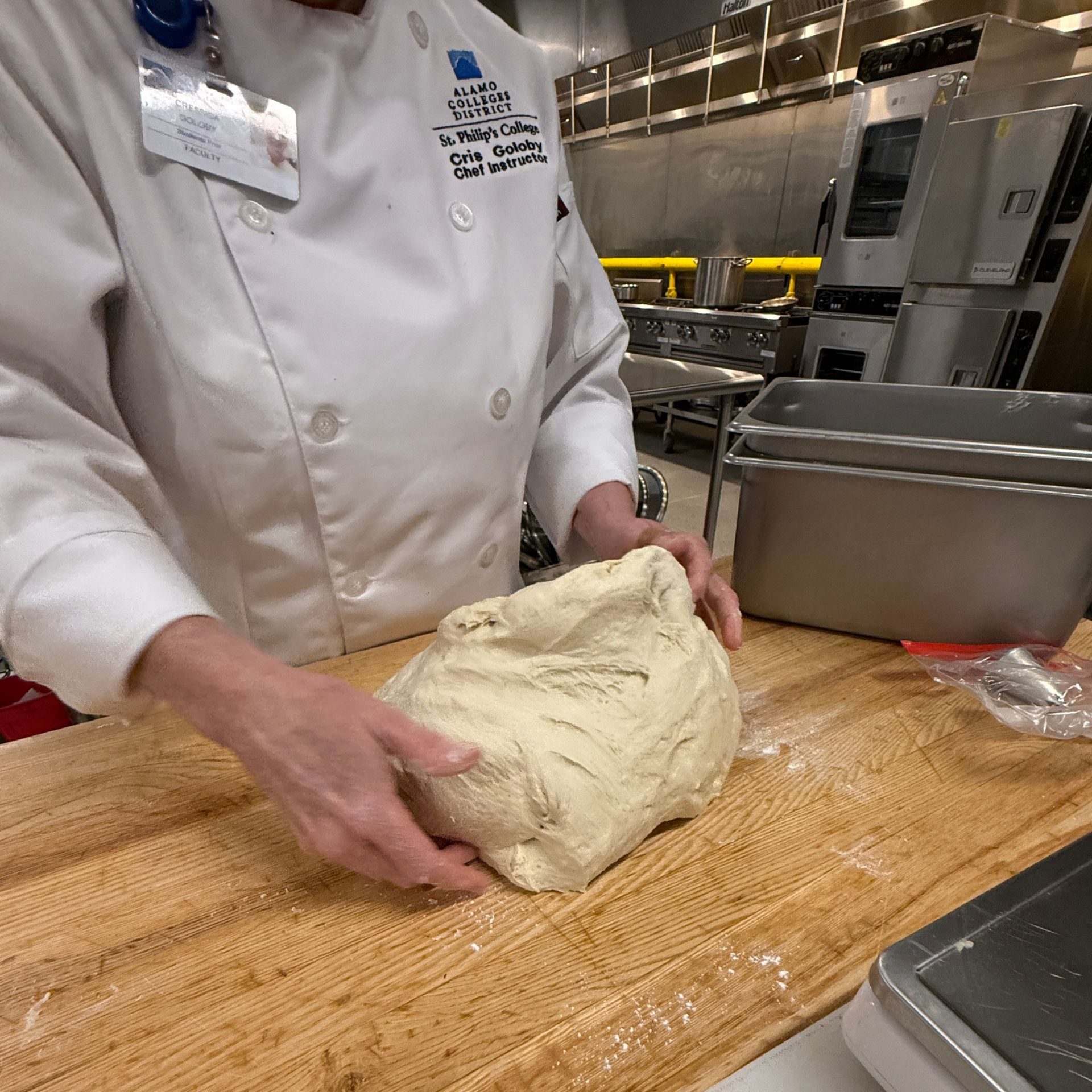
Bread making:
Leavening agents--
-Yeast – dry, must be activated; instant can be added immediately. 10 minutes for yeast to activate with 110 degree water. You can control room it lives in, but you can’t control the yeast.
-Steam – delicate pastries. Pie dough, pate a choux, eclairs; steam of butter to create layers when it comes from evaporation of water from butter or eggs causing layers to expand and separate
-Chemical – baking powder, baking soda; “quick bread”; baking powder activated by heat, soda activated by acid. Muffins and biscuits are quick breads. Biscuits have a hard fat cut into flour. Muffins have wet fat folded into dry ingredients to form a batter. Quick to make, quick to bake, quick to eat.
Steps to yeast bread
-Activate the yeast
-Mise en place
-Mix ingredients
-Bulk fermentation
-Punching
-Sale/weight
-Shape it
-Form – scale, shape, form at same time go into freezer in this class to stop the proofing
-Proof, back into proofer, double in size; maybe 10-30 min in this class. It will come out of freezer
-Egg wash/Bake
-Cool
-Eat/store
Straight dough method – all soft bread yeast dough
Types of flours
-Wheat flours – bread flour, AP flour, cake flour, pastry flour; gluten content differentiates. High gluten content to hold together, bread. Pastries want to form but not flake apart, pastry flour.
-Cake flour least amount of gluten/protein; want it to be loose. AP is a combo of all three.
-Barley, rye, oats and wheat – contains gluten
-Rice flour has no gluten. Quinoa flour has no gluten.
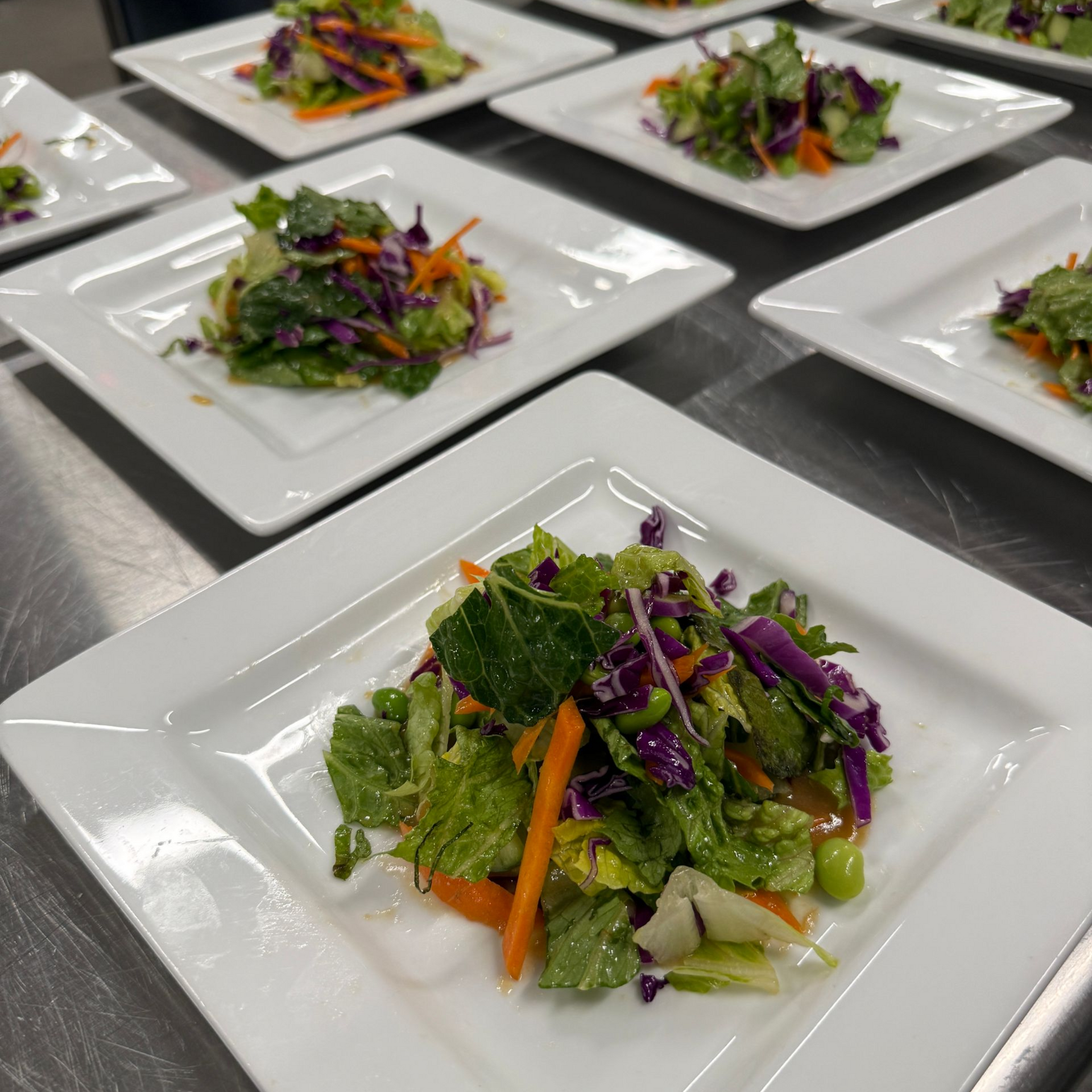
Semester Menus
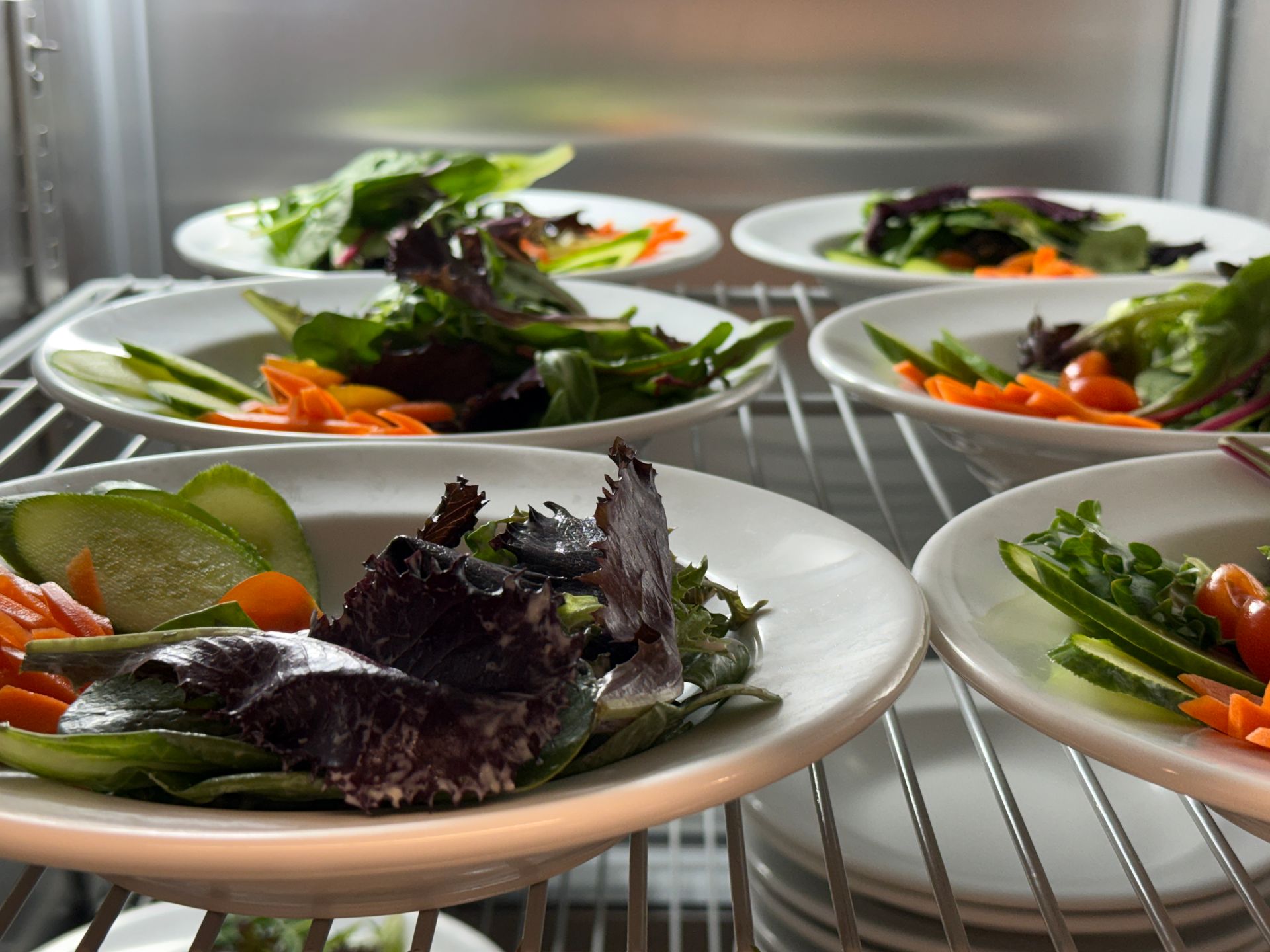
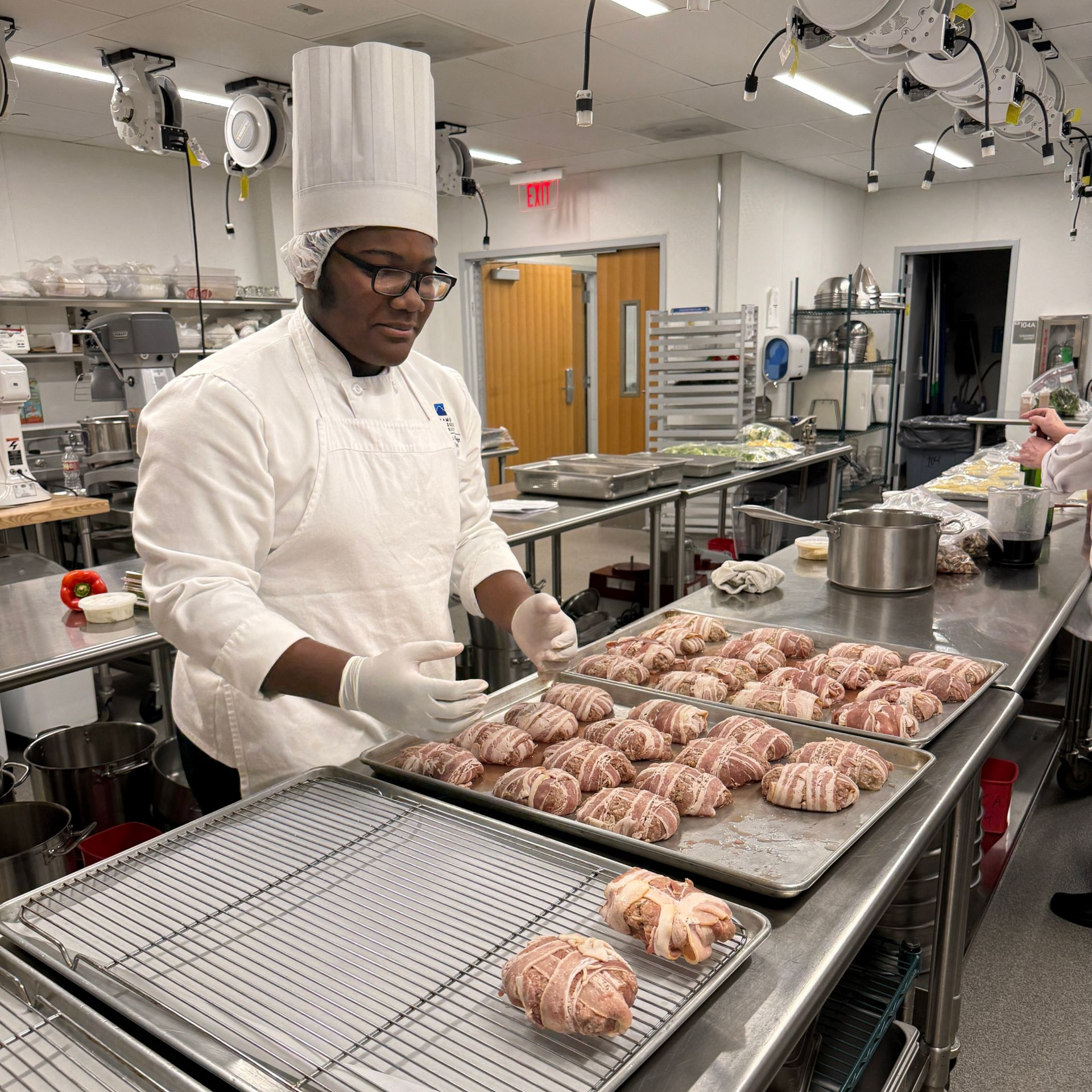
Menu Set 1 -Meatloaf
Menu Set 2 - Stuffed Chicken
Menu Set 3 - Red Snapper Vera Cruz
Menu Set 4 - Build Your Own Pasta
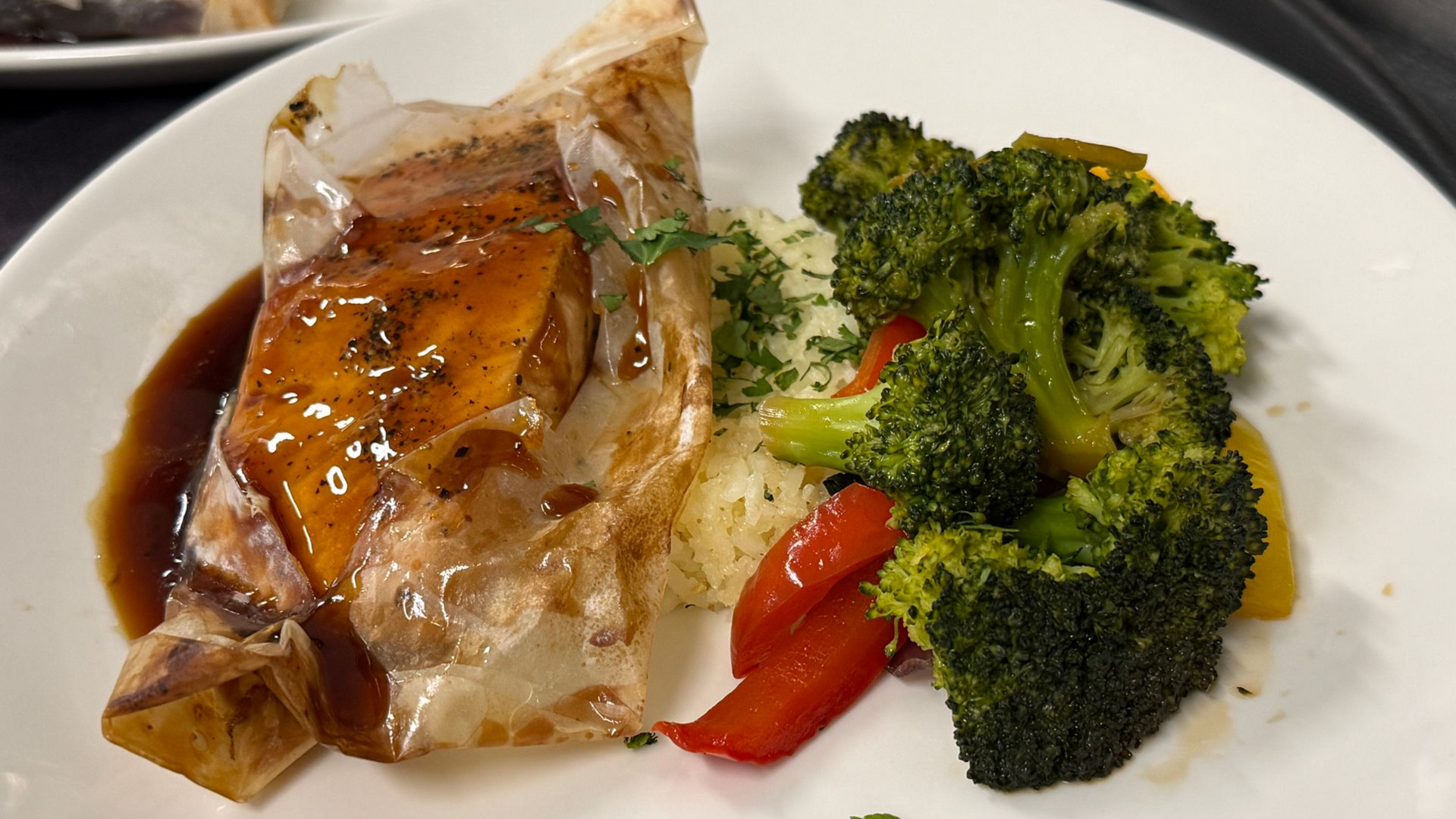
Menu Set 5-Teriyaki Salmon En Papillote
Menu Set 6 - Choose a Skewer
Menu Set 7 - Choose a Panini
Menu Set 8 - Blackened Fish
Menu Set 9 - Manicotti with Chicken
Menu Set 10 - Pork Tenderloin with Angel Fire Sauces
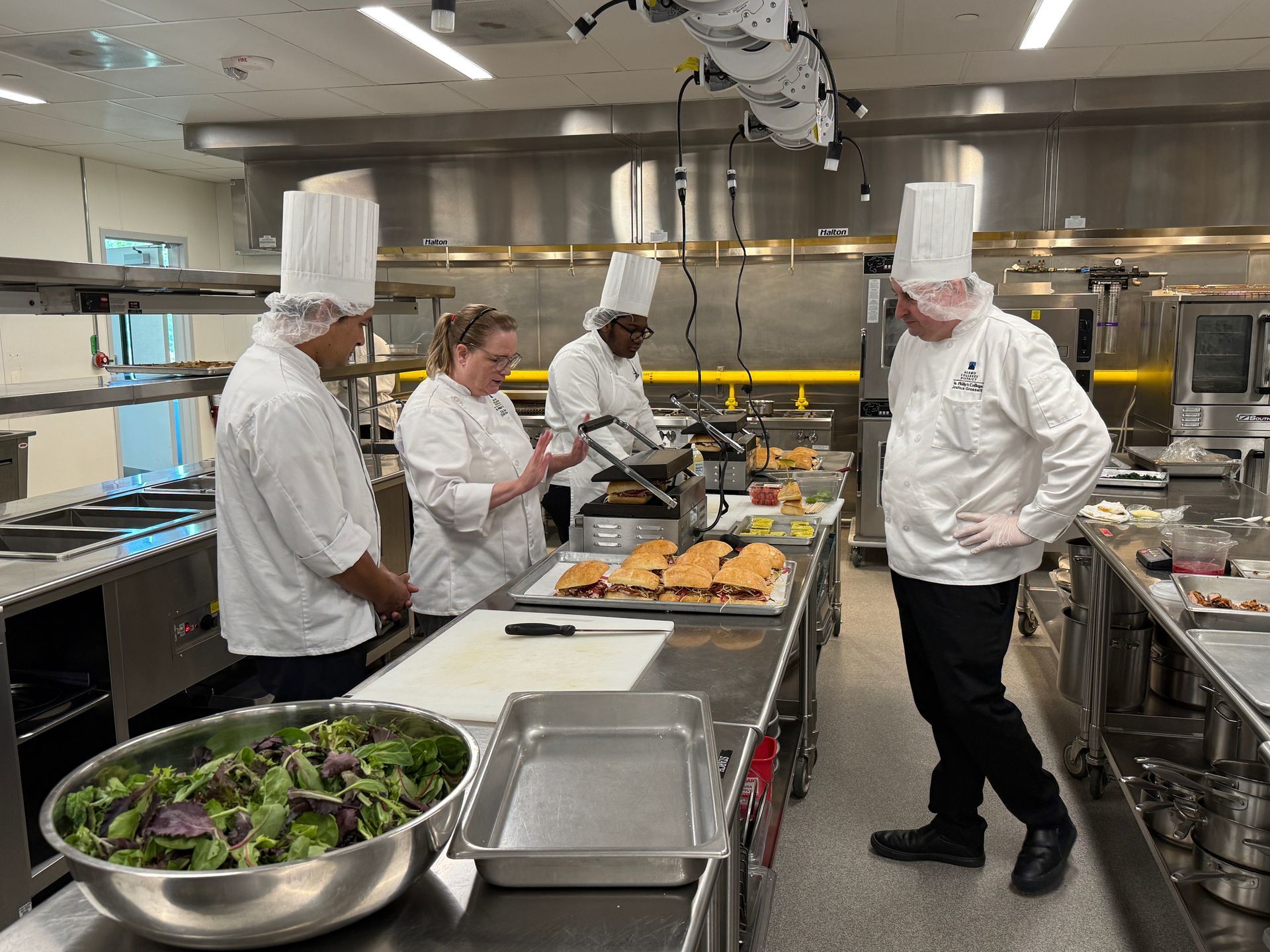
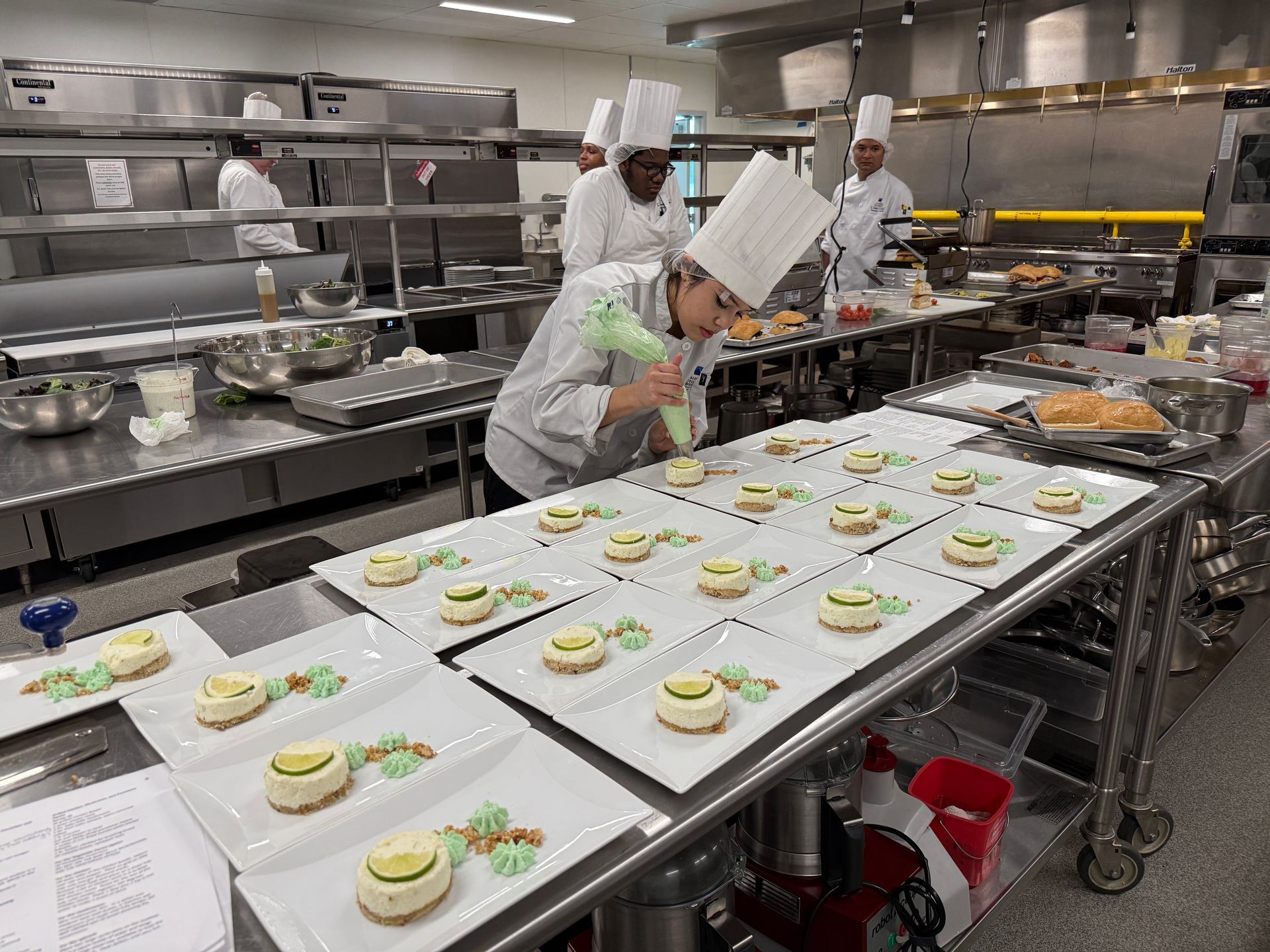

Plating Techniques