PROFESSIONAL COOKING & DINING ROOM SERVICE
BASIC SKILLS REVIEW
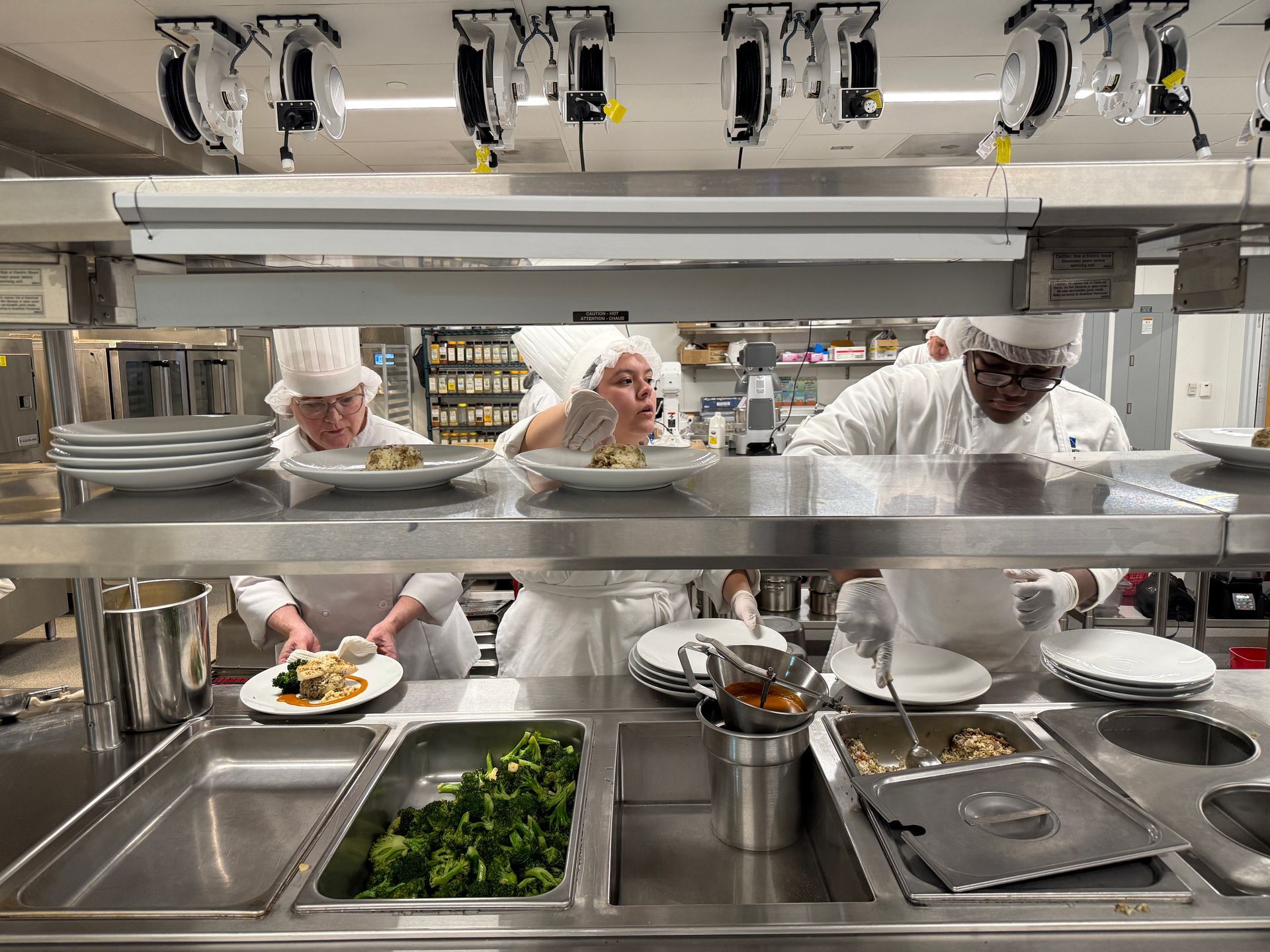
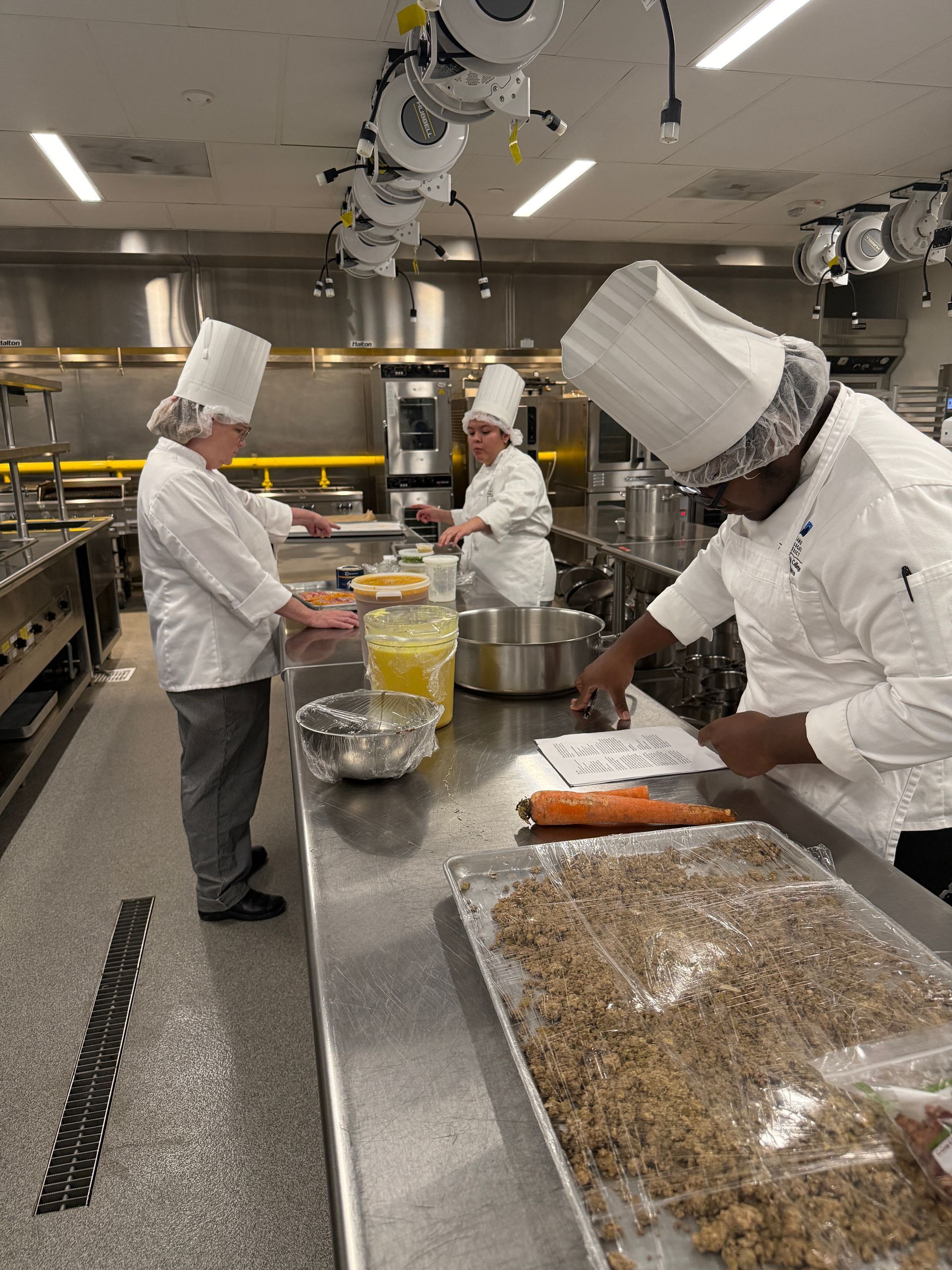
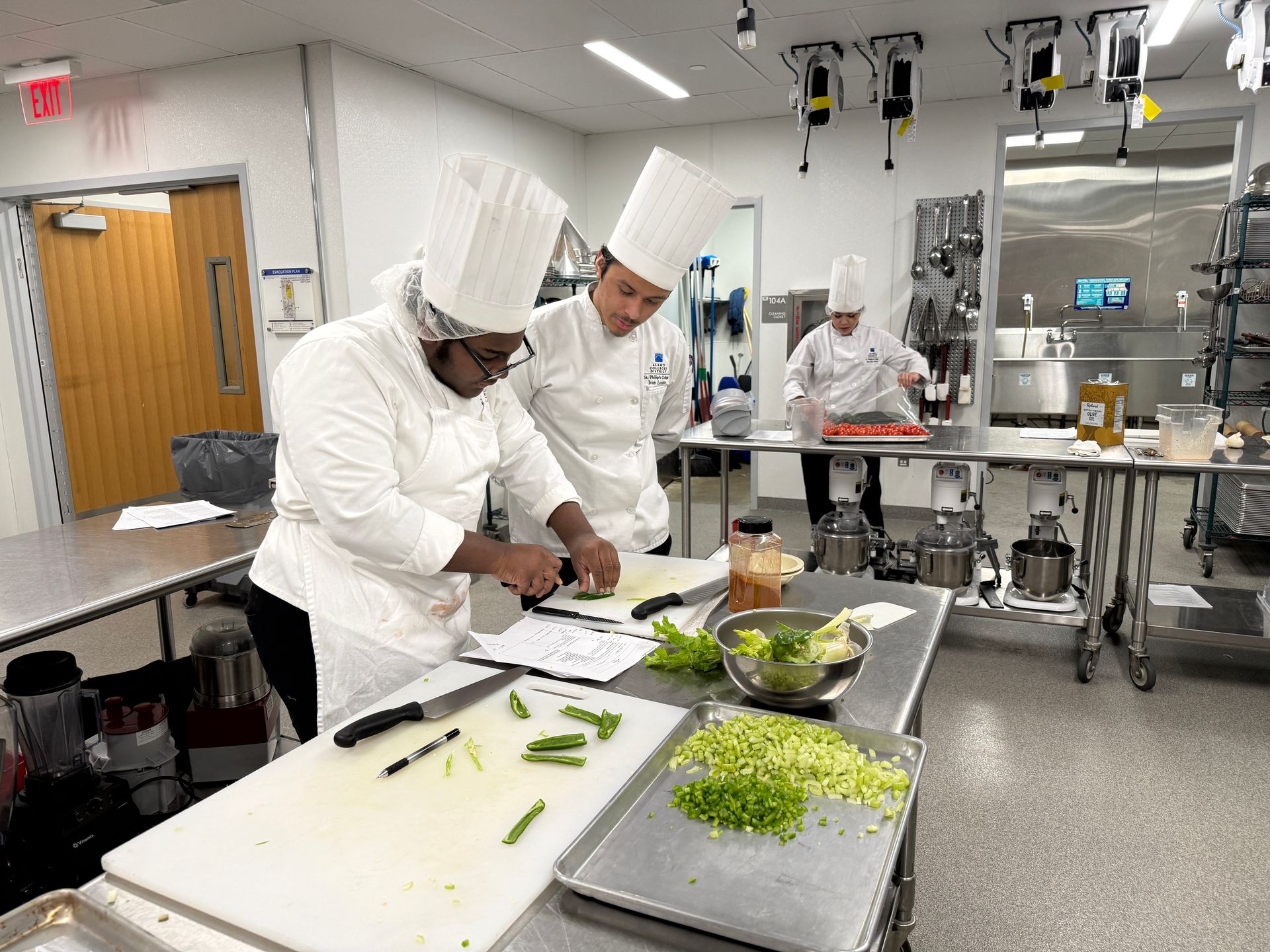
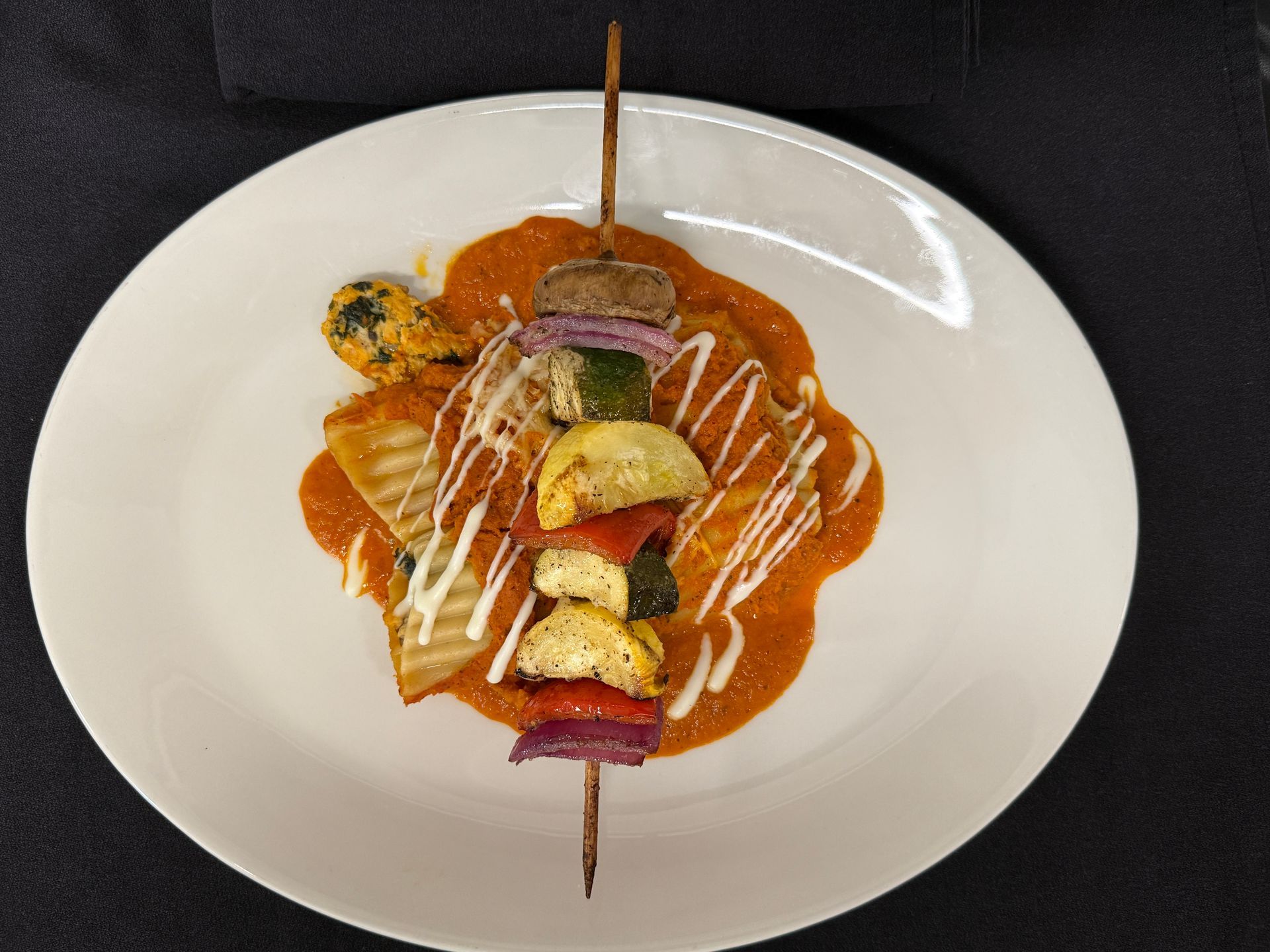
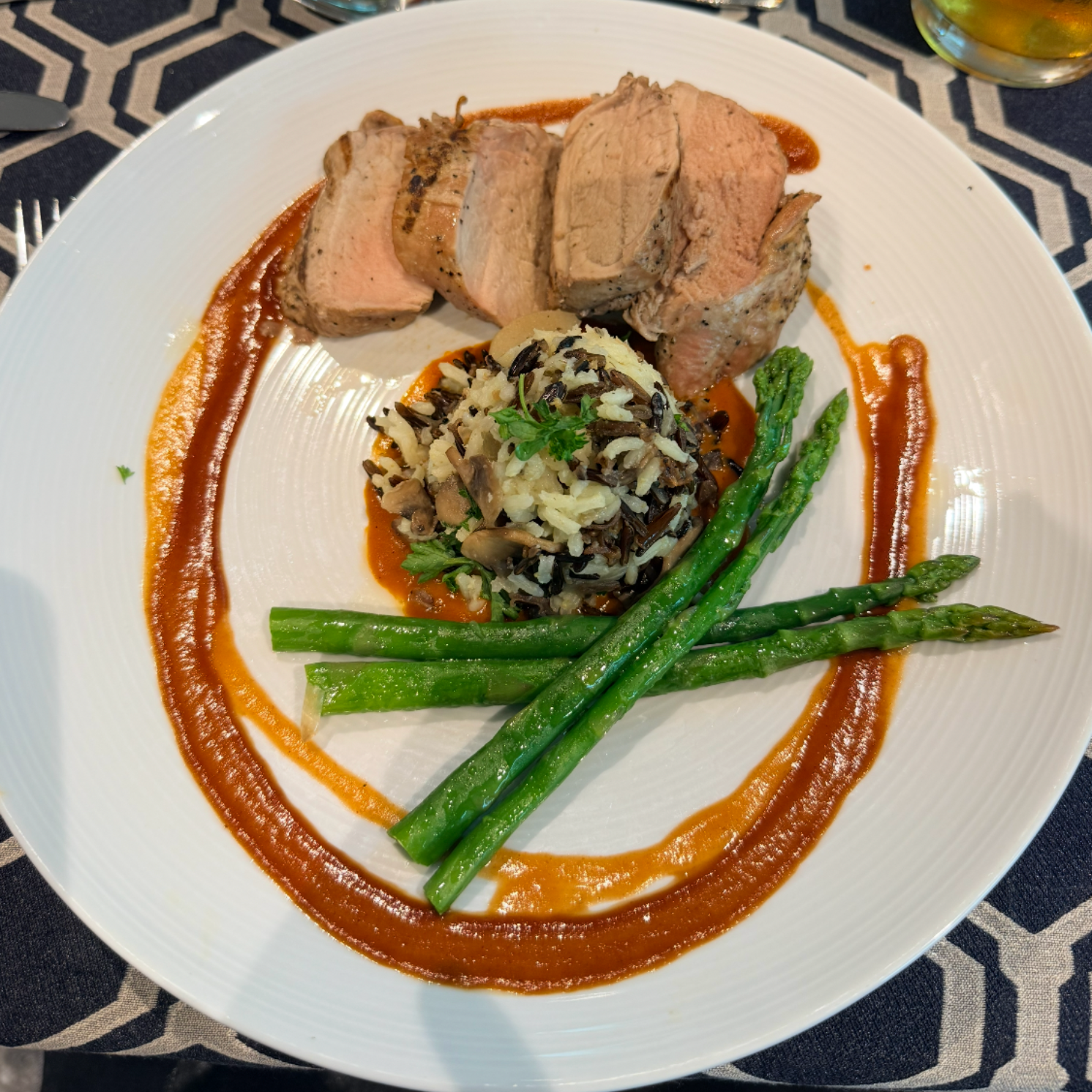
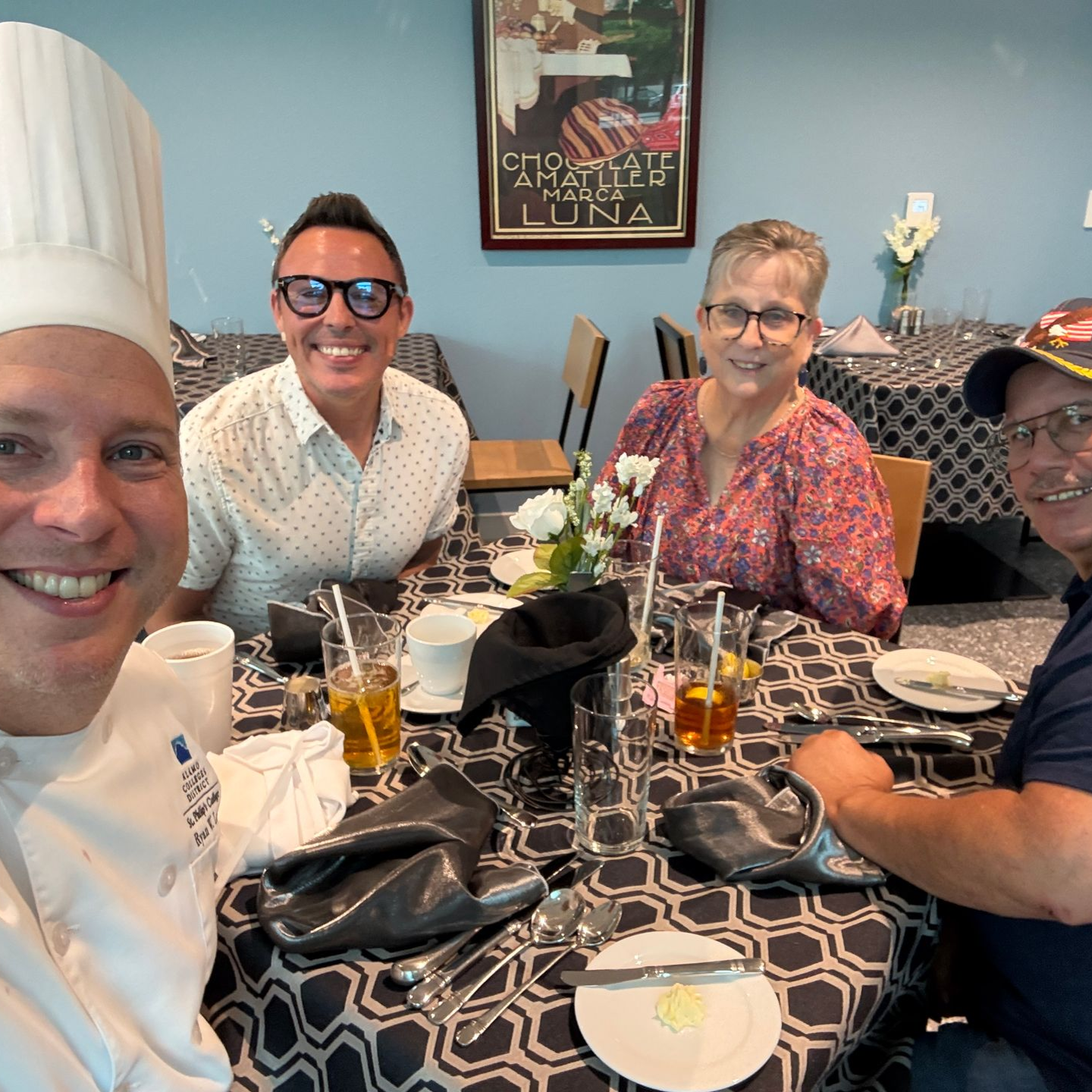
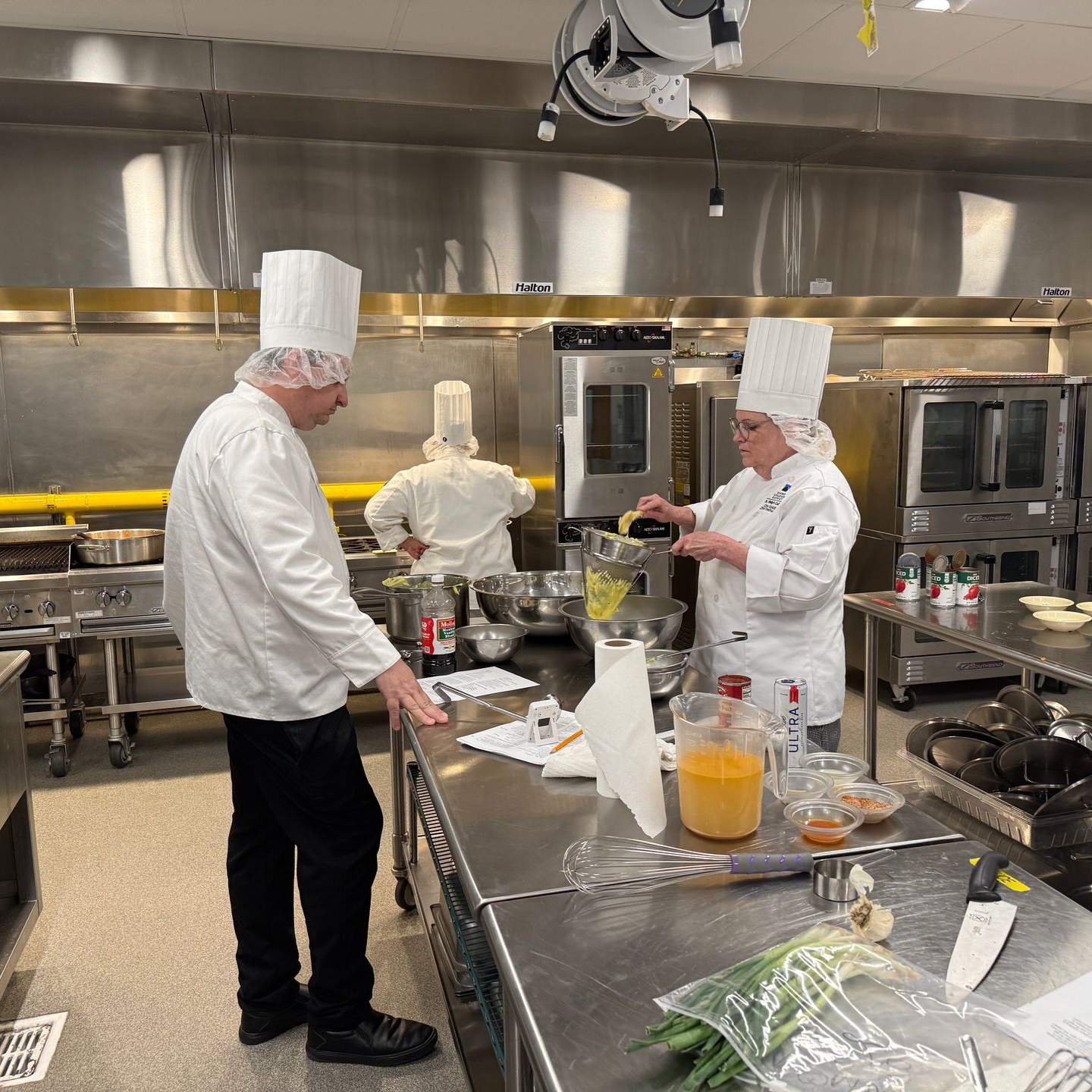
It was a year between my Basic Food Prep and Intro to Foods classes. So when I got to CHEF 1300, the Professional Cooking & Dining Room Service class, the class that serves in the school's first-floor restaurant 1898, it was a bit of a shock for all the review info. Here is an overview.
What is a Sauce?
A liquid, plus a thickener, plus a seasoning. Stock is a flavored liquid.
Stocks are made from a combination of bones, vegetables, seasonings, and liquids. (Bones + mirepoix + sachet de garni)
You can have a white beef stock. You can have a brown chicken stock.
Mirepoix = 50% onion, 25% carrot, 25% celery, by weight
¾ lb = 12 oz = 6 oz onion, 3 oz carrot, 3 oz celery, diced
Simmering stock:
Beef stock = 8-12 hrs
Chicken = small dice
Fish = hour
- Bouquet de garni – flavorings tied to a string
- A Sachet is a small, permeable bundle—typically cheesecloth—filled with herbs and spices used to infuse flavor into soups, stocks, sauces, and stews. It acts like a culinary tea bag, allowing easy removal of spices and herbs, keeping dishes clean and preventing bitter, over-extracted flavors.
Salt is not added to stock – it's not the final product
The St. Philip’s Way = 1 tsp convenience base per one cup of water. If you have:
One gallon = 16 cups = 16 tsp
16 tps = 5 Tbsp + 1 tsp. OR, 4 Tbsp is 1/4 cup + 1 tsp.
Sauté is a French term that translates to "jump" or "jumped" (from the verb sauter), referring to the technique of cooking food quickly in a hot pan with a small amount of fat while tossing or flipping it, causing the food to dance or "jump".

Cups up from Tbsp
1 Tbsp + 1 tsp = 4 Tbsp+ 1 tsp = 4 Tbsp. 4/2 = 2 oz.
½ gallon of stock – 8 cups water, 8 tsp = 2 tsp + 2 Tbsp
Salt is the first ingredient in convenience base
Mother Sauces:
Hollandaise – clarified butter, egg yolk
Espangol, brown stock, brown roux
Bechamel, milk, white roux
Tomato - tomato
Veloute - white stock, blonde roux
Mother Sauce Seasoning:
Hollandaise - lemon juice
Espanngol – salt, pepper
Bechamel – onion piquet
Tomato – follows whatever cuisine you’re making; Italian-organo, rosemary, garlic or Asan-curry, ginger, green onion
Veloute – salt, white pepper
Roux = equal parts fat and flour by weight; with 1 cup of stock... 1 oz of roux will thicken one cup of stock
(½ oz of each)
1 gallon = 16 oz is 8 oz of each fat and flour
Butter = 80% fat, 20% other stuff; it’s unstable. To control it, you carlify it to remove the vairables so all you have is a predictable product
Heat effects:
Fat melts
Proteins coagulate
Sugars carmelize
Starches gelatanize
Water evaporates
To clarify, start by cutting down butter this way: down middle all the way, cut down side all the way, cut the half, cut the half in half, and each will weigh 1 oz.
16 one oz pieces. Cube butter, low heat, walk away. Don’t stir it, barely look at it. Milk solids come to surface to raft, water at bottom. Then remove from heat, take ladle and remove film or create a hole in the raft and have a measuring cup and pool out the butter
12 oz yield clarified, or 75% of the yield
Bread making:
Leavening agents--
-Yeast – dry, must be activated; instant can be added immediately. 10 minutes for yeast to activate with 110 degree water. You can control room it lives in, but you can’t control the yeast.
-Steam – delicate pastries. Pie dough, pate a choux, eclairs; steam of butter to create layers when it comes from evaporation of water from butter or eggs causing layers to expand and separate
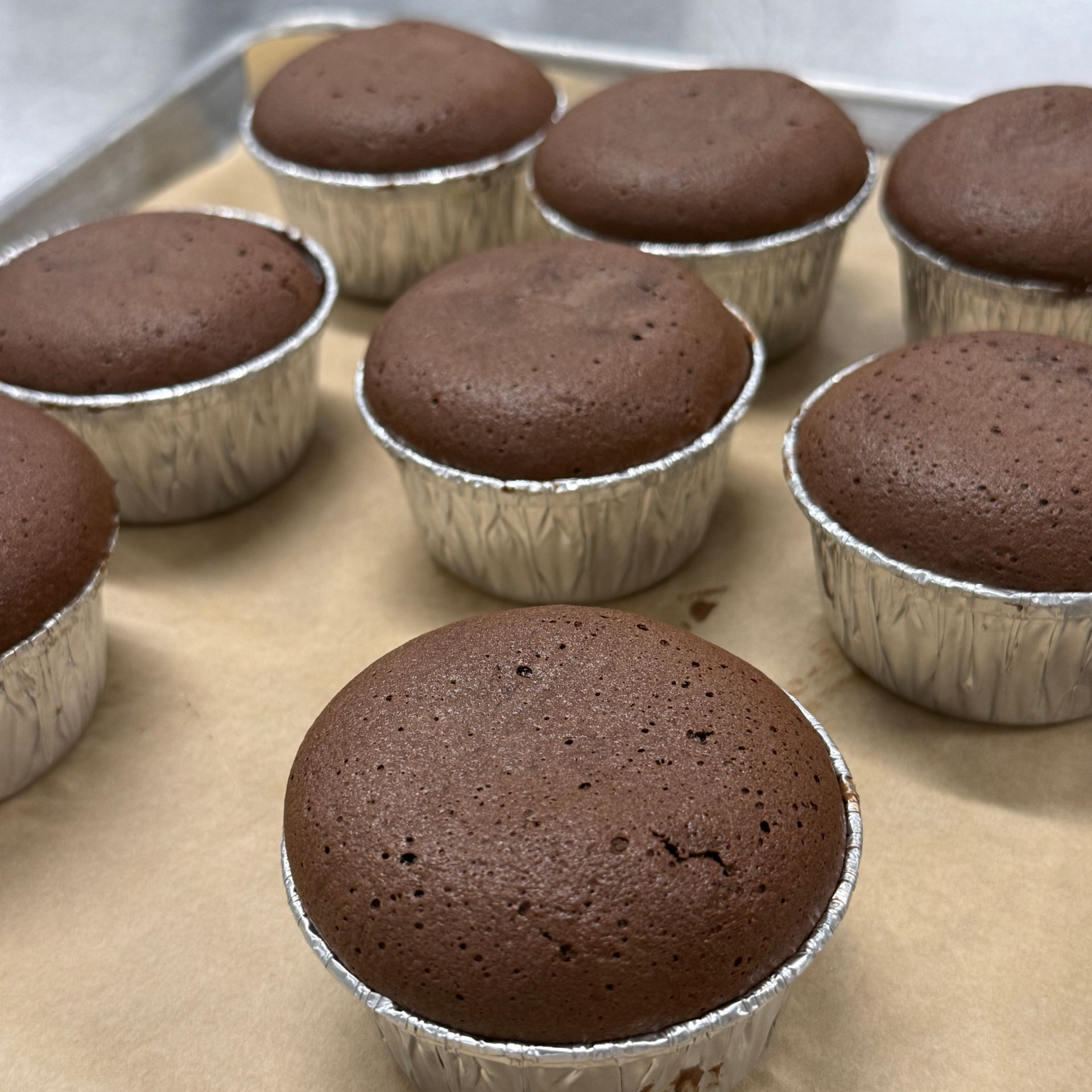
-Chemical – baking powder, baking soda; “quick bread”; baking powder activated by heat, soda activated by acid. Muffins and biscuits are quick breads. Biscuits have a hard fat cut into flour. Muffins have wet fat folded into dry ingredients to form a batter. Quick to make, quick to bake, quick to eat.
Steps to yeast bread
-Activate the yeast
-Mise en place
-Mix ingredients
-Bulk fermentation
-Punching
-Sale/weight
-Shape it
-Form – scale, shape, form at same time go into freezer in this class to stop the proofing
-Proof, back into proofer, double in size; maybe 10-30 min in this class. It will come out of freezer
-Egg wash/Bake
-Cool
-Eat/store
Straight dough method – all soft bread yeast dough
Types of flours
-Wheat flours – bread flour, AP flour, cake flour, pastry flour; gluten content differentiates. High gluten content to hold together, bread. Pastries want to form but not flake apart, pastry flour.
-Cake flour least amount of gluten/protein; want it to be loose. AP is a combo of all three.
-Barley, rye, oats and wheat – contains gluten
-Rice flour has no gluten. Quinoa flour has no gluten.
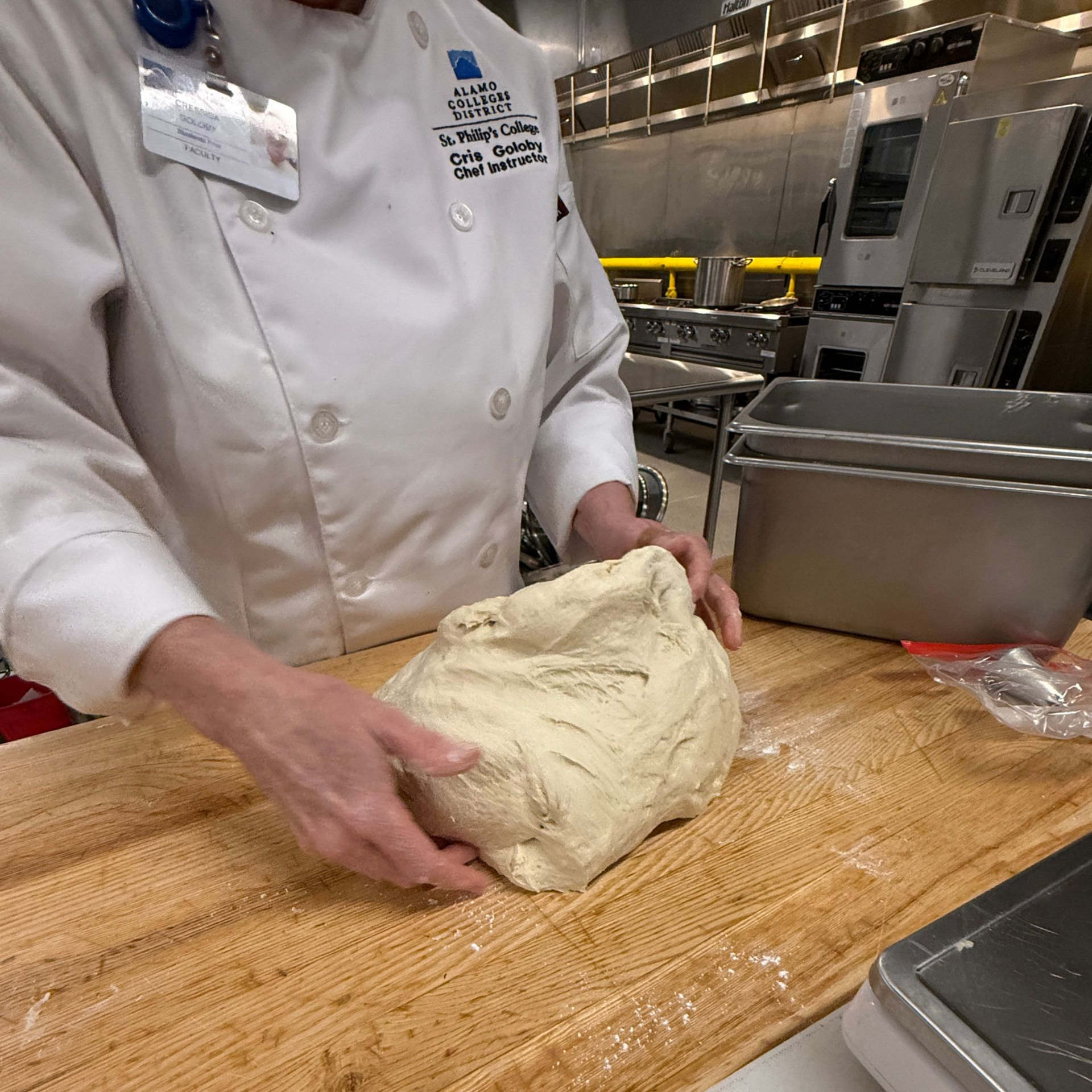
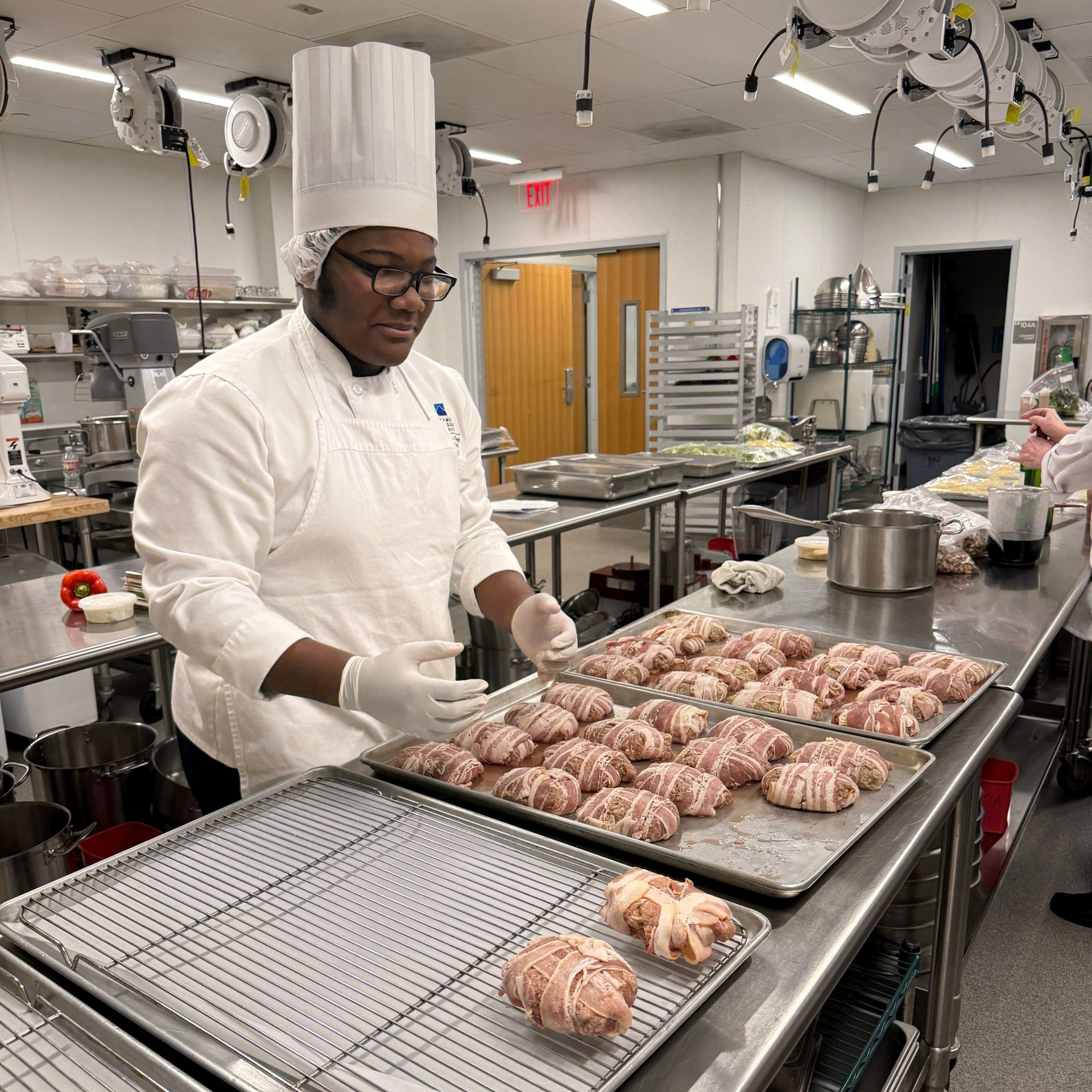
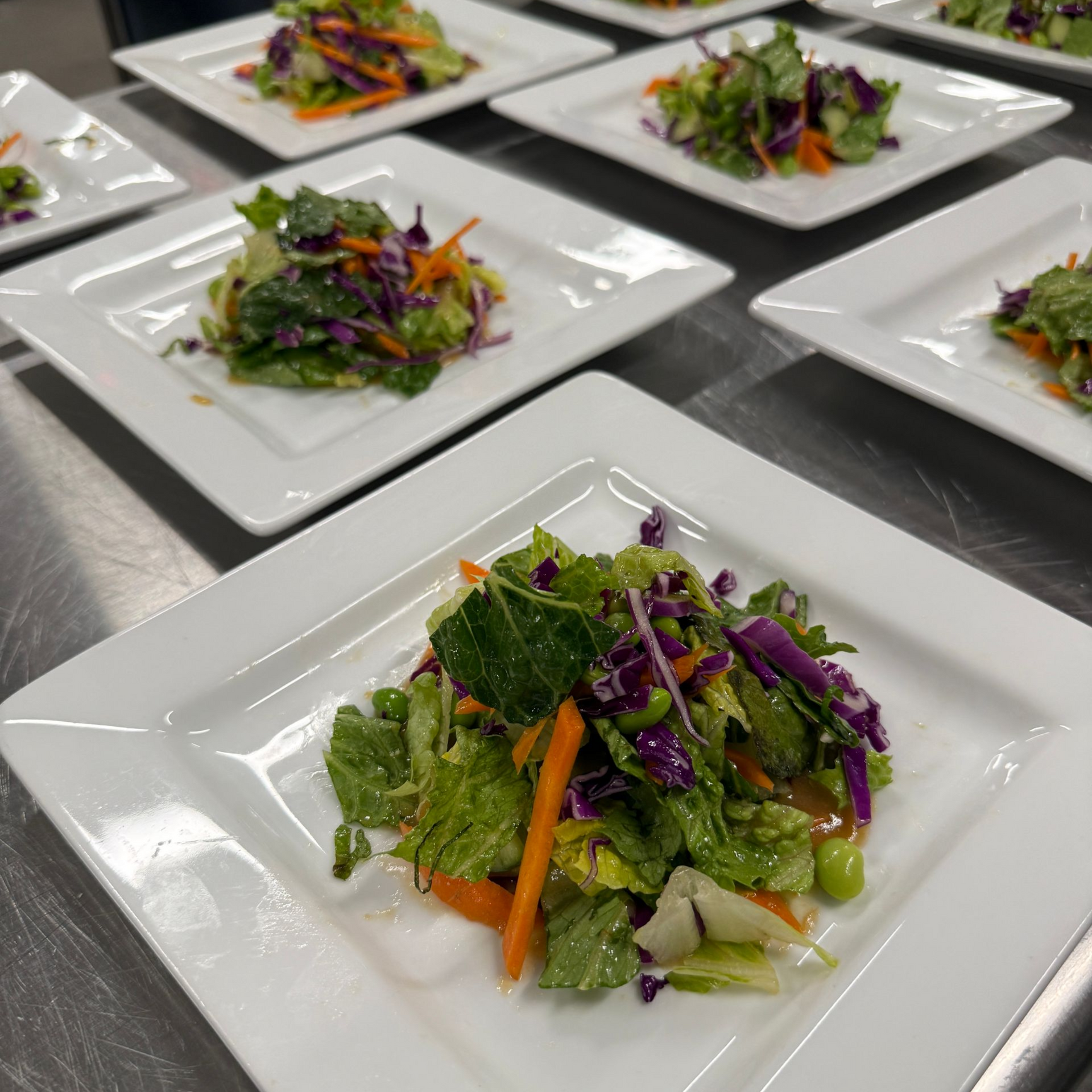
Semester Menus
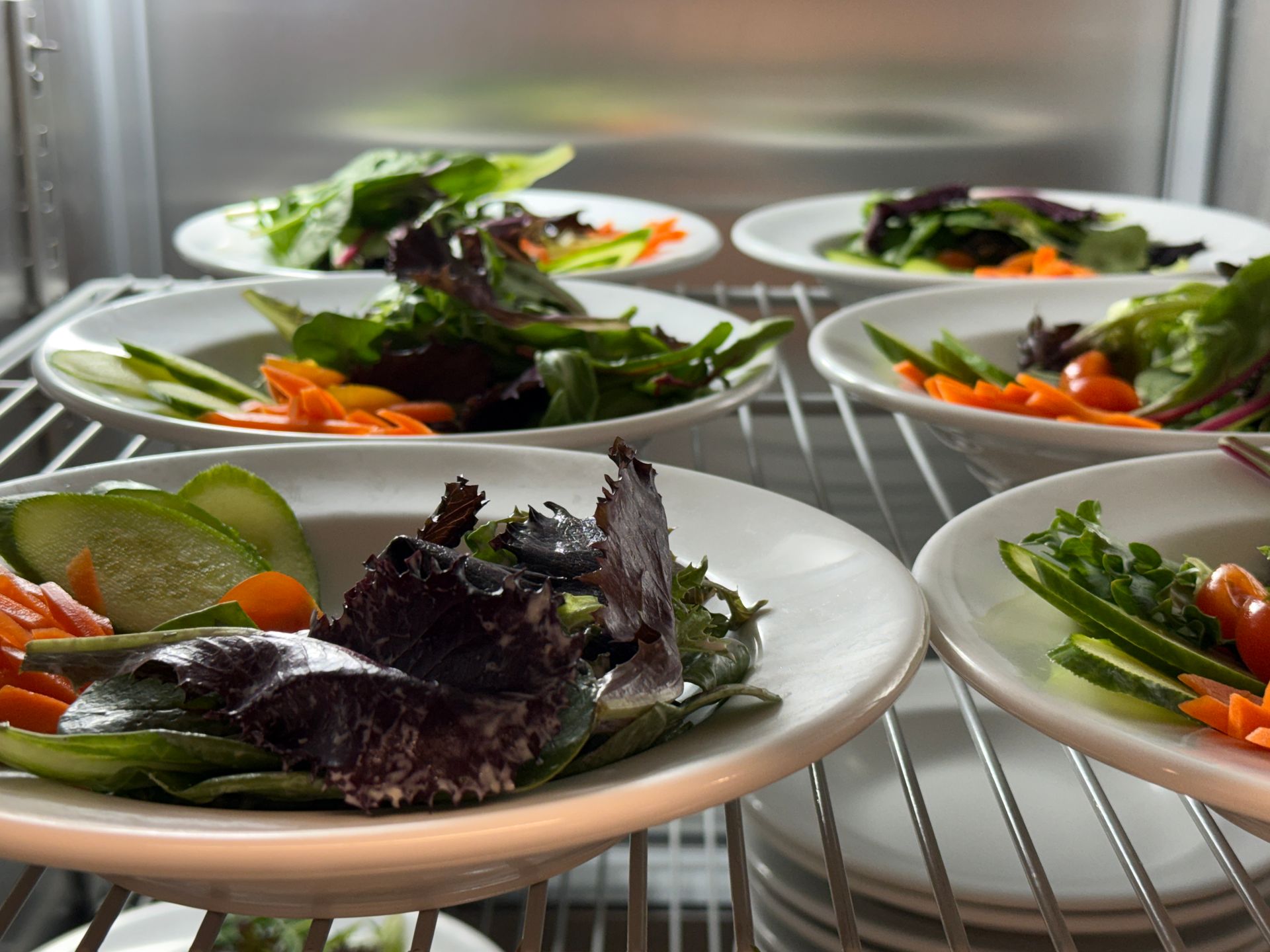
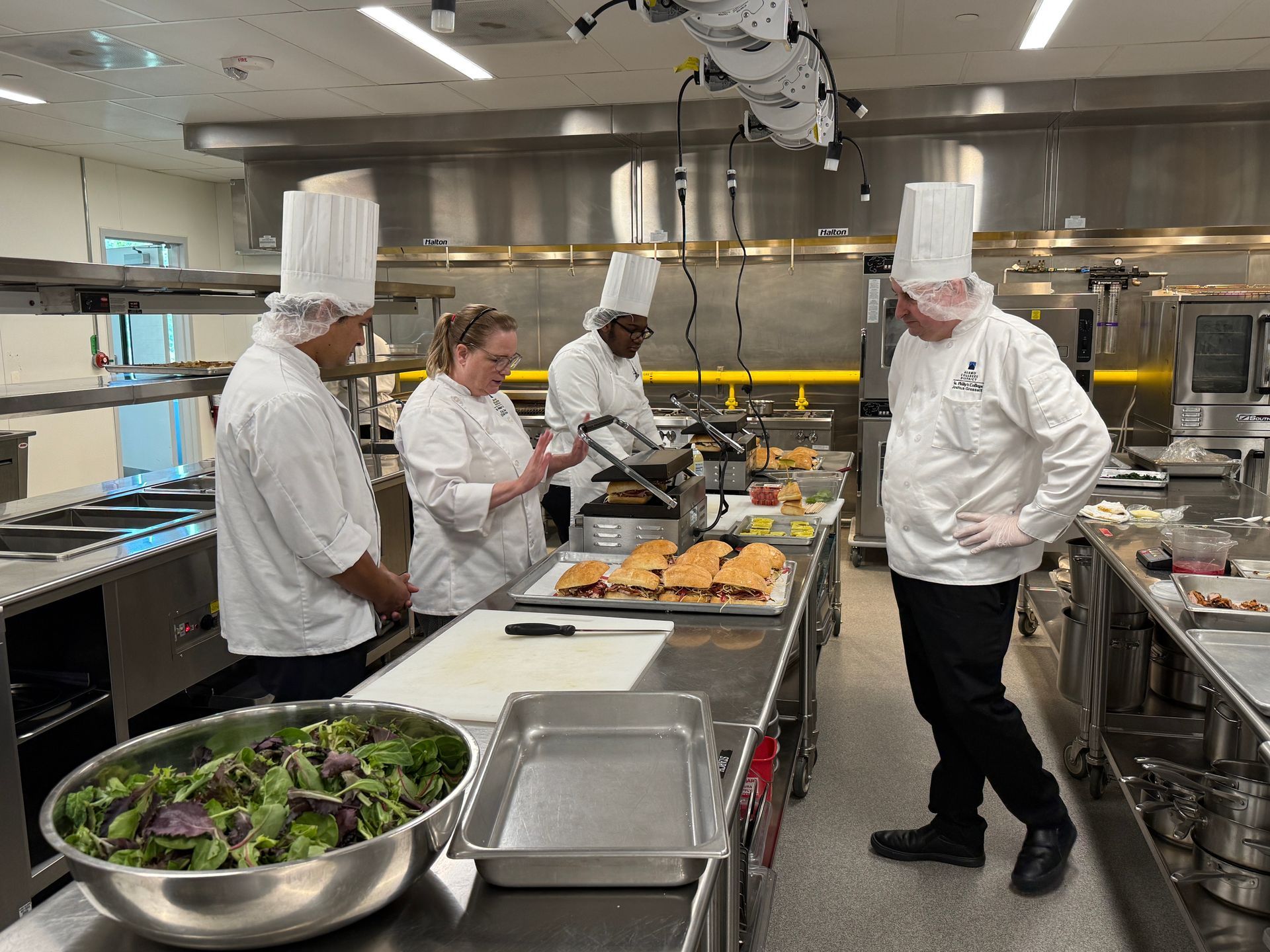
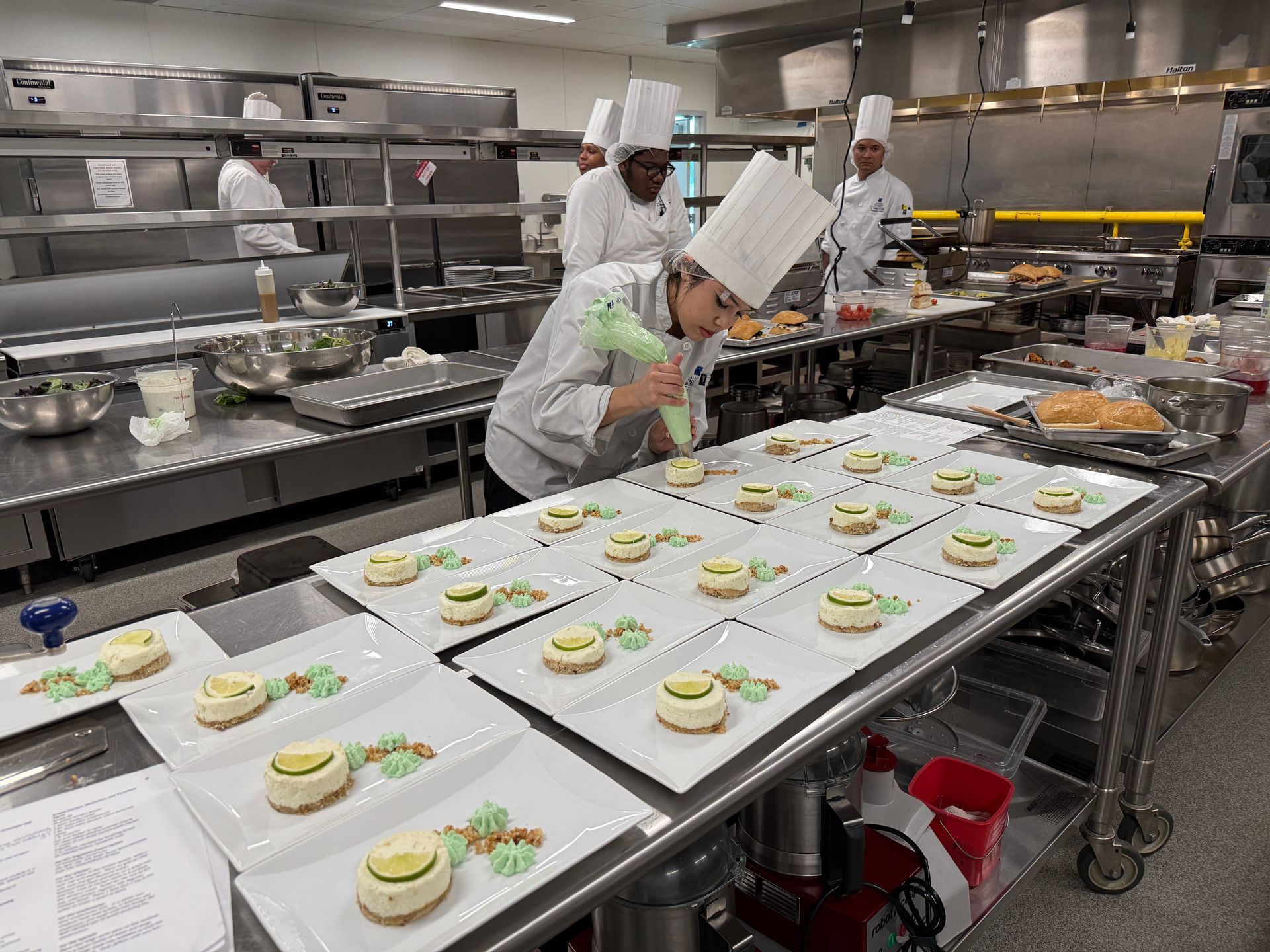
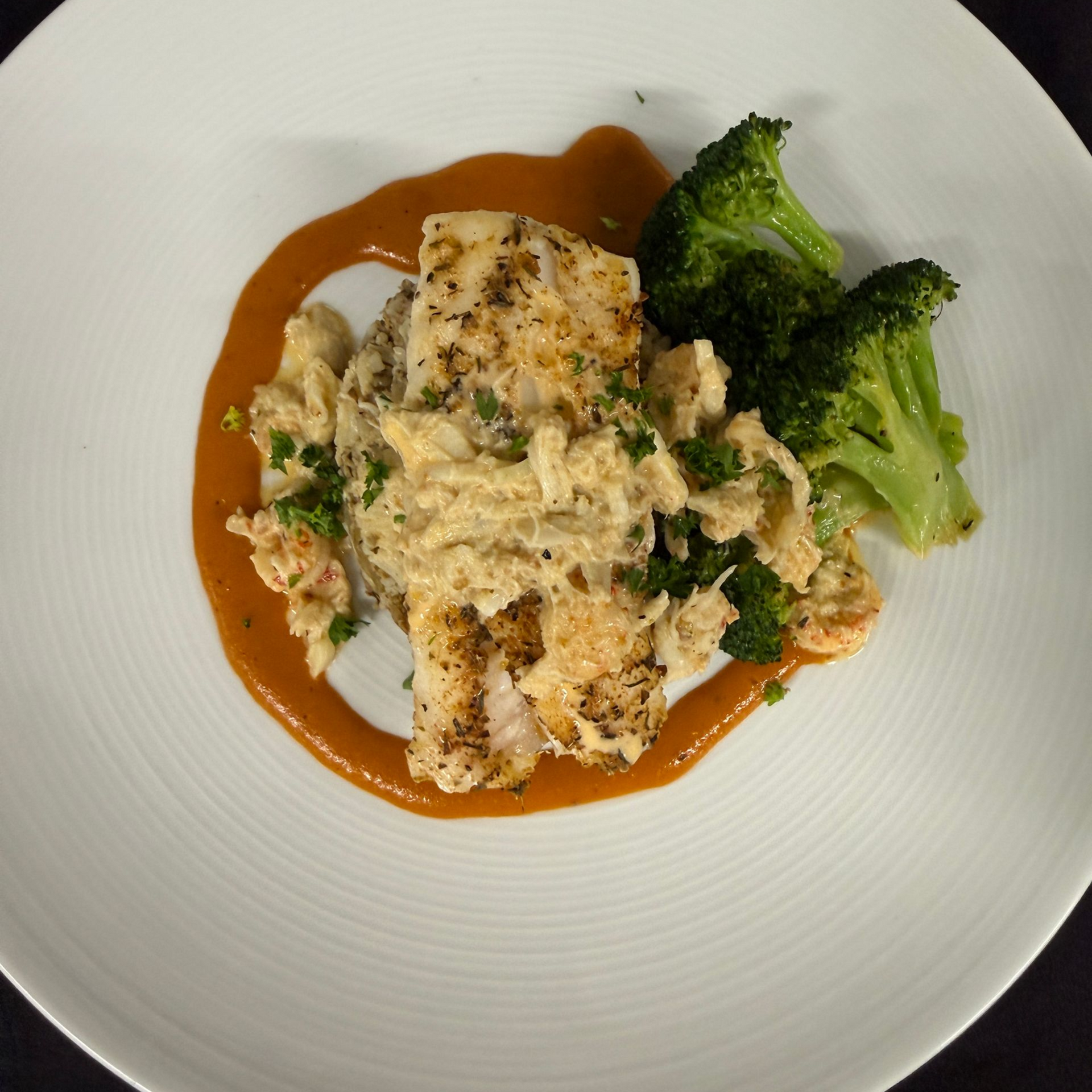
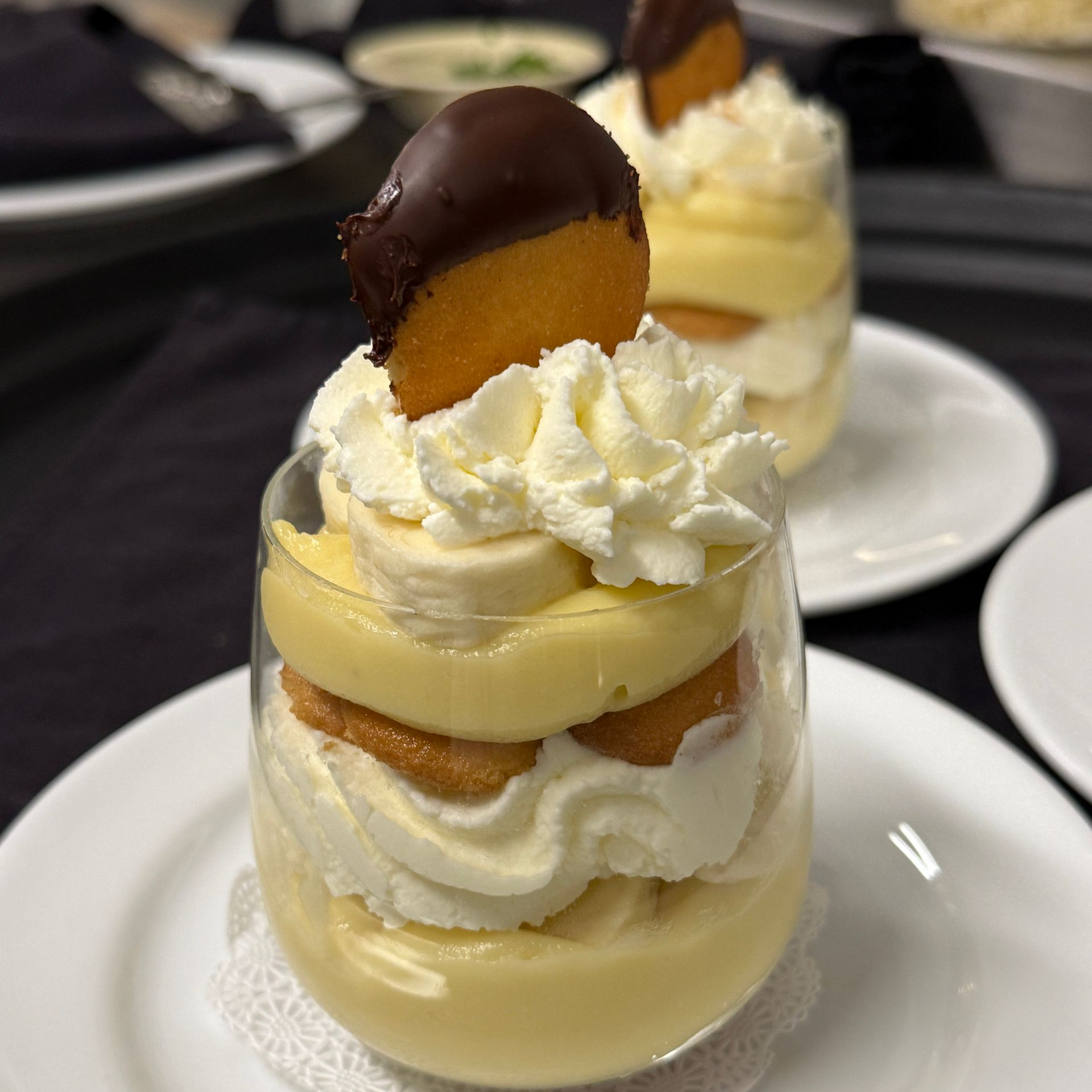


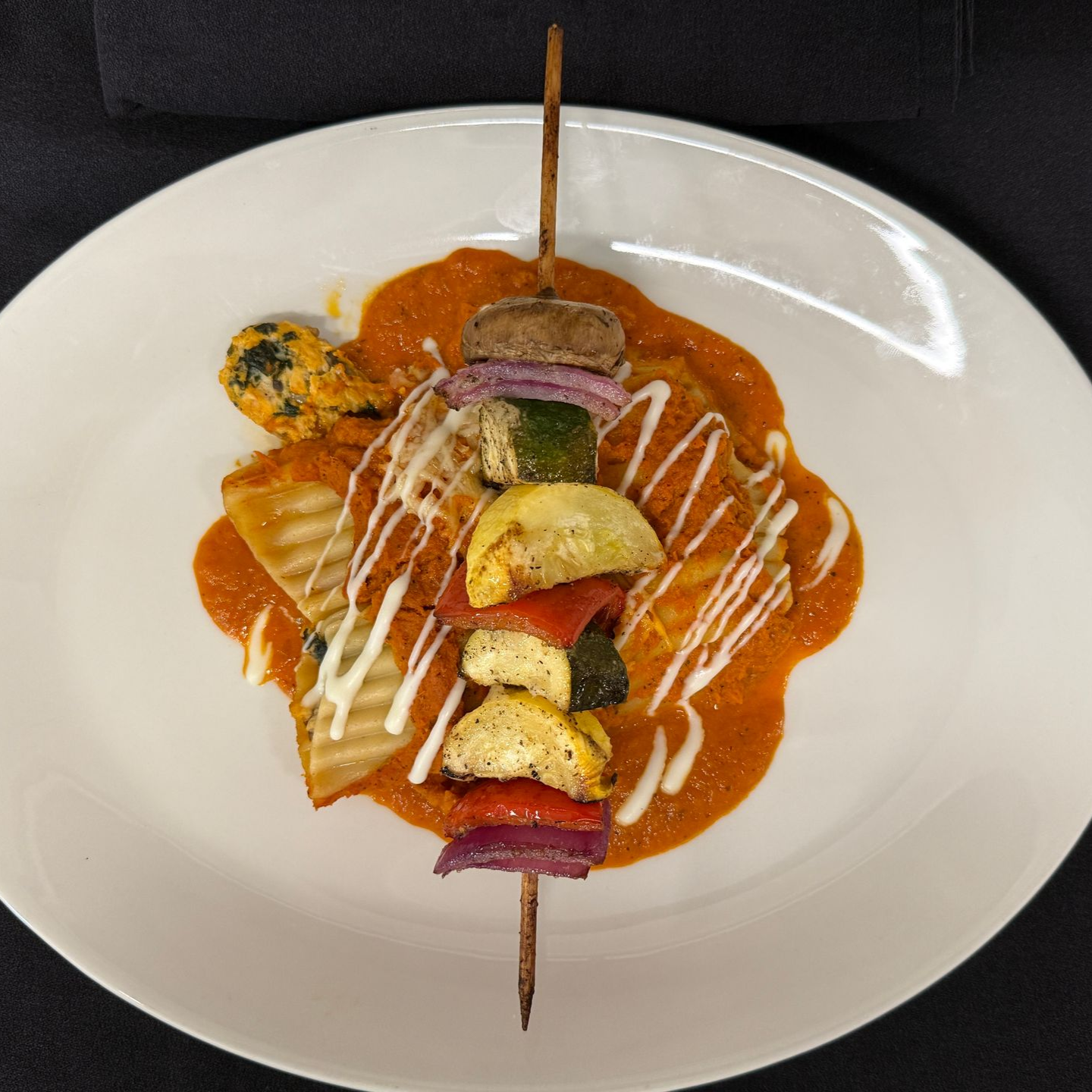
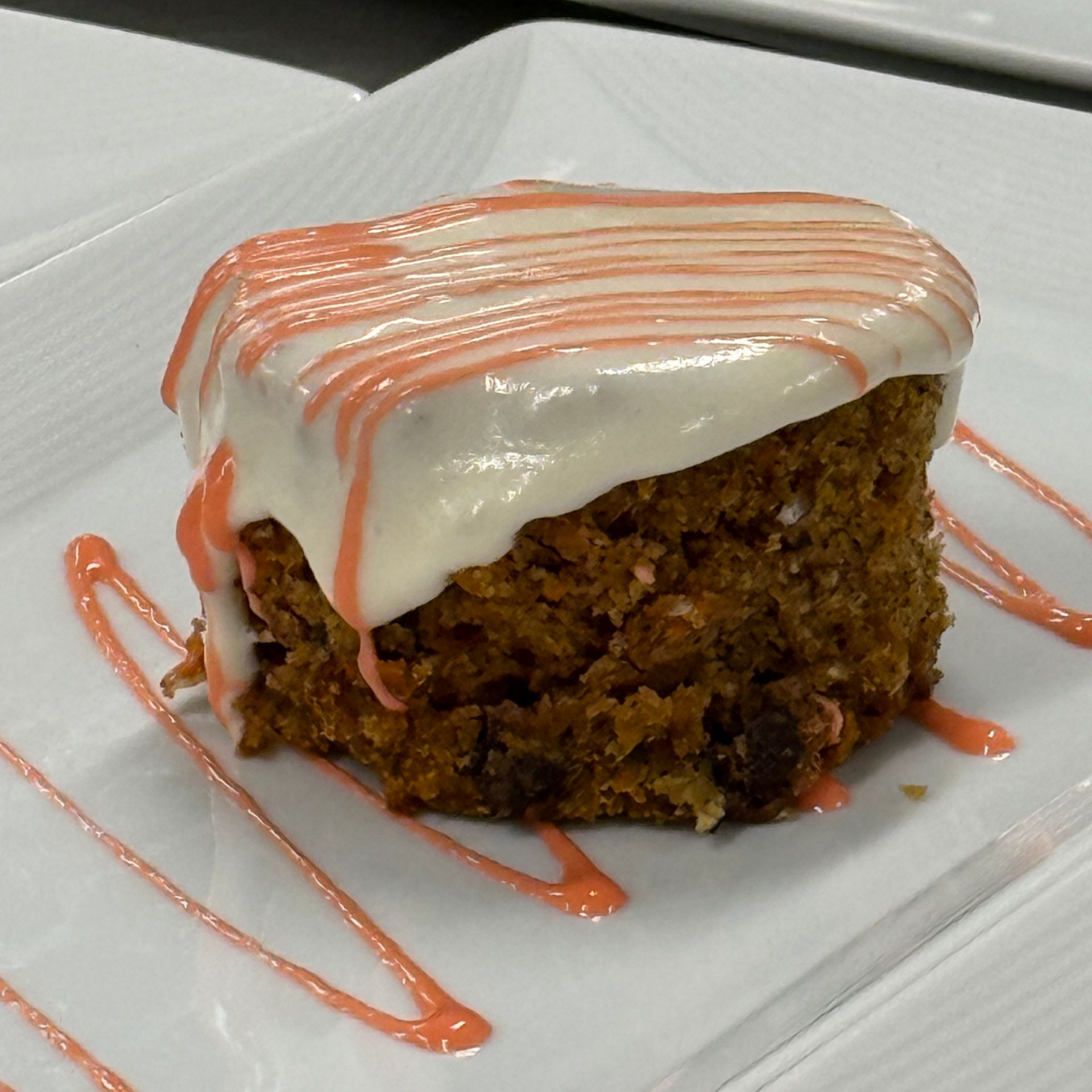
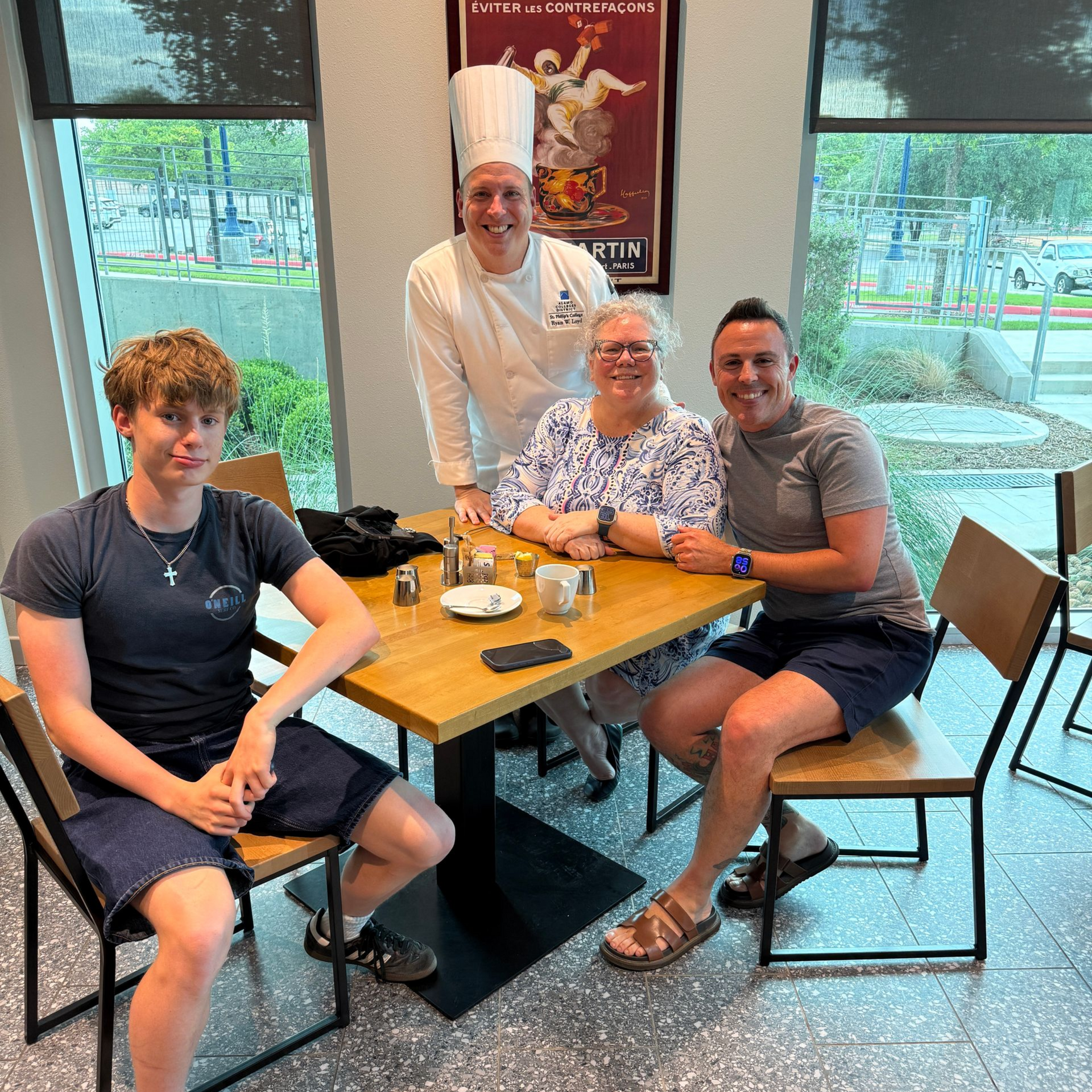
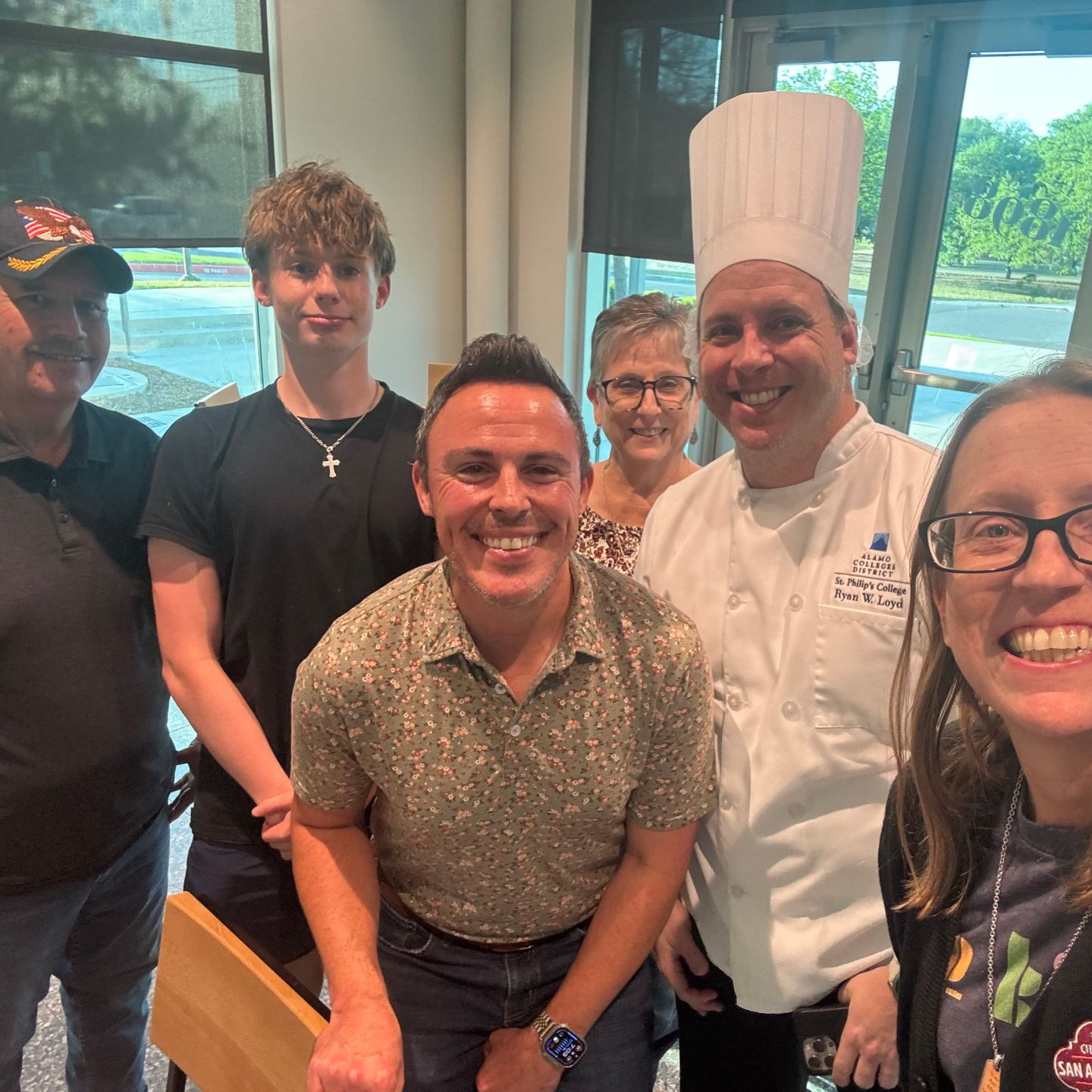

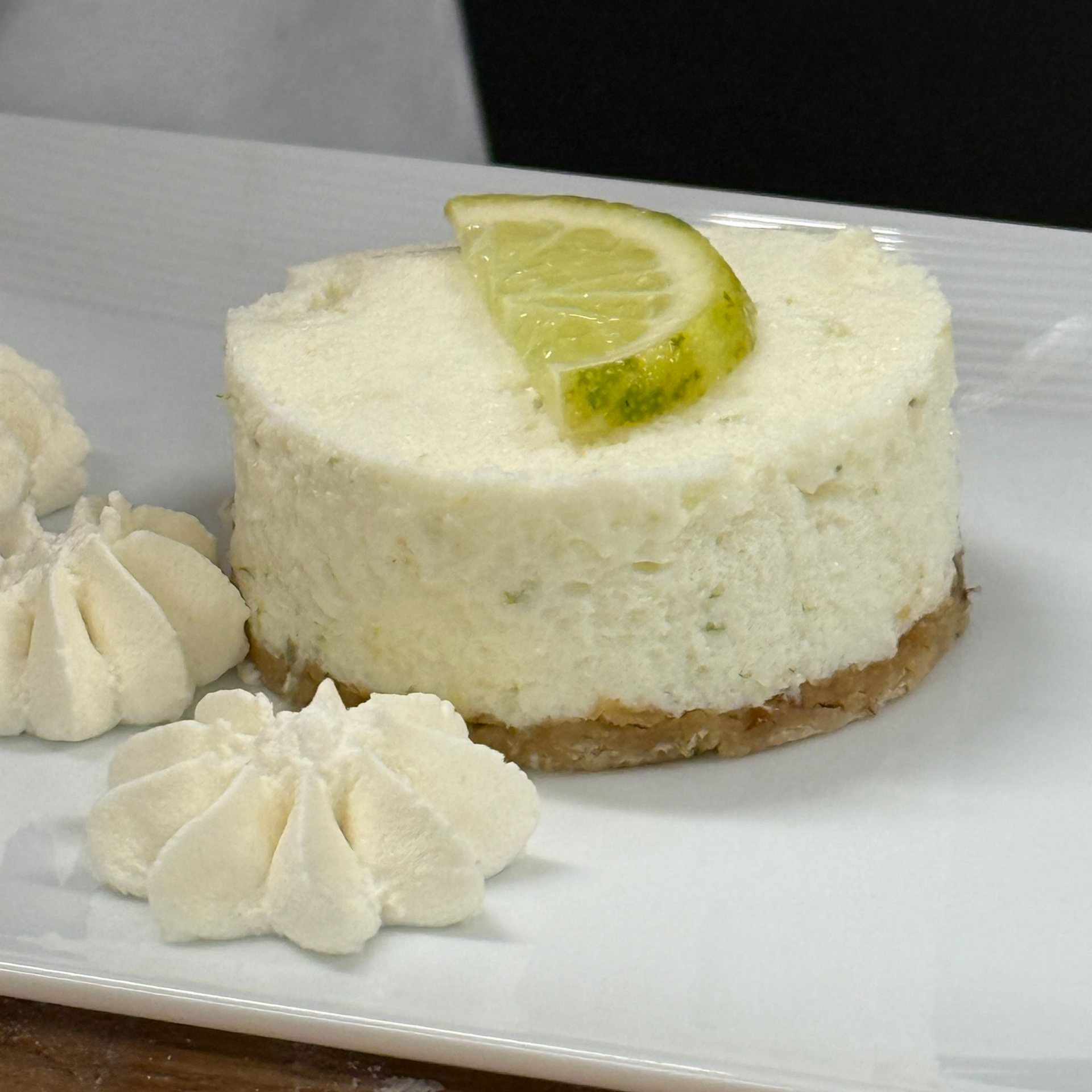
Plating Techniques
Cuts
Final Exam Review
1. Know your measurements (15 questions)
2. Difference between mass vs. volume. and how you portion each one
Volume is the space occupied by a substance – liquid measuring cups, dry measuring cups, tablespoons, teaspoons. Best for liquids, small amounts of ingredients like spices
Mass is how heavy – how much stuff is inside the object. To measure by mass, use digital scale, balance scale. Best for flour, sugar, etc.
3. what happens to heat when applied to: fats, sugar, proteins, water and starches
Fats melt
Sugar caramelizes
Proteins coagulate
Water evaporates
Starches gelatinize
4. Know components and ratios for a roux
1:1 fat and flour, by weight
5. Detail steps for clarifying butter and knowing the yield.
To clarify, start by cutting down butter this way: down middle all the way, cut down sideall the way, cut the half, cut the half in half, and each will weigh 1 oz.
16 one oz pieces. Cube butter, low heat, walk away. Don’t stir it, barely look at it. Milk solids come to surface to raft, water at bottom. Then remove from heat, take ladle and remove film or create a hole in the raft and have a measuring cup and pool out the butter
12 oz yield clarified, or 75% of the yield
6. How do you make stock from a convenience base (ratios of base to water)
1 tsp of convenience base for every cup of warm water
7. What are the ratios for mirepoix and know how it translates to a specific quantity
50% onion, 25% celery, 25% carrot, by weight
8. Know how to make a roux given a specific quantity of sauce (1.5quarts of stock)
1.5 qts = 48 oz = 6 cups. (1 oz of roux will thicken 1 cup of stock.) 6 oz will thicken 6 cups of stock. So you need 3 oz of fat and 3 oz of flour (6 oz total)
Roux = equal parts fat and flour by weight; with 1 cup of stock... 1 oz of roux will
thicken one cup of stock (½ oz of each) 1 gallon = 16 oz is 8 oz of each fat and
flour
9. Know the crucial step for searing a product
Browning quickly on high seat, usually done as a preparatory step for combination cooking methods. A crucial step is to pat the meat dry. Moisture will prevent the Maillard reaction of crystalizing the sugars when coming into contact with protein.
10. Know the key factors for making whipped cream
Chill the bow, whisk, use cold heavy cream. Whip until stiff peaks.
11. Detail process for blind baking
Partial/full bake (tarts); Roll out pie crust into pan, line with parchment/wrap and fill with baking beans filled to the brim and bake for 20 min at 400 to partially bake. For full bake, take out after 20 min, remove beans, continue baking until baked all the way through. Now it is ready to be filled with filling.
12. 7 detail steps to concase a tomato
1. With a paring knife, cut an X on the bottom of the tomato to penetrate the skin
2. Blanch tomatoes in boiling water for 20 seconds
3. Remove from boiling water and place in ice bath
4. Cut the core out of the tomato and peel tomato using paring knife.
5. Peel tomato skins using the paring knife and the previously cut X
6. Cut tomatoes in half horizontally and squeeze out seeds and juice
7. Chop/dice
13. how do you produce diamond marks on a grilled item
Decide which side will be presented face up to the customer. Put the meat on the
Hot grill side facing down, 45 degree angle. Rotate 90 degrees and allow to cook long enough to char it as with the first grill mark in the previous step.
14 how do you serve plates to patrons in the dining room
From left to right, serve on the left with the palm of the hand facing up and never show the customer the back of hand. Pick up to the right.
15. how do properly ask a patron when wanting to remove their plates
May I take your plate, or if the patron has pushed the plate away, the ask is not necessary.
16. know the digital scale conversions
.25, ¼; .50 is 1/2; .75 is 3/4
17. You will be allowed 5 minutes to assemble and disassemble the dishwasher and disposal
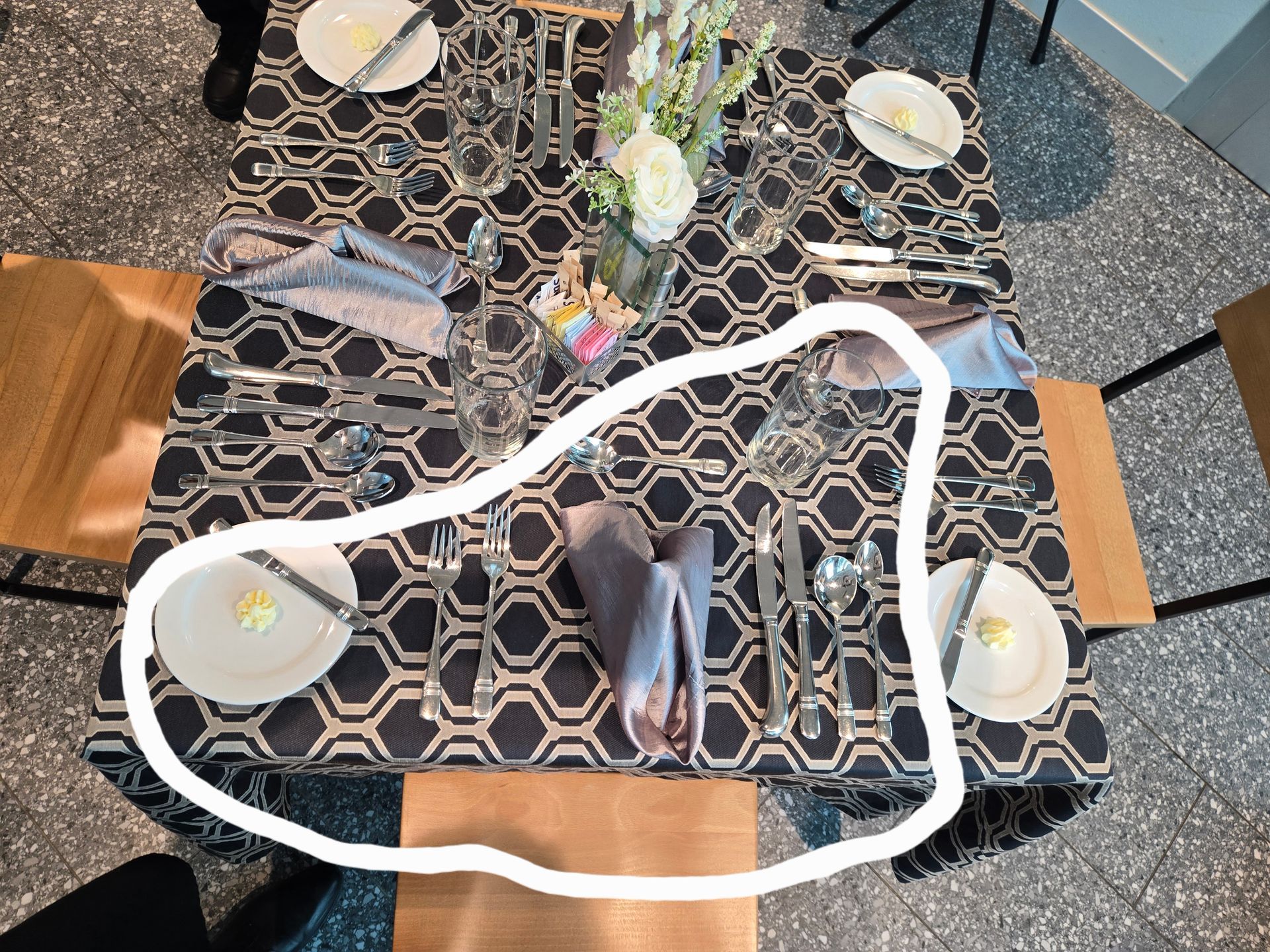
18. You will be given 5 minutes to set a formal place setting based on menu provided by Baldo