BASIC FOOD PREP
Knife Skills
- Vegetable production
- Fruit production
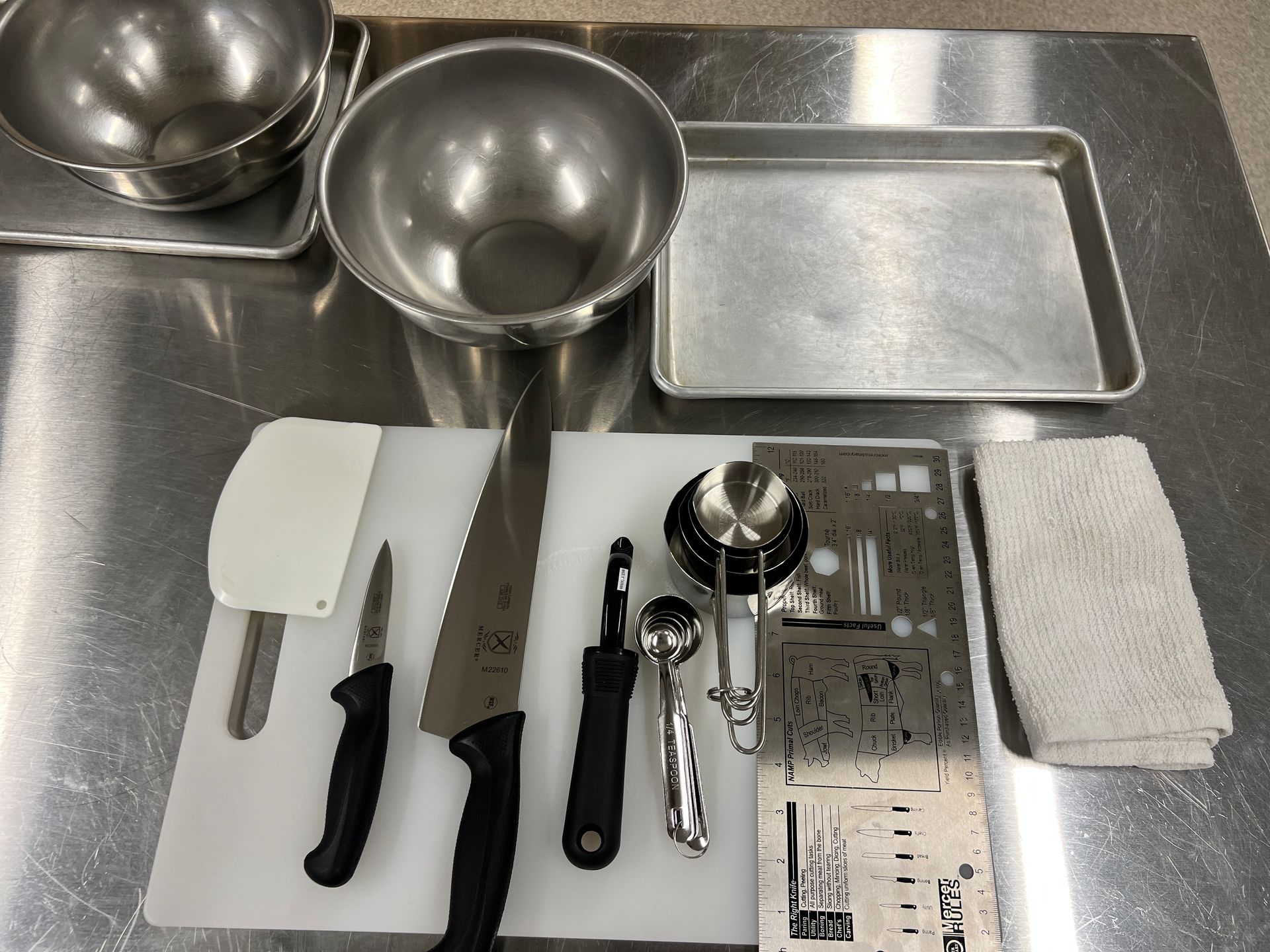
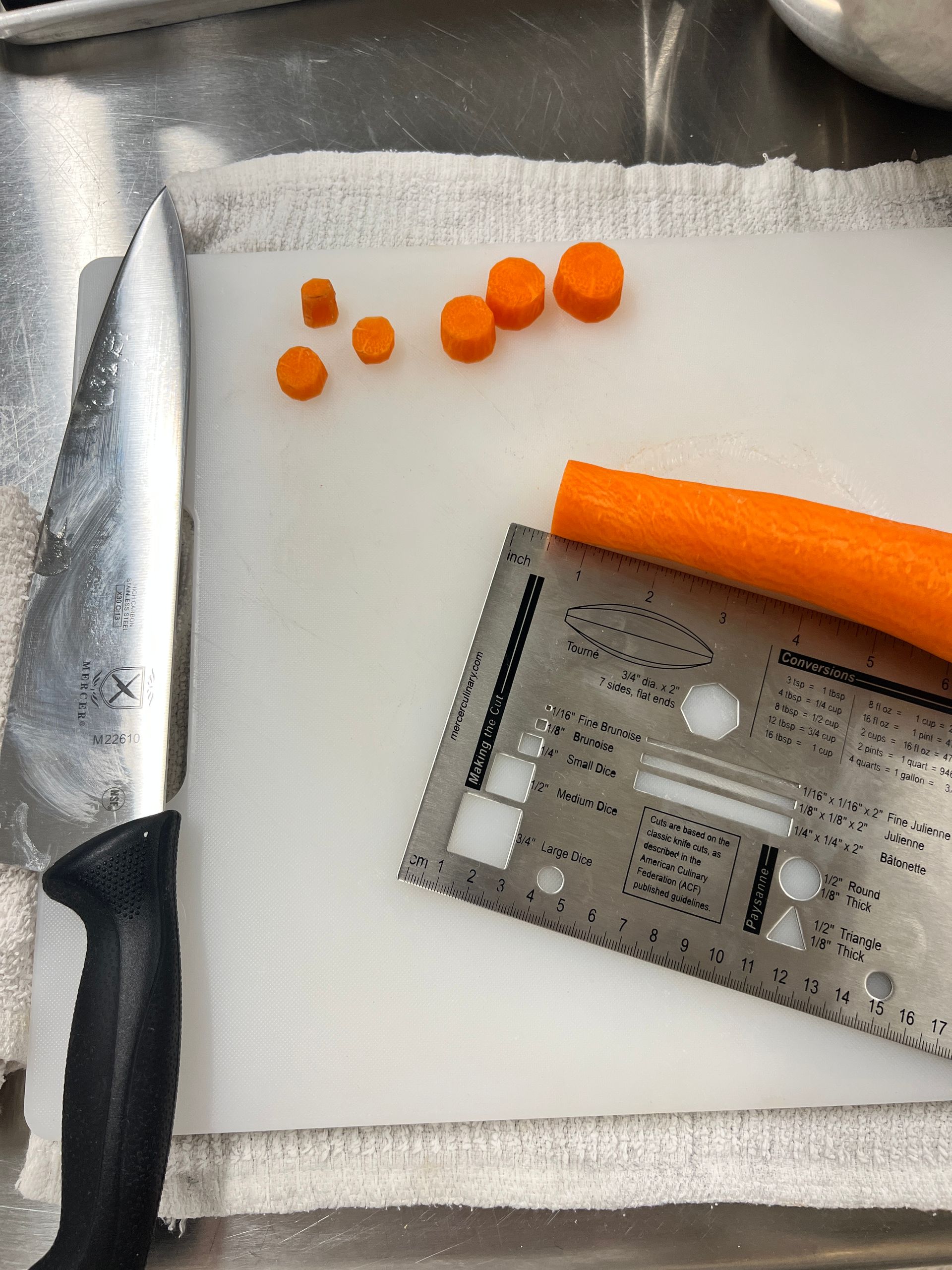
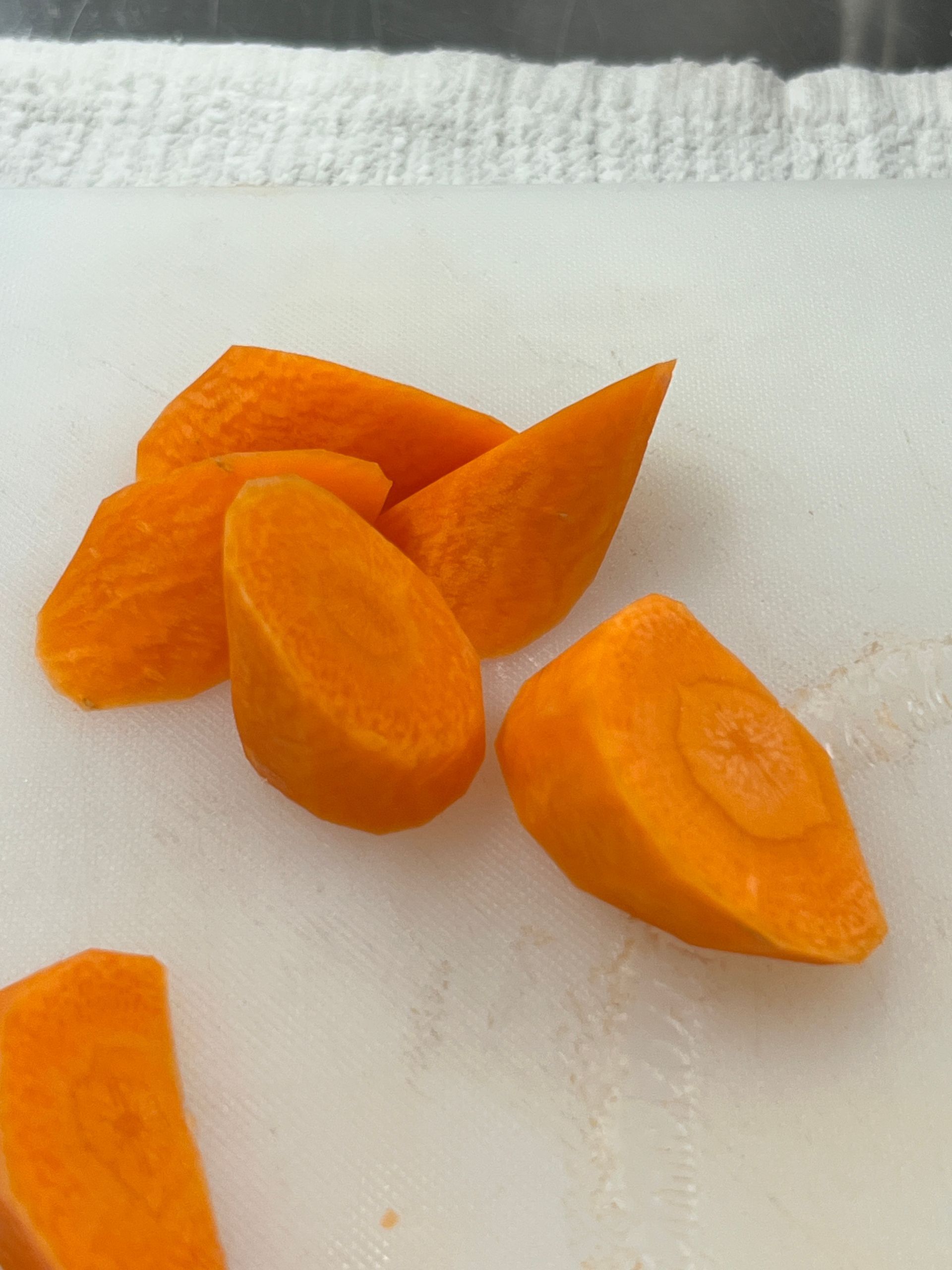
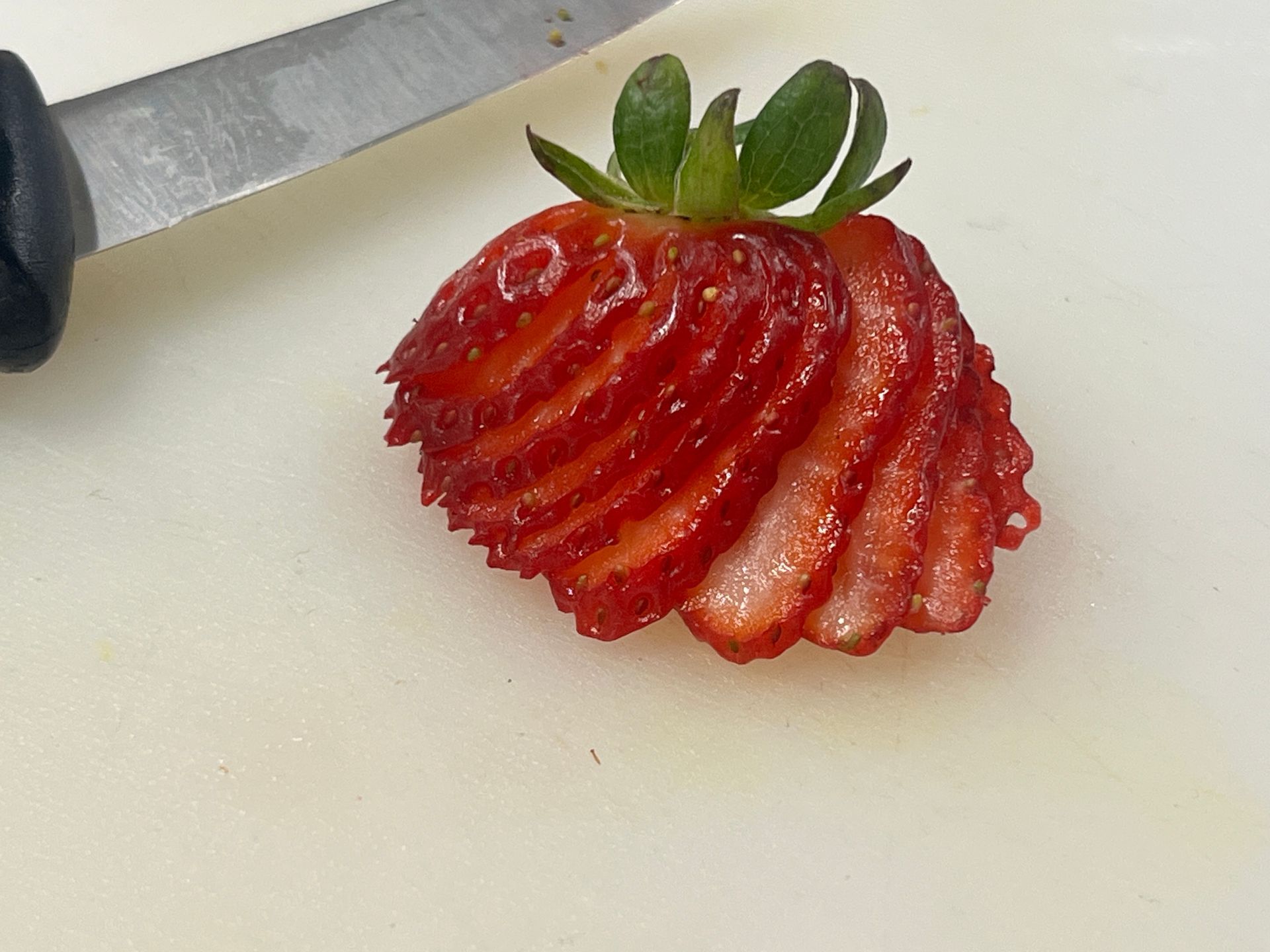
Along with knife care and skills, we covered scale use and measurement. Tools needed: Chef's knife, pairing knife, peeler, rubber bowl scraper, measuring spoons and cups.
For fruit production, we used apple corer, citrus zester, microplane.
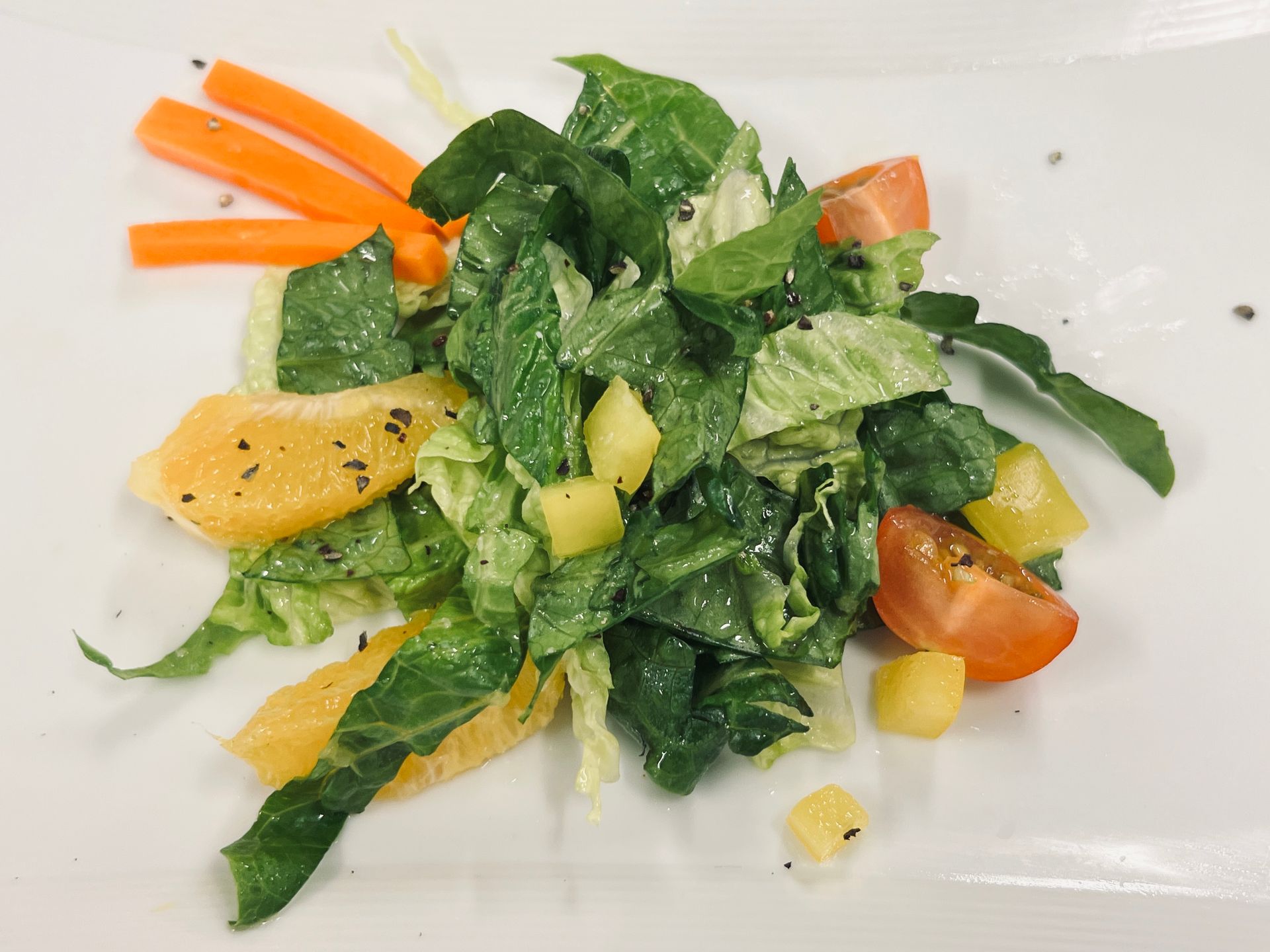
Then we made salad using the above tools + our whisk! The salad preparation came with a lesson in presentation and plating.
A review:
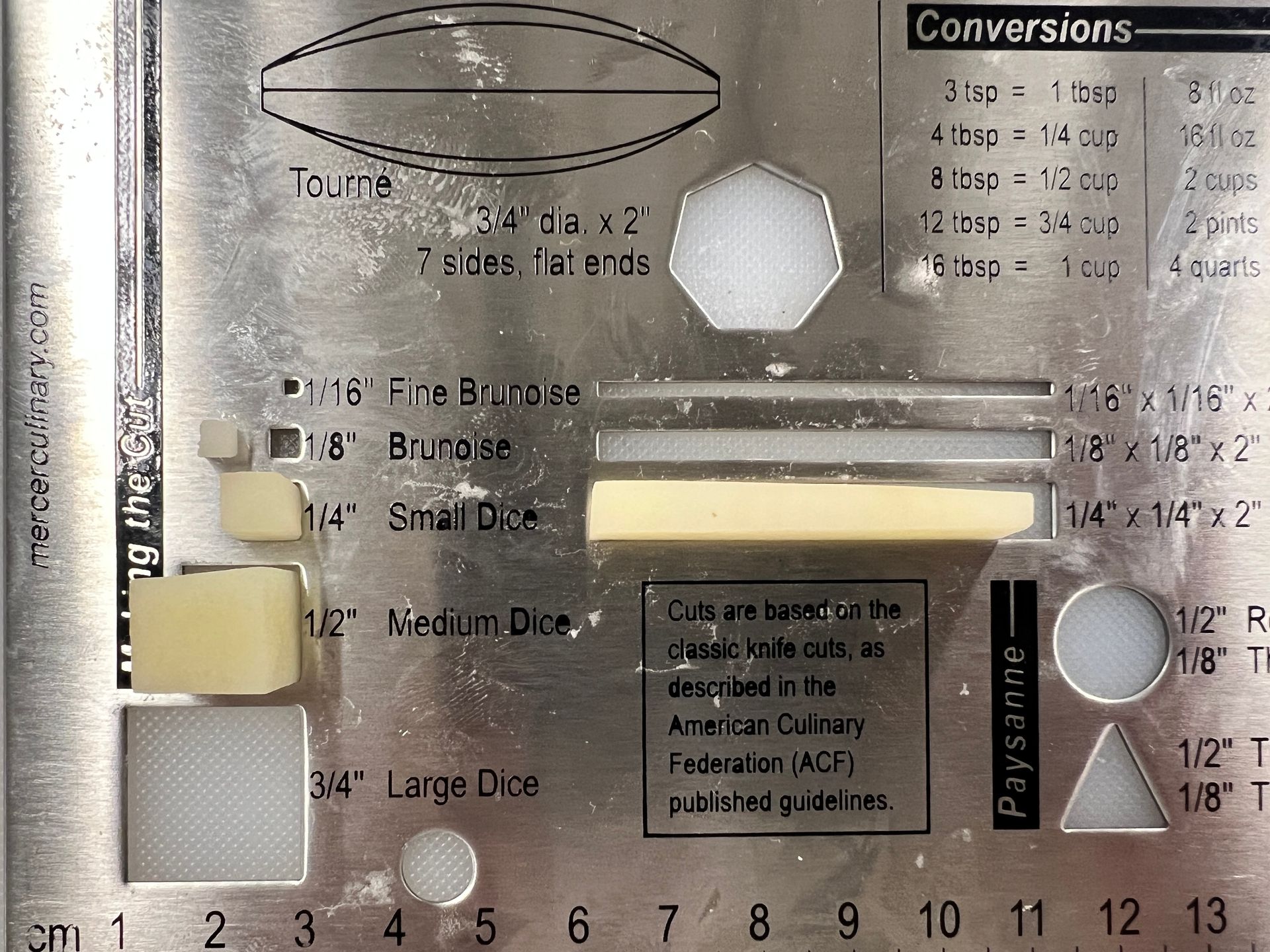
- Bâtonnet cut (square, block, plank, match stick)
- 2" x 1/4" x 1/4"
- Small dice cut (square, block, plank, matchstick, cube)
- 1/4" x 1/4" x 1'4" on all sides
- Brunoise (cube shaped)
- 1/8" x 1/8" x 1/8"
- Julienne (stick shaped)
- 2" x 1/8" x 1/8"
- Medium dice
- 1/2" x 1/2" x 1/2"
- Large dice
- 3/4" x 3/4" x 3/4"
- Paysanne (flat, square, round or triangular)
- 1/2" x 1/2" x 1/8"
- The difference between volume and weight measurements
- Volume measures how much space; weight is how heavy
Slicing
- Rondelles or rounds are disk-shaped slices or cylindrical vegetables or fruits used in salads, side dishes, soups and stews.
- Diagnoals or bias cuts are elongated or oval-shaped slices (carrots above). They're produced similarly to rondelles, except that the knife is held at an angle to the item being cut. They'll cook more quickly because they have more exposed sides.
- Oblique cuts are small pieces with two angle-cut sides.
Chopping
- A chiffonade is the preparation of finely sliced or shredded leafy vegetables used as a garnish or base under cold presentations. The definition is to finely slice or shred leafy vegetables or herbs.
- Course chopping is a procedure identical to that used for slicing but without the emphasis on uniformity.
Dicing
- Dicing is cutting items into cubes with six even sides.
- Dicing an onion
- Remove stem end; trim root end but leave in tact. Peel away outer skin.
- Cut onion in half through the stem and root. Place the cut side down on the cutting board.
- Cut parallel slices to desired thickness vertically through the onion from the root toward the steam end without cutting completely through the root end.
- Make a single horizontal cut on a small onion or two horizontal cuts on a large onion through the width of the onion without cutting the root end.
- Turn the onion and cut slices perpendicular to the other slices to produce diced onion.
The standard ratio for vinaigrette dressing is 3:1 oil/acid.
An emulsion is a uniform mixture of two unmixable liquids.
Egg Cookery
- Simmer, poach, fry, hard boil
- Omelette and soufflé
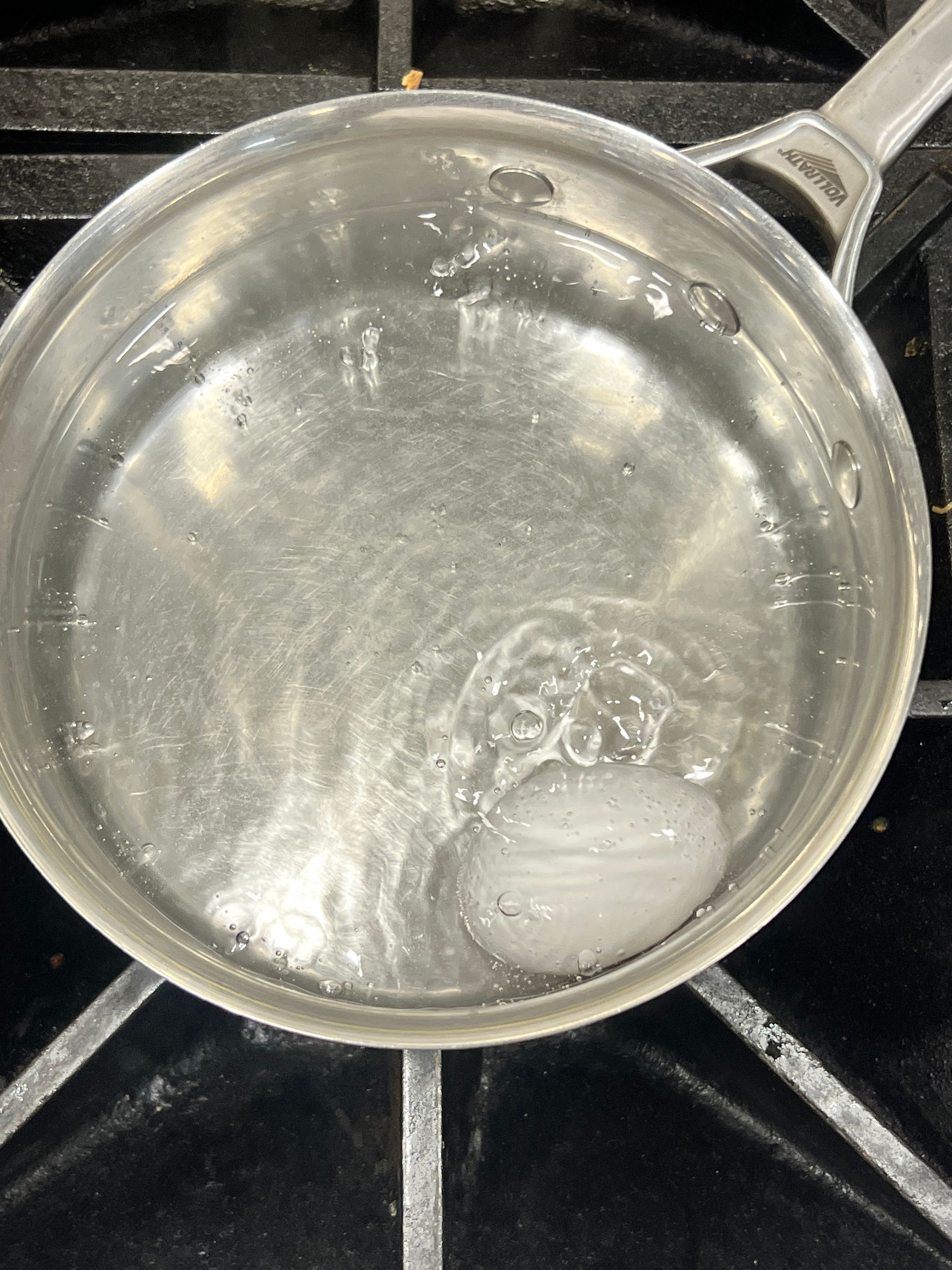
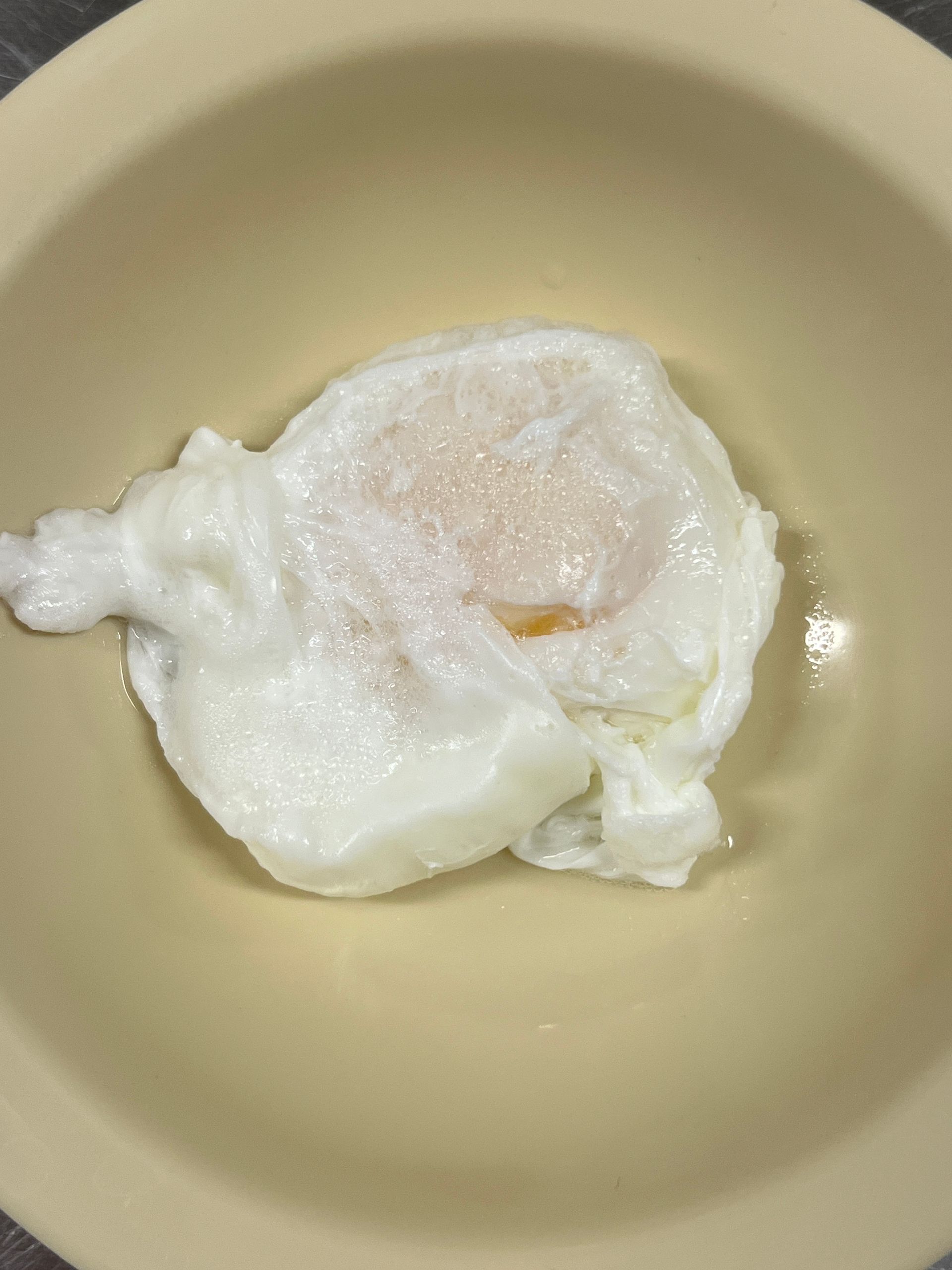
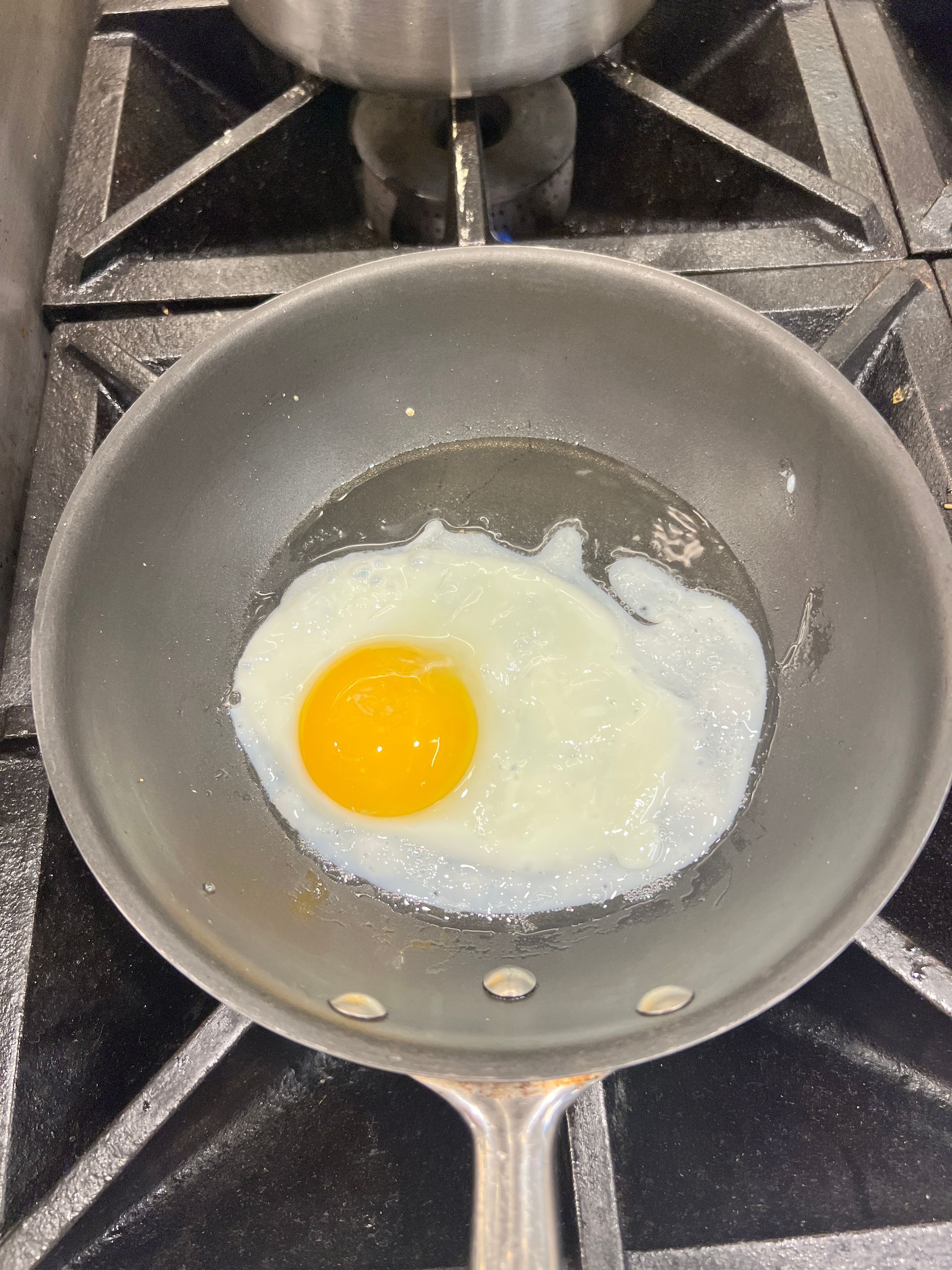
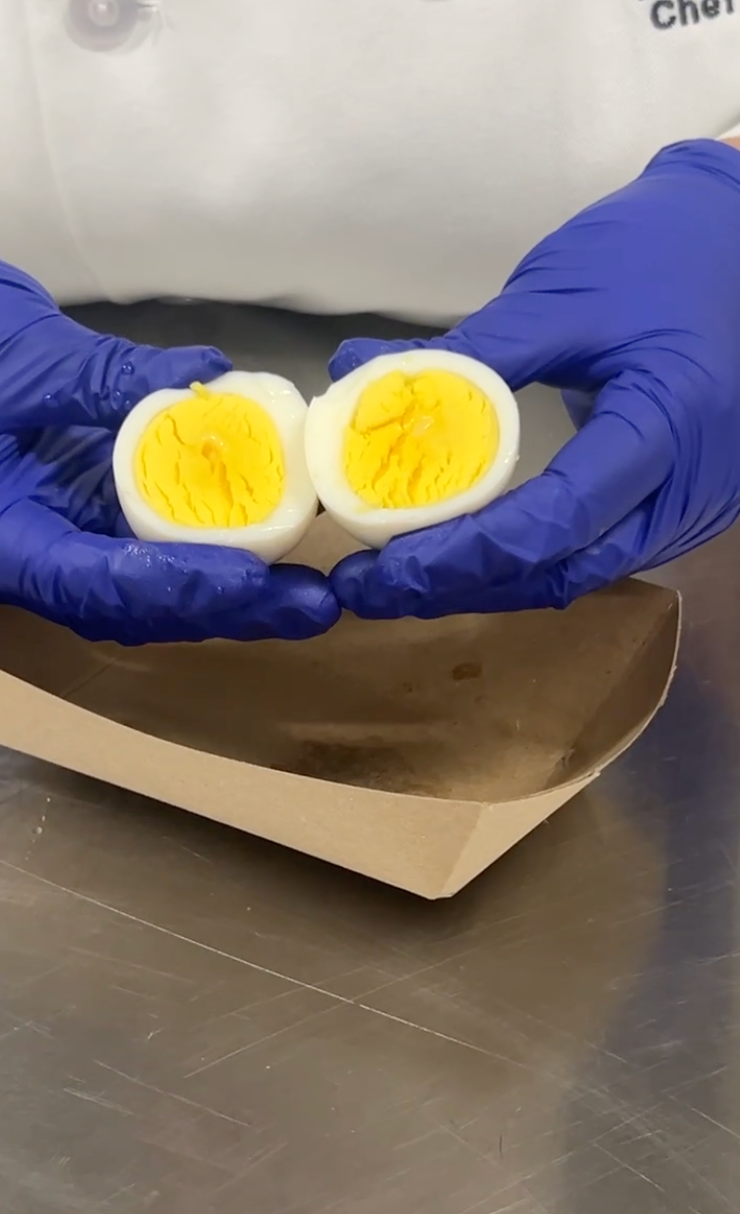
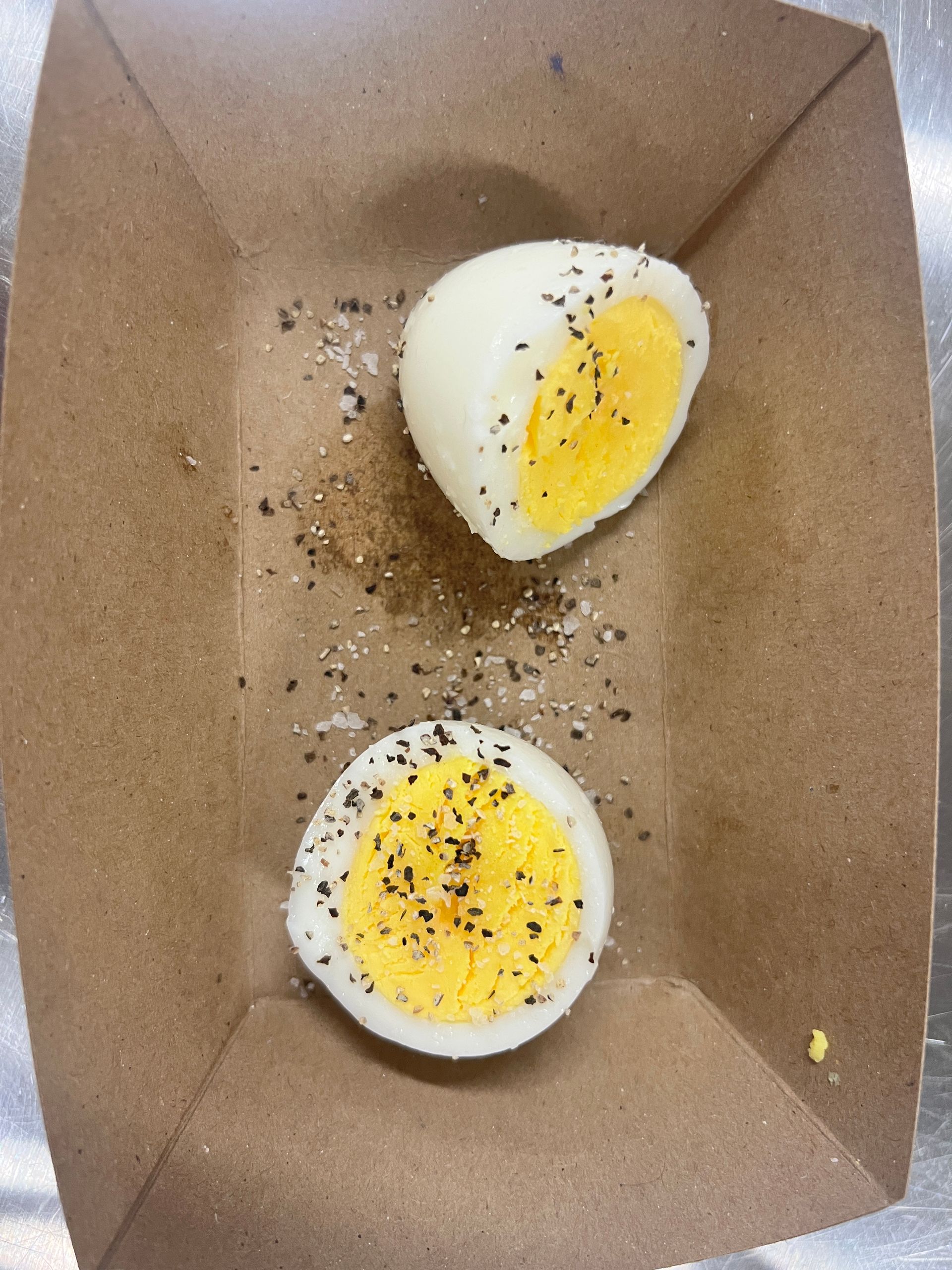
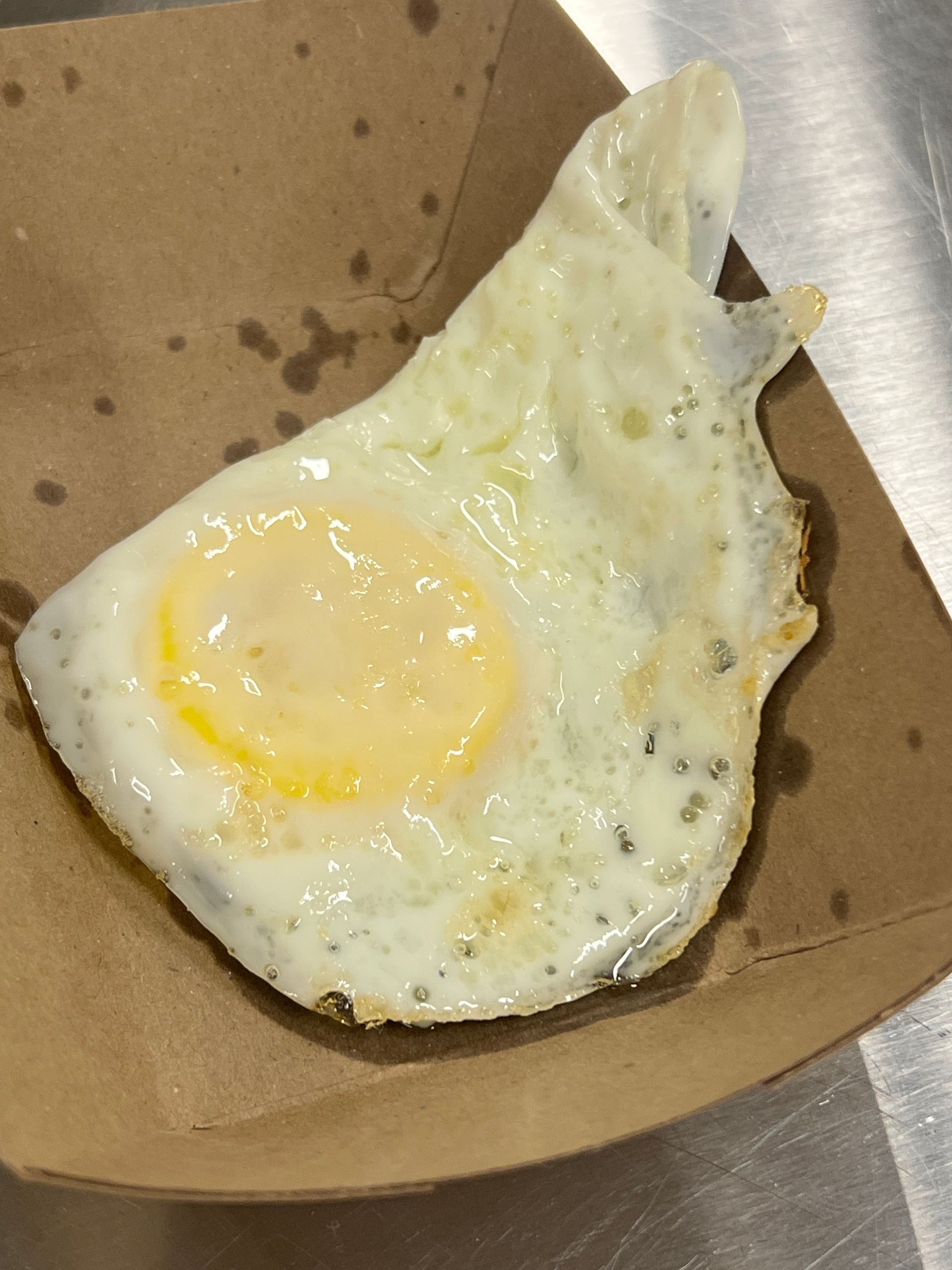
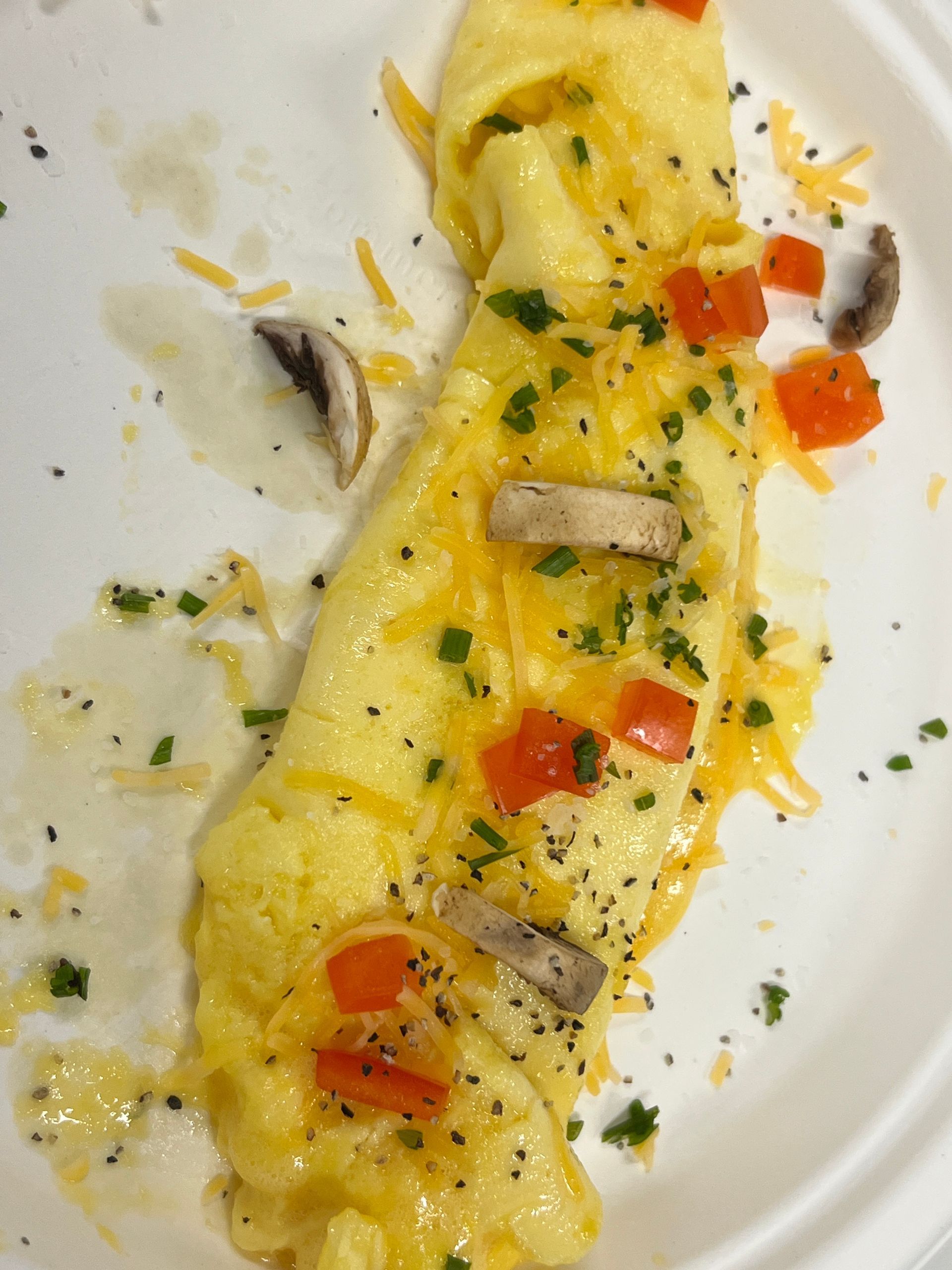
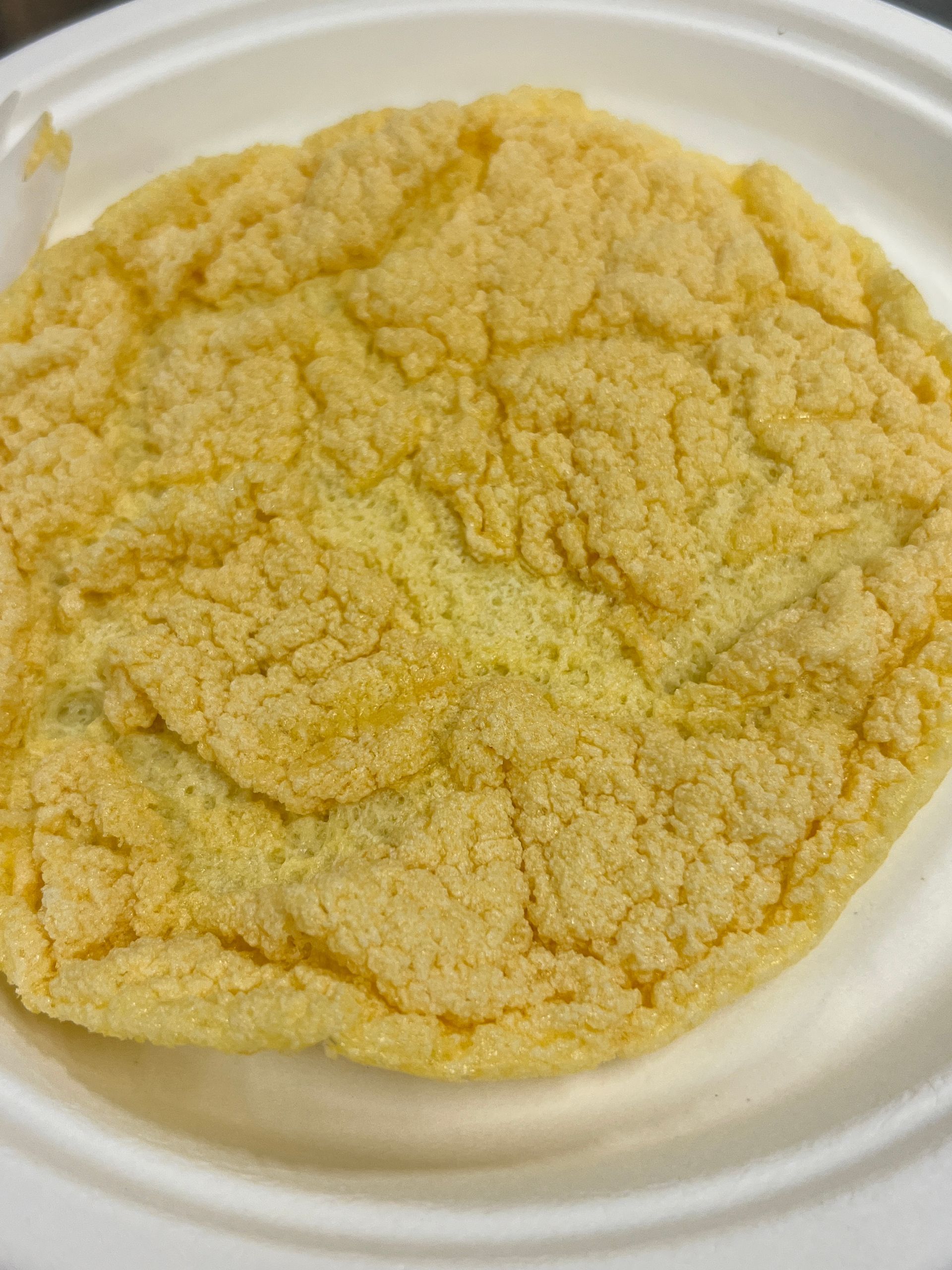
Eggs are an excellent food for people because they're high in protein, low cost and readily available. The egg consists of the shell, the yolk, the albumen (egg white) and chalazae cords.
Egg whites solidify at temps between 144-149 degrees F. Egg yolks solidify at temps between 149-158 degrees F. Eggs are graded from Grade AA to Grade A to Grade B, They can be cooked by almost any method like dry-heat such as baking (shirred eggs/baked eggs & quiche); sautéing with a small amount of fat such as scrambled and omelets; pan-frying like sunny-side-up which aren't turned during cooking so the yolk remains visible or over-easy where the yolk remains very runny cooked at about 250 degrees F (over-medium should cook sightly longer until the yolk is partially set and over-hard the yolk is completely cooked).
Cooking eggs by moist-heat includes methods such as simmering in shell, known as soft-boiled and hard-boiled or poaching by filling a saucepan with sufficient water to cover the eggs and bringing to a simmer. Stir in a circular motion and lower each egg into the water, uncovered for 3-5 minutes depending on firmness desired. Lift each egg out with a slotted spoon or spider.
The traits of a French omelet include a smooth exterior, folded into a tri-fold and maintains a slightly custard-like interior. The method is that the eggs are cooked while constantly shaking the pan to keep them light and fluffy. French omelets are tightly rolled onto a plate for service. For an elegant presentation, cut the omelet on the plate with a paring knife and spoon filling like mushrooms, tomatoes, or other accompaniments in the center.
Stocks & Sauces
- Stocks are made from a combination of bones, vegetables, seasonings, and liquids.
- Sauces are liquid + thickening agent plus seasoning. Any chef can produce fine sauces by learning to make good stocks, use thickening agents properly to achieve the desired texture, flavor and appearance, and use seasonings properly to achieve the desired flavors.
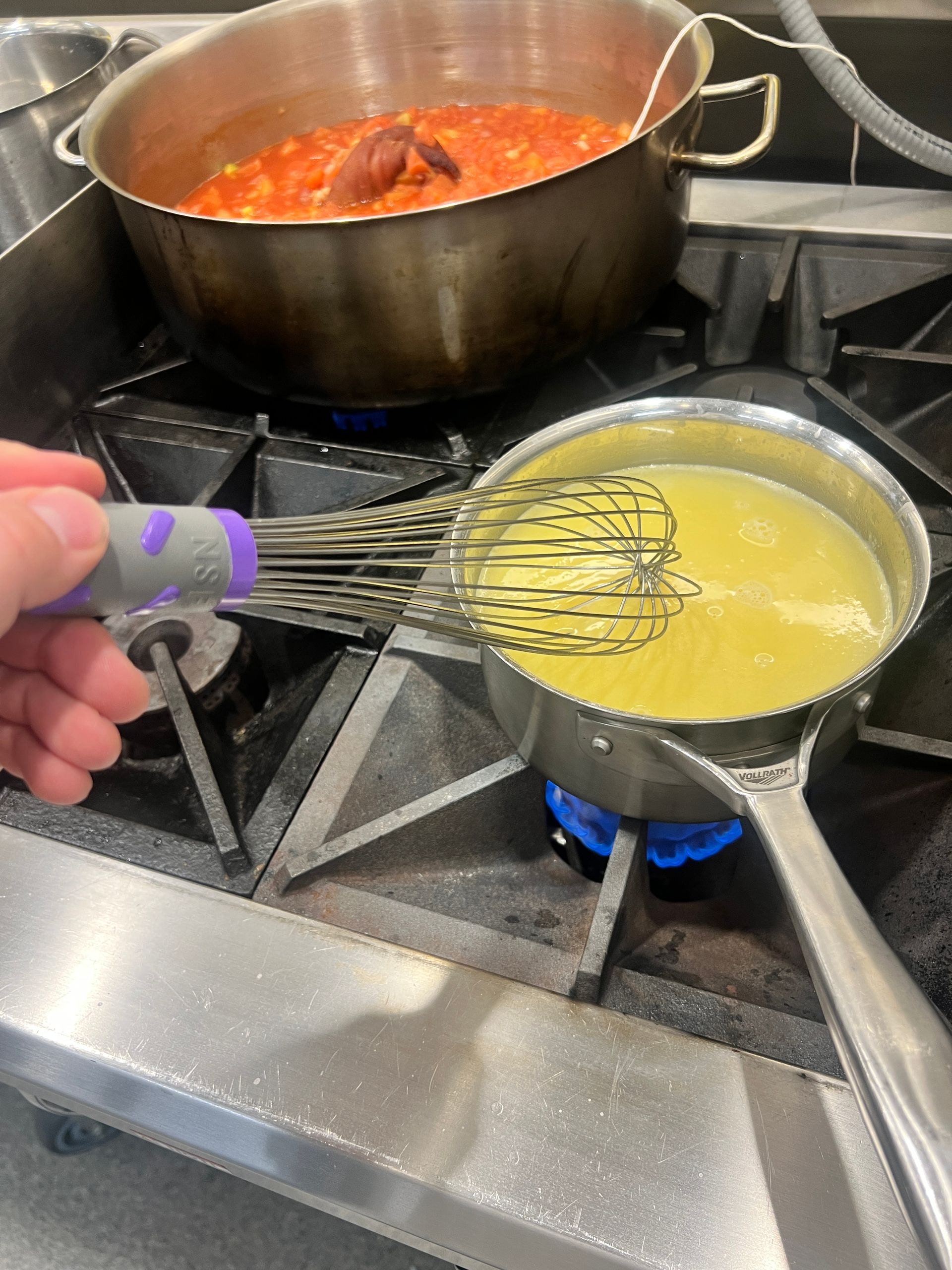
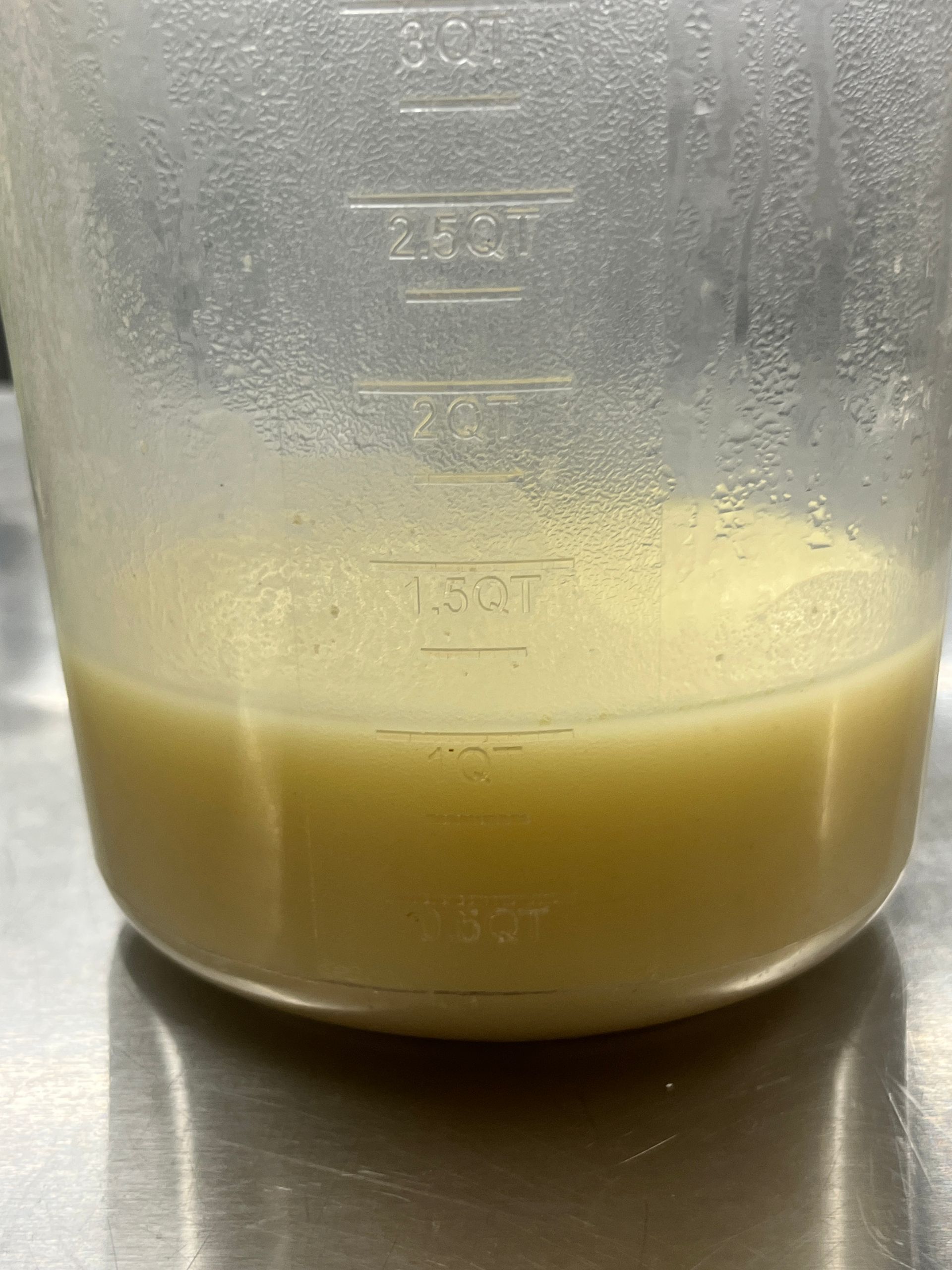
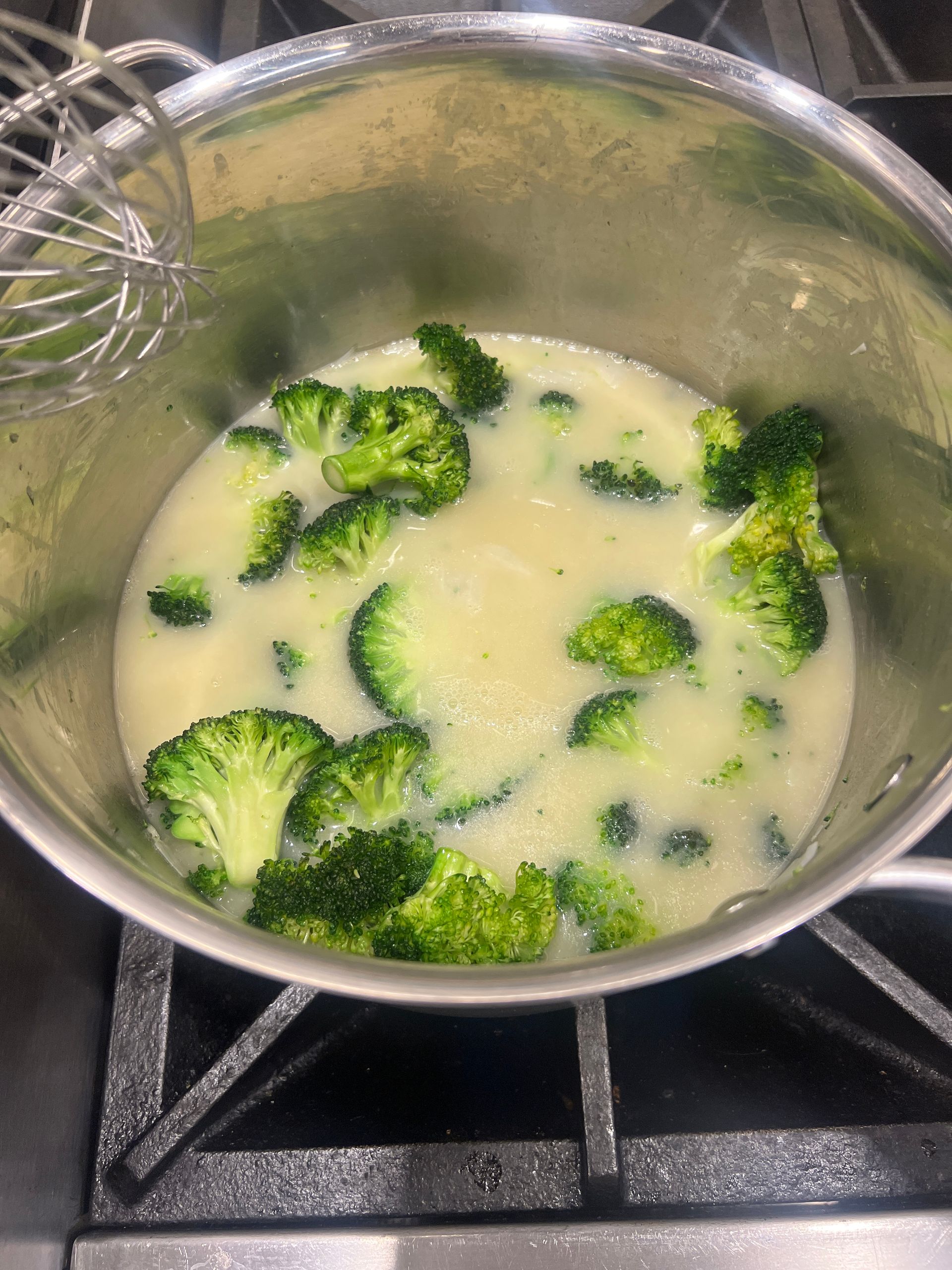
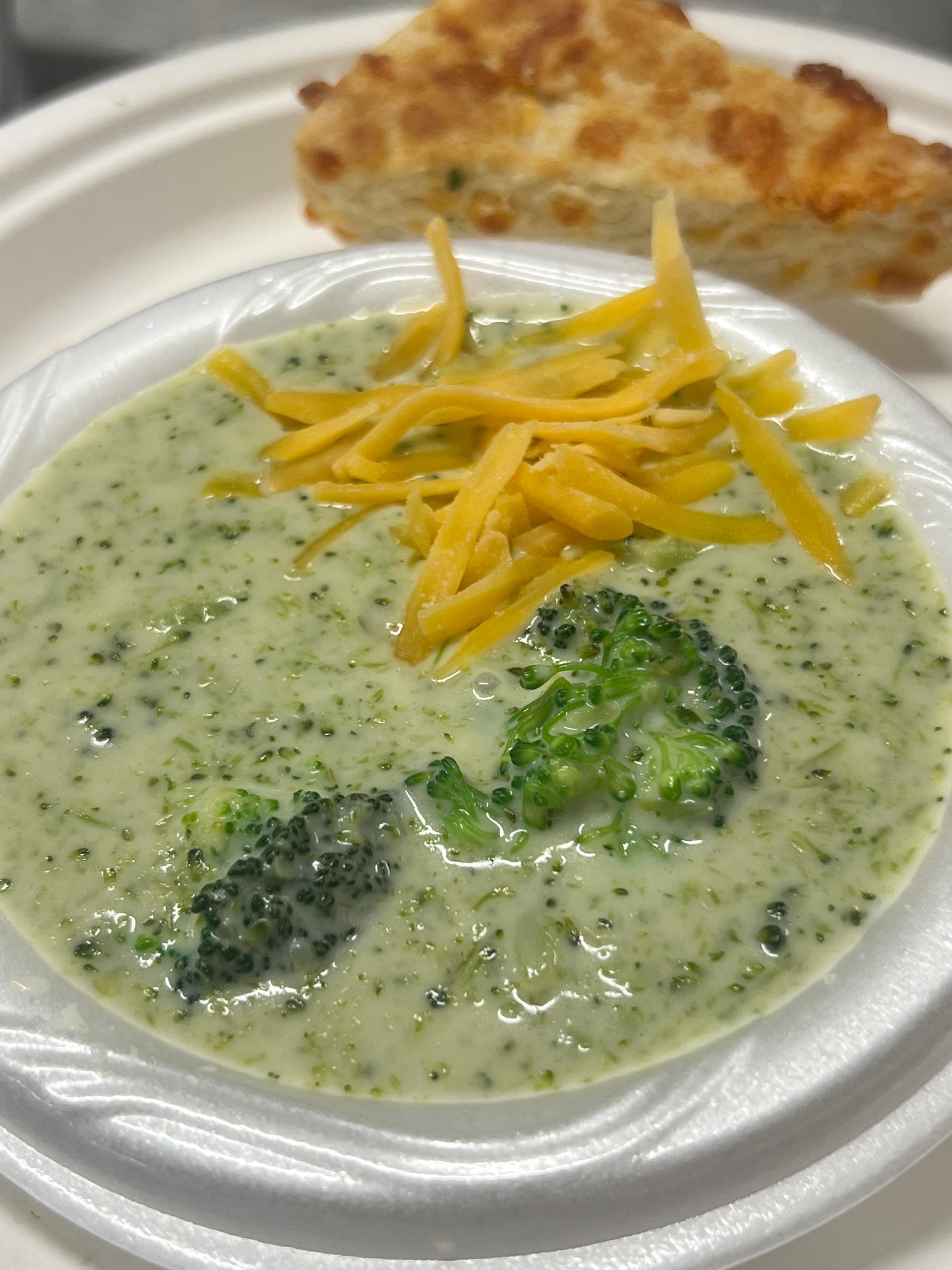
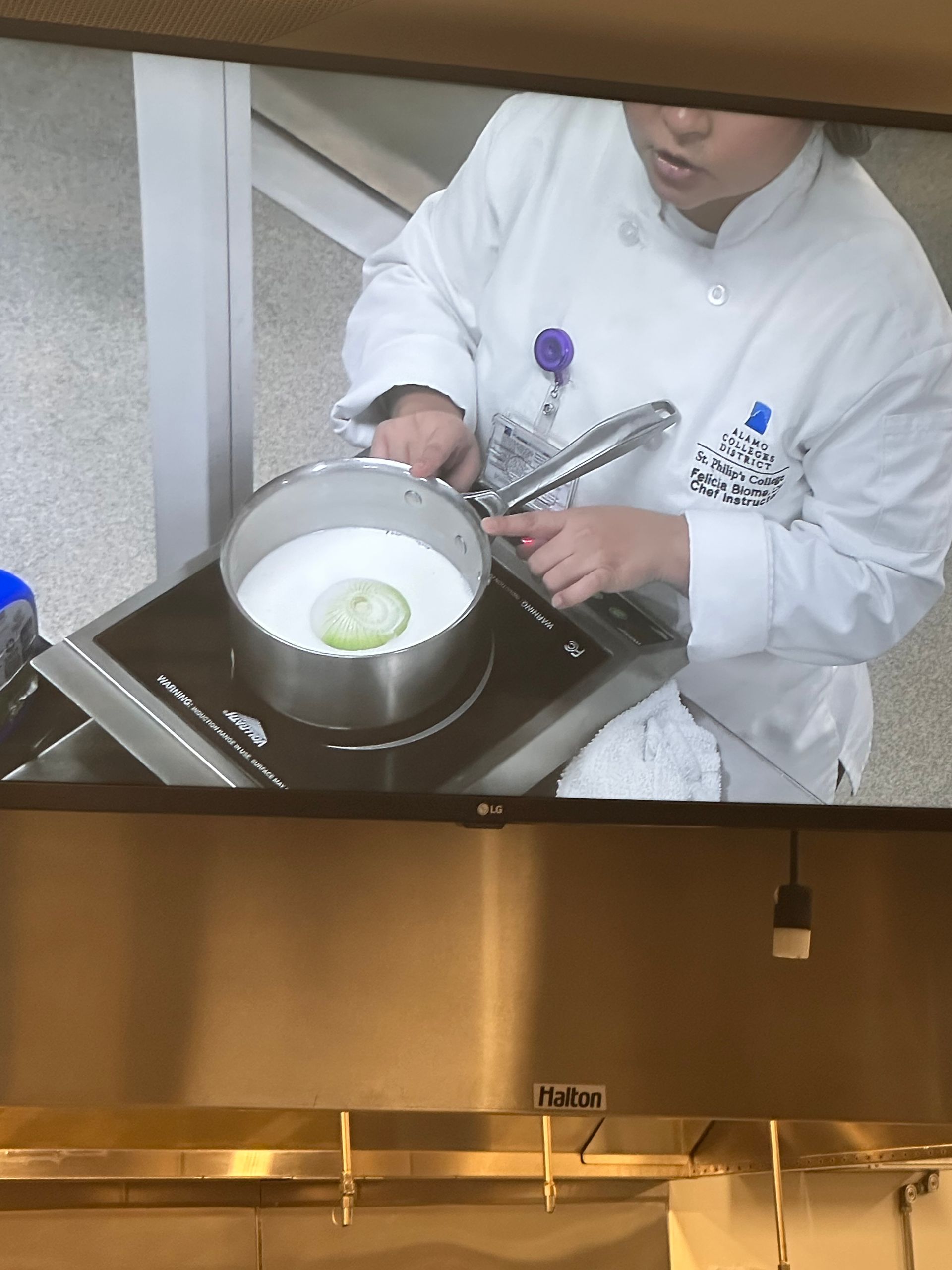
Stocks
- White stock
- Simmering chicken, veal, or beef bones in water with vegetables & seasonings.
- Brown stock
- Made from chicken, veal, beef, or game bones and vegetables, caramelized before simmering in water. This stock has a dark, rich color.
- Fish stock
- A fish stock and a fumet are made by slowly cooking fish bones or crustacean shells and vegetables without coloring them, then simmering in water with seasonings for a short time. In a fumet, wine and lemon juice are also added.
- Court bouillon
- Simmering vegetables and seasonings in water and an acidic liquid like vinegar or wine. It's used to poach fish or vegetables.
Stock quality is baed on four things:
- Body
- Flavor
- Clarity
- Color
Stock-making procedure:
- Start in cold water, placing the bones for the stock in a large stock pot completely submerged.
- Simmer stock gently. Bring to a boil, then reduce to a simmer at about 185 degrees F. Fish stock only needs about 30 minutes, whereas brown beef stock may take 8 hours.
- Skim the stock frequently, removing fat and impurities that rise to the surface.
- Strain the stock carefully once it finishes cooking. Carefully strain out the bones, vegetables and other solids. Strain through a china cap lined with damp cheesecloth.
- Cool stock quickly. Plastic containers will delay cooling.
- Store properly.
- Degrease the stock, removing the congealed fat from the surface of the stock with a spoon. Discard the fat.
Sauces
- One of the most traditional method for thickening sauces is the gelatinization of starches. That's the process by which starch granules absorb moisture when placed in a liquid and heated. Starches used to thicken include flour, cornstarch, and arrowroot.
- Roux is a combination of equal parts fat and flour, by weight.
- White roux is cooked only briefly and should be removed from heat as soon as it develops a frothy, bubbly appearance. It's used in white sauces like béchamel.
- Blond roux is cooked slightly longer than white roux and will take on a bit of color as the flour caramelizes. It's used in ivory-colored sauces like velouté.
- Brown roux is cooked until it's darker and has a nutty aroma and flavor.
Sauce families:
Mother Sauces
- Béchamel
- Velouté
- Espagnole (brown)
- Tomato
- Hollandaise
*Except for hollandaise, a leading sauce is rarely served as is.
Small/Compound Sauces
Small or compound sauces are flavor-enhanced variations of the five classic French "mother sauces" (Béchamel, Velouté, Espagnole, Hollandaise, Tomato) that add ingredients like herbs, cheese, or wine to create diverse dishes, acting as flavor enhancers or binders, and are often made to order for specific dishes. Examples include Béarnaise (from Hollandaise), Mornay (from Béchamel), and Bordelaise (from Espagnole/Demi-glace).
Contemporary Sauces
- Flavored butters, flavored oils, foams, salsas, relishes, and pan gravy
Poultry/Meat/Seafood Fabrication
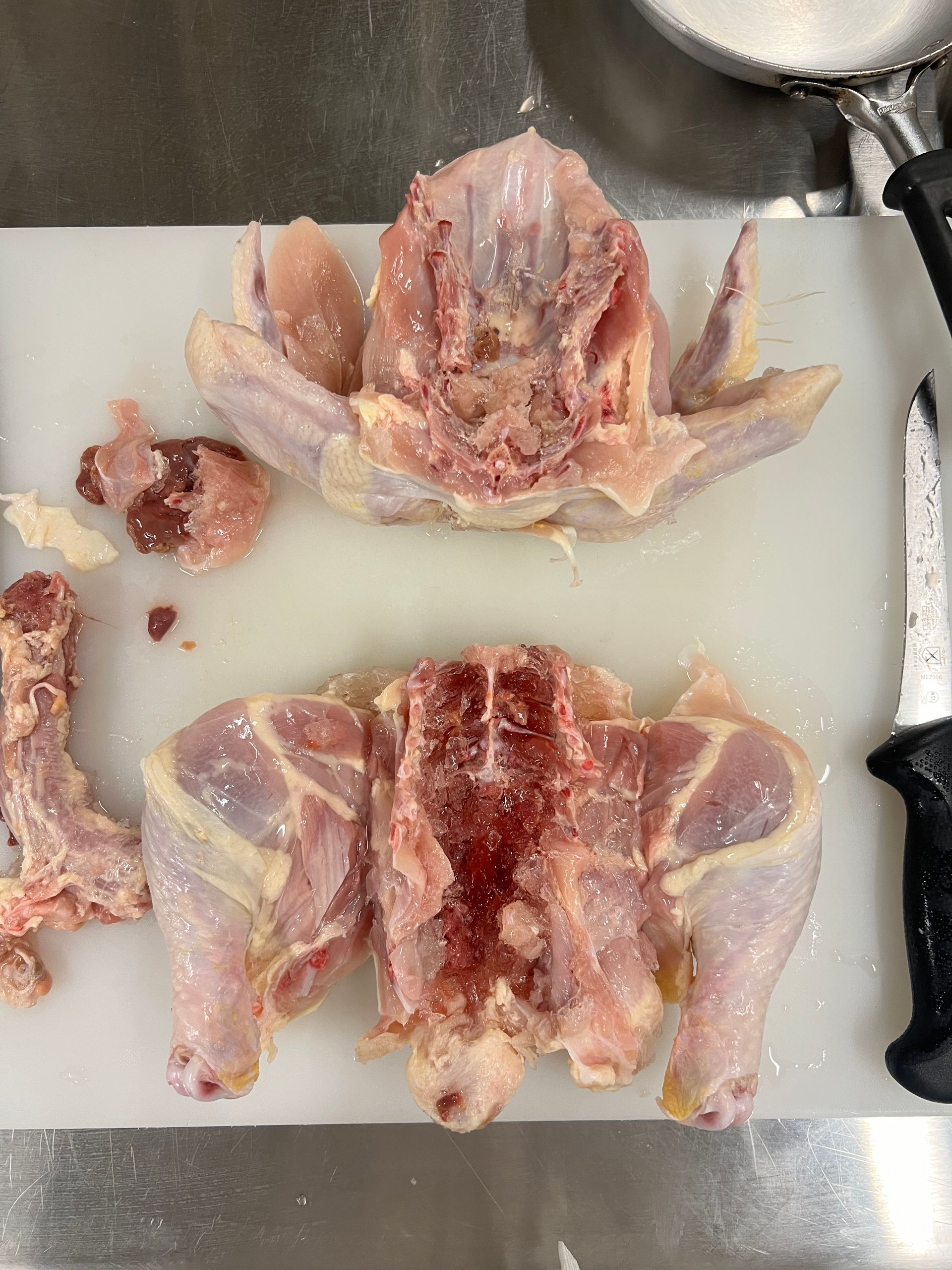
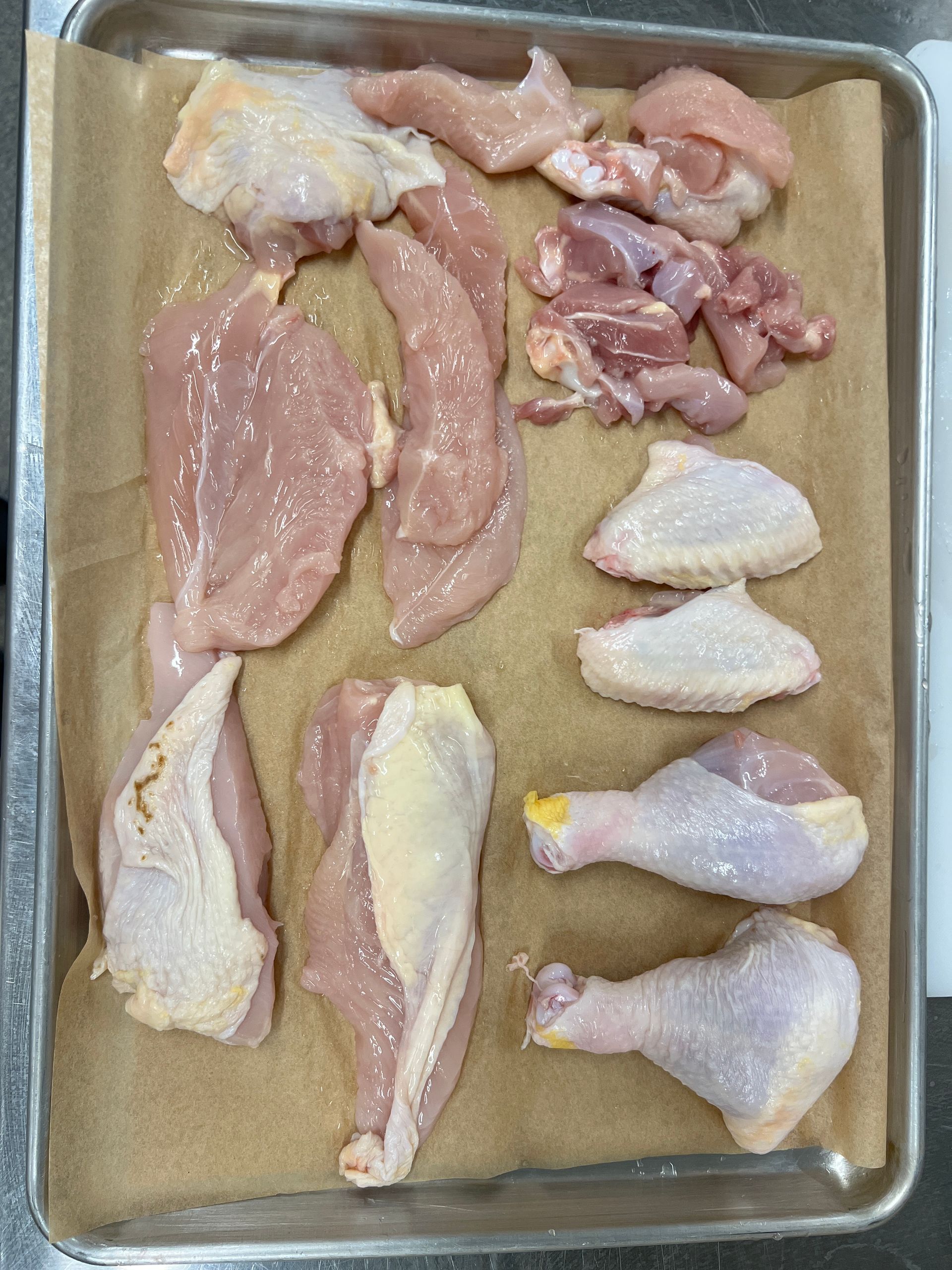
- Debone whole chicken
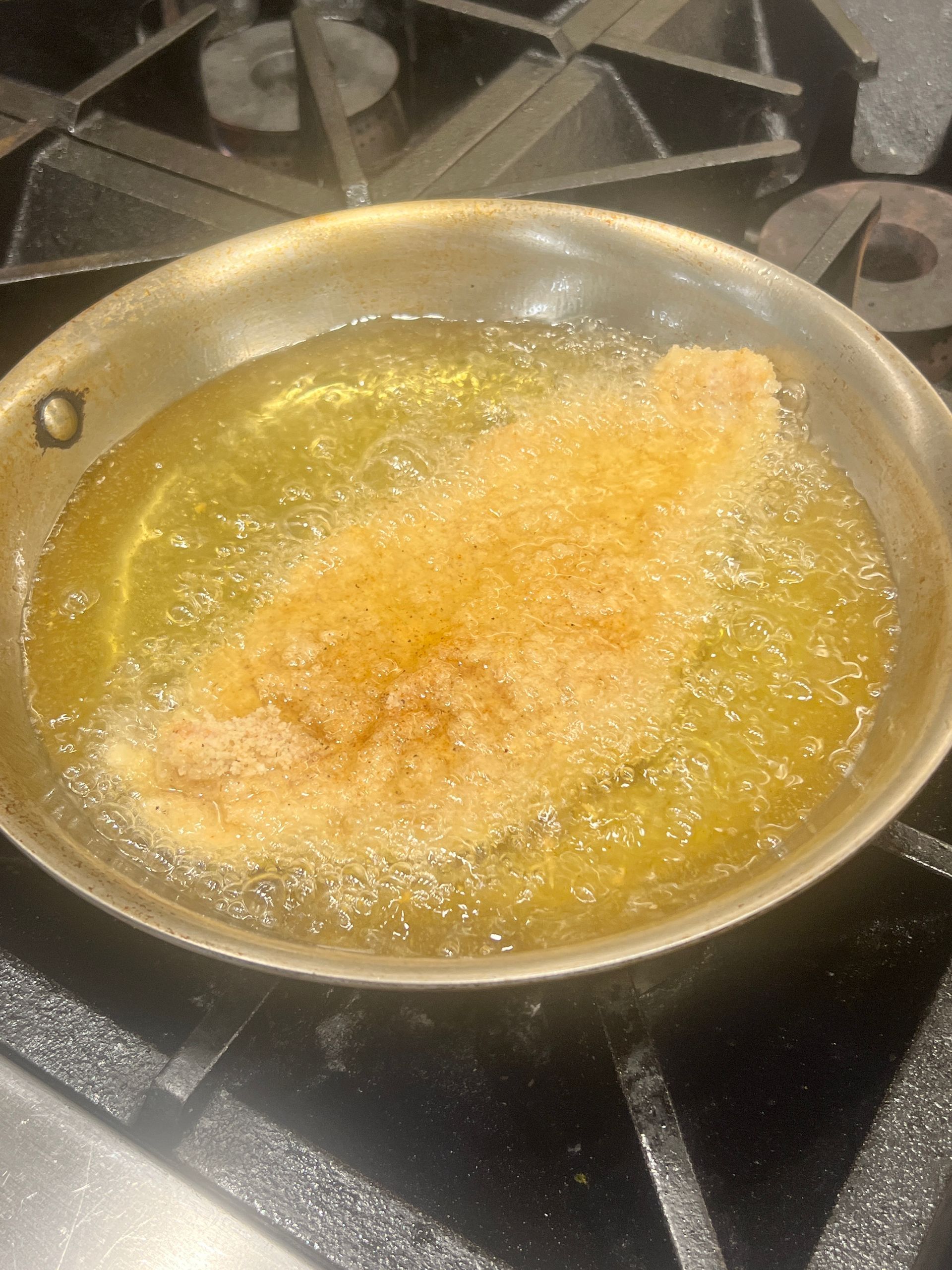
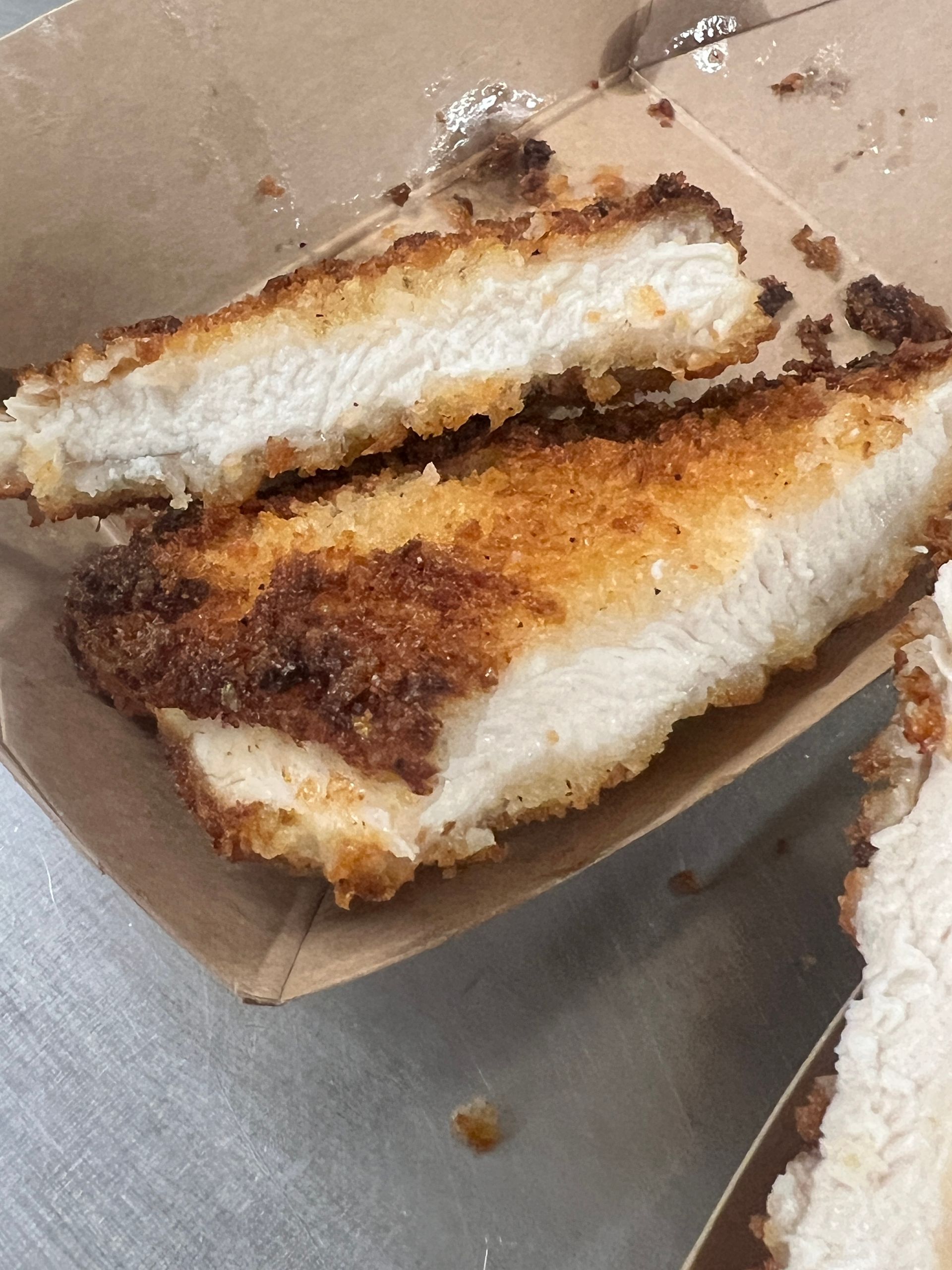
- Pan sear chicken
- Sauté chicken tenders
- Butterfly chicken breast
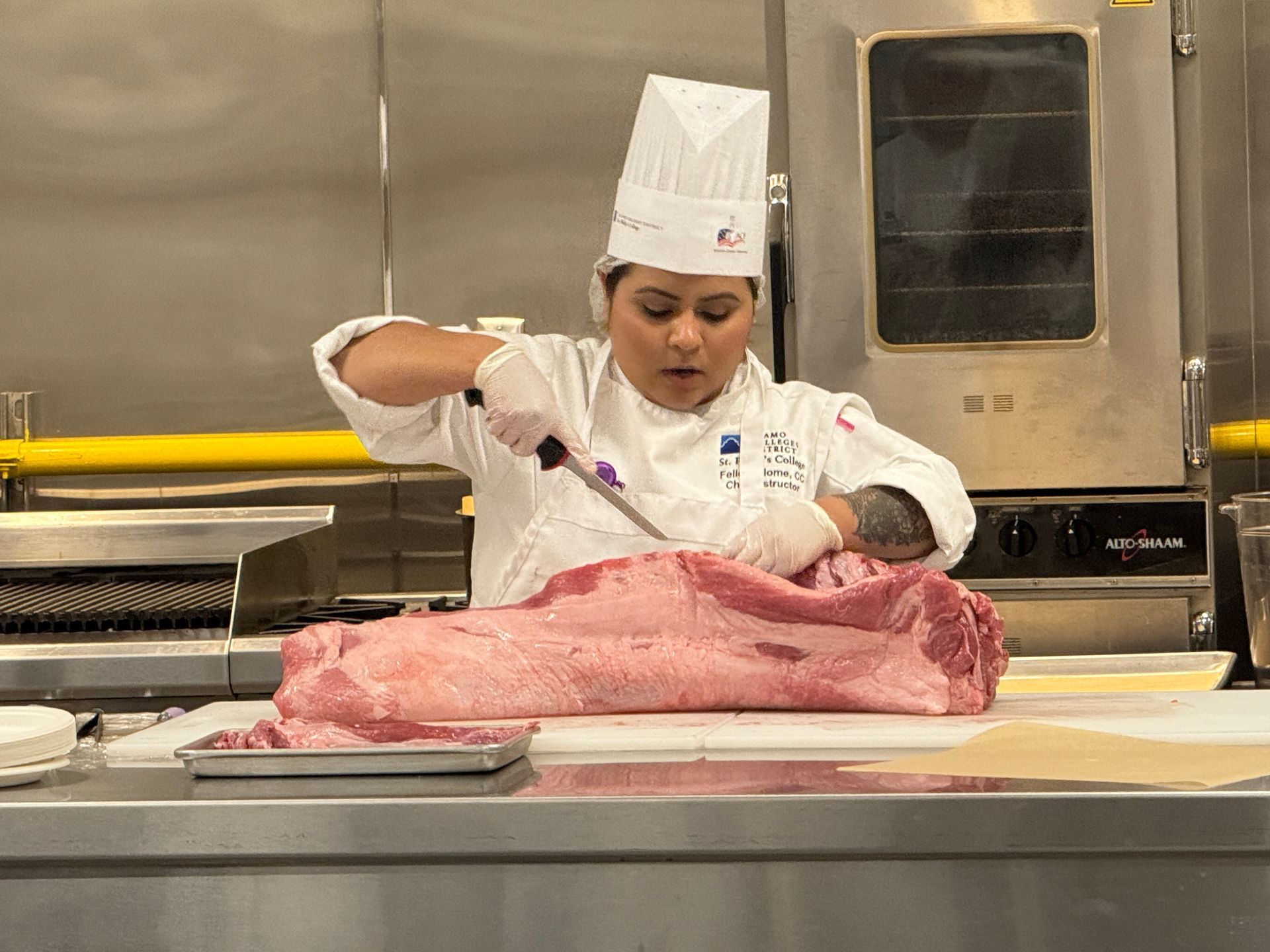
- Trim pork loin
- Grill pork chop
- Poach pear
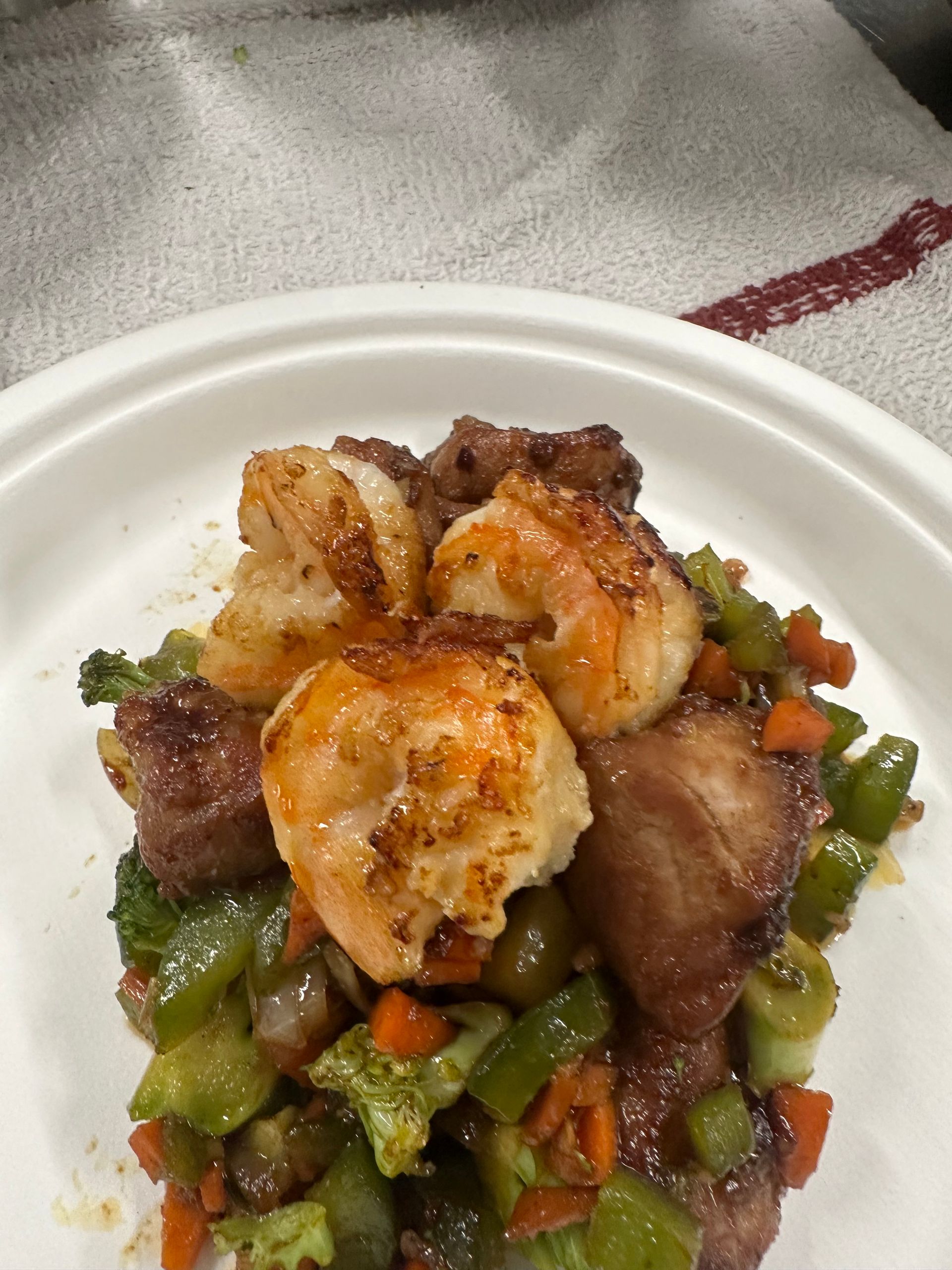
Formulas for meat analysis
A. Raw Wt - Cooked Wt = Shrink Loss %
Raw Weight
B. Trim Weight = Trim Loss %
Raw Weight
C. Cooked Weight - Trim Weight = Yield %
Raw Weight
D. Price Per Pound = Actual Cost
Yield %
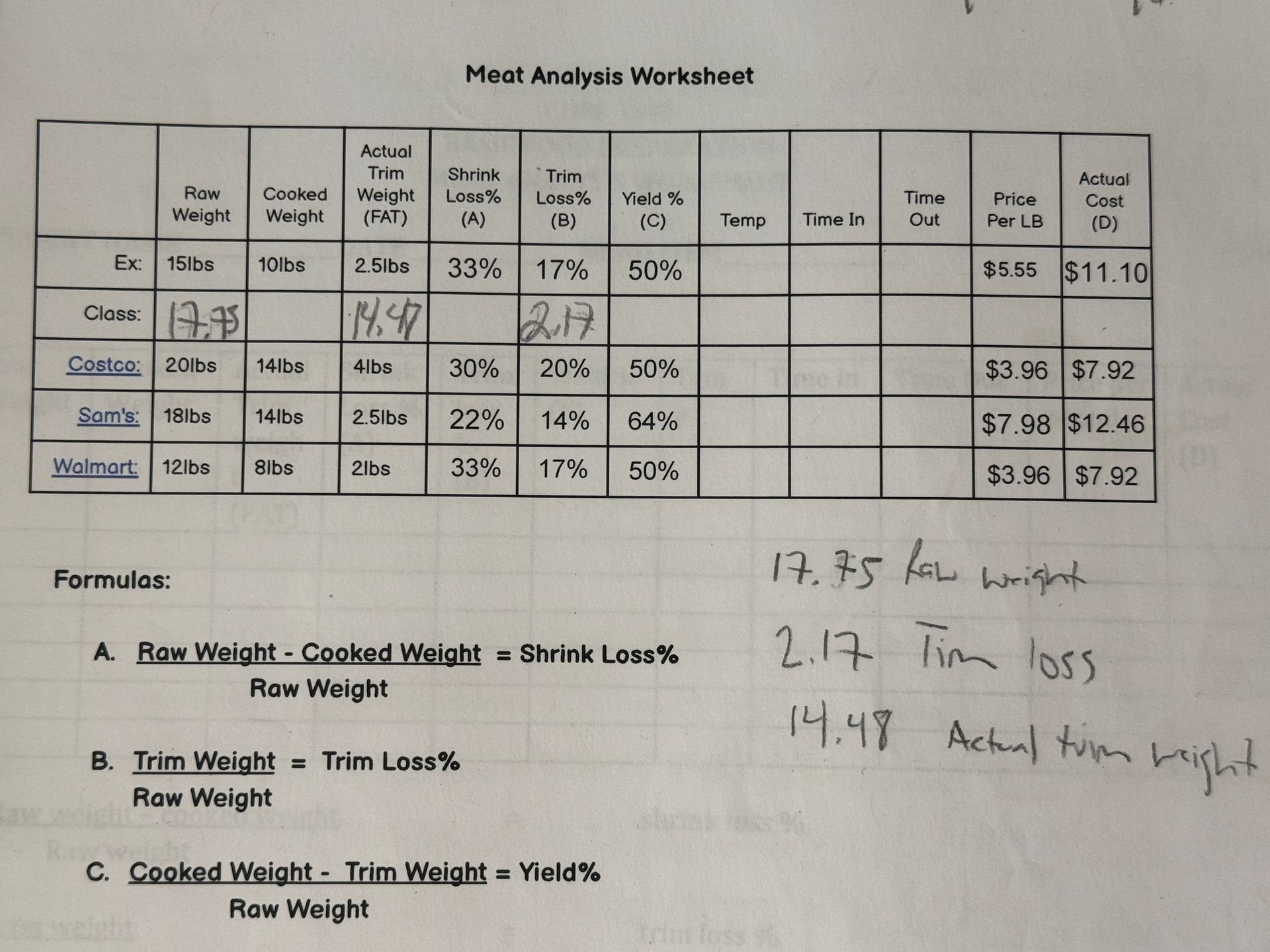
Seafood
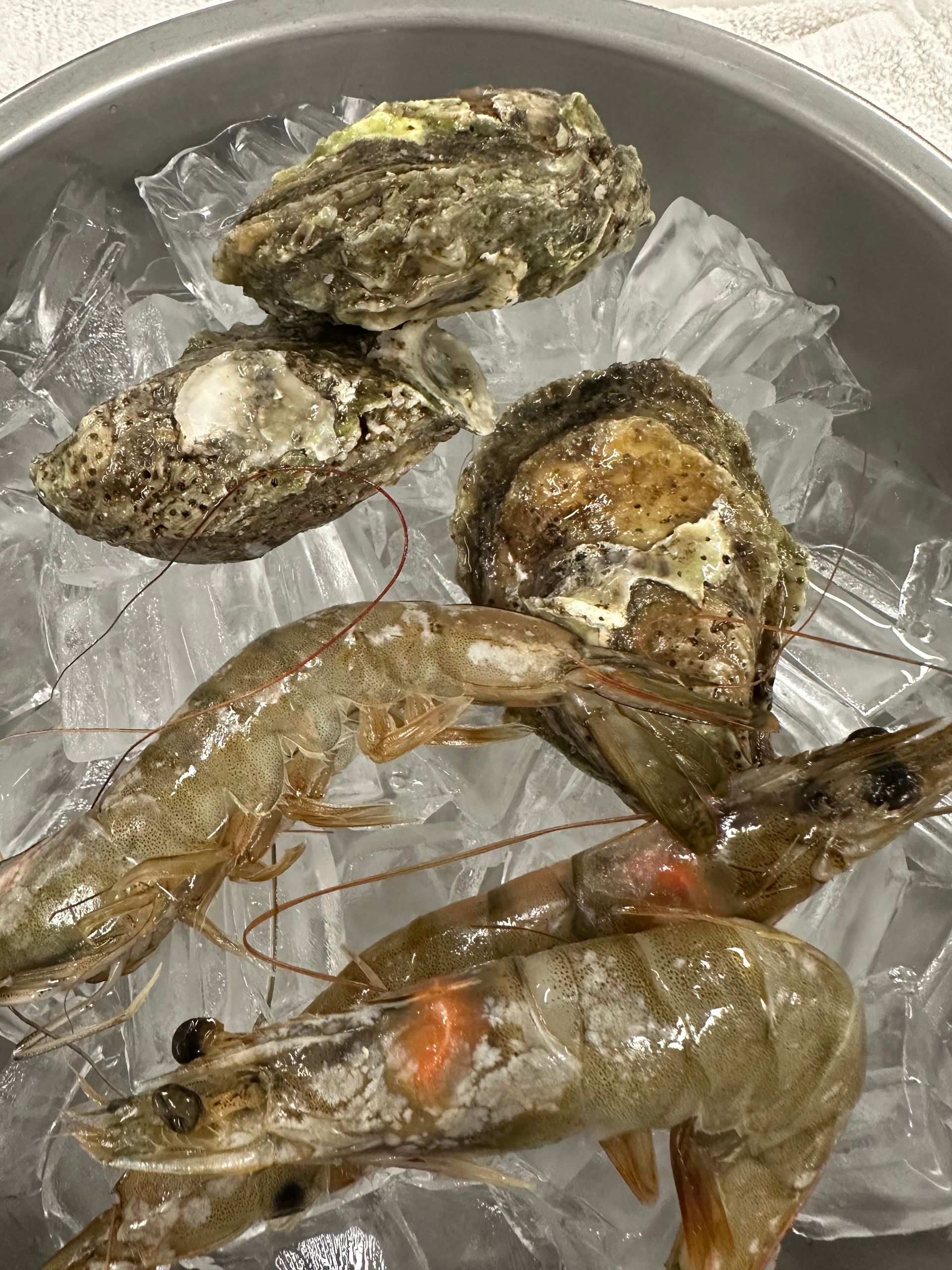
- Peel, devein, & butterfly shrimp
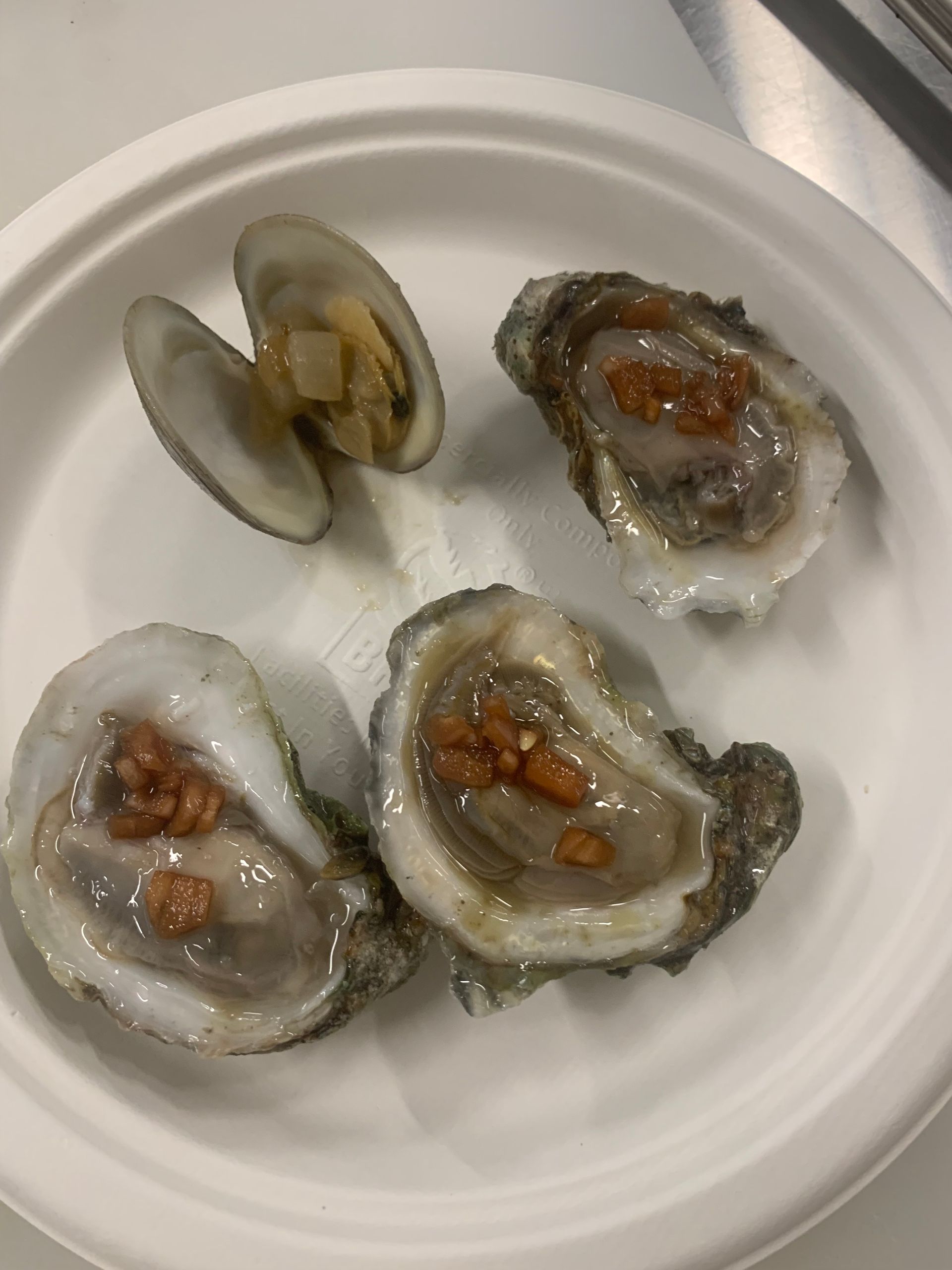
- Shuck oysters
- Open clams
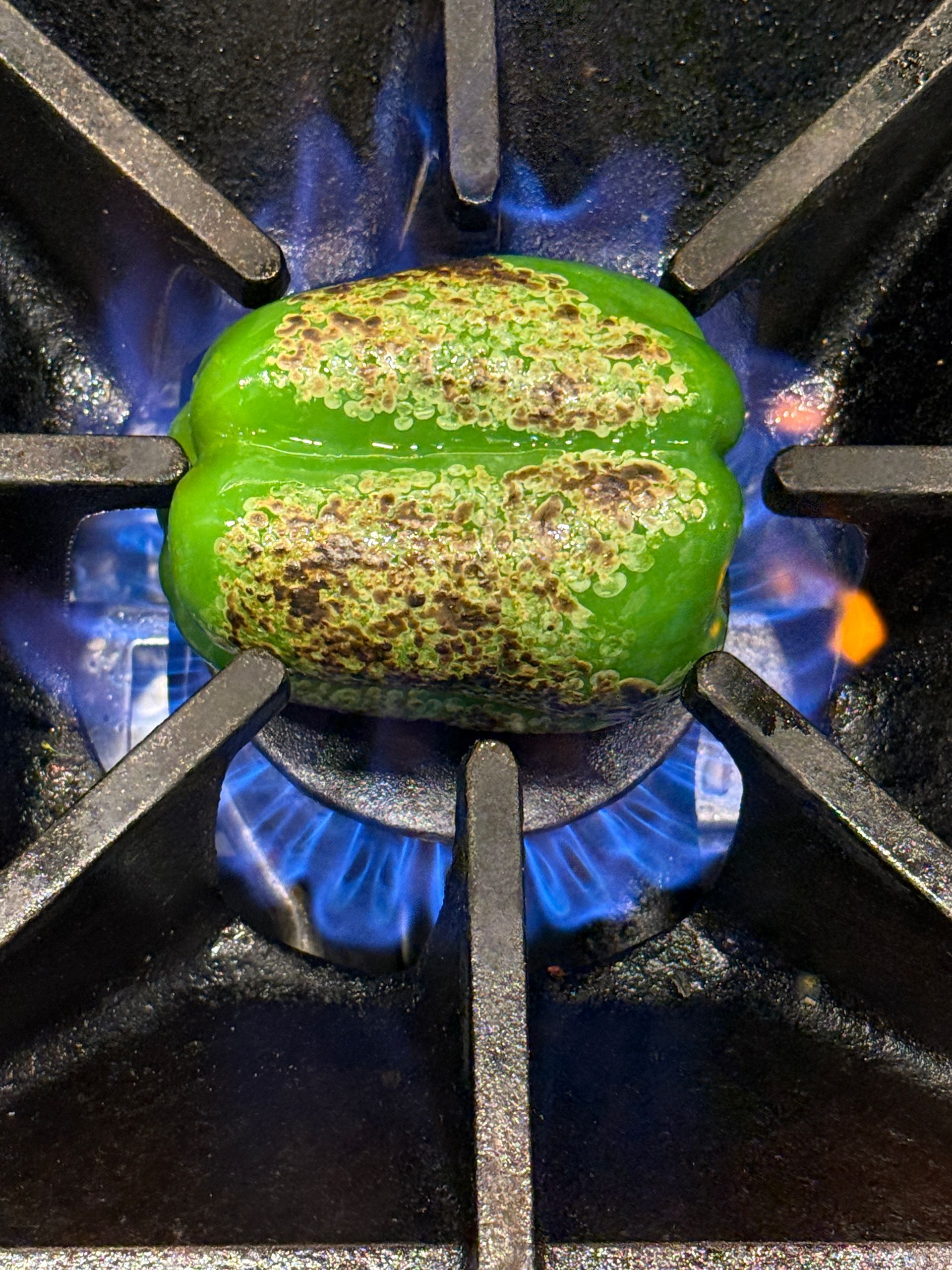
- Stir-fry vegetables with seafood
- Fire-roast a bell pepper
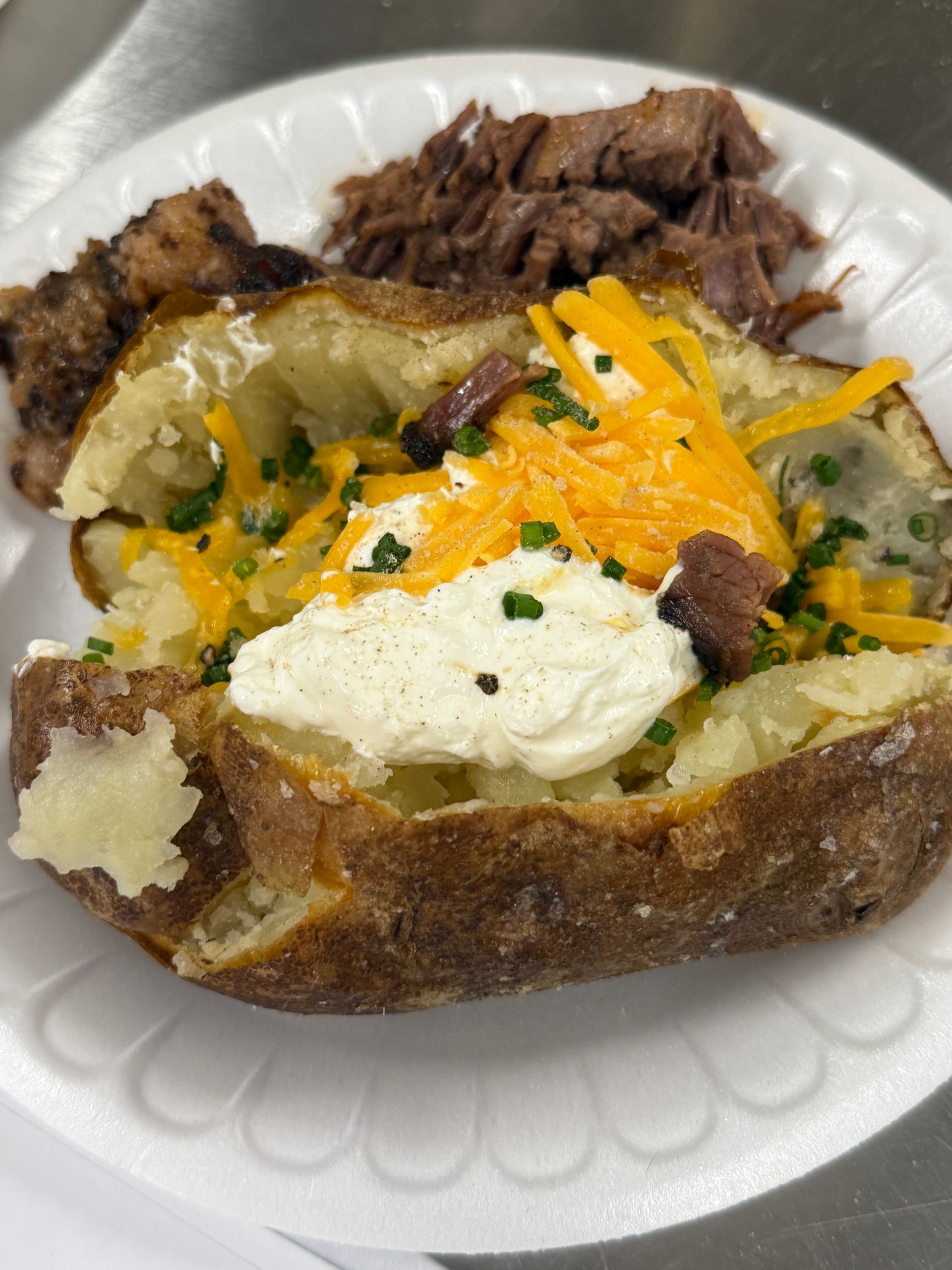
Starch Cookery
- Prepare baked potato
- Prepare rice pilaf
- Prepare white rice
- Prepare polenta
- Mexican rice
Mexican Rice Mise en Place
Ingredients
- 2 Tbsp vegetable oil
- 1/2 cup rice
- 1/4 cup diced onion
- 1/4 cup bell pepper
- 1/4 cup carrot
- 1 cup water
- 3/4 Tbsp chicken base
- 1/4 tsp black pepper
- 1/4 tsp cumin
- 1/2 diced tomato
Method
- Heat oil over medium heat and brown rice, then add vegetables (not tomato/garlic). Vegetables should be tender.
- Add chicken broth and bring to a boil. Add spices, tomato, and simmer on low heat, covered, for 15 minutes.
- Remove from heat, let sit 10 minutes, fluff with fork.
Polenta Mise en PLace
Ingredients
- 1 tsp shallot
- 1/2 oz butter
- 16 oz milk stock
- 2 tsp chicken base
- 3 oz corn meal
- Salt and pepper, to taste
Method
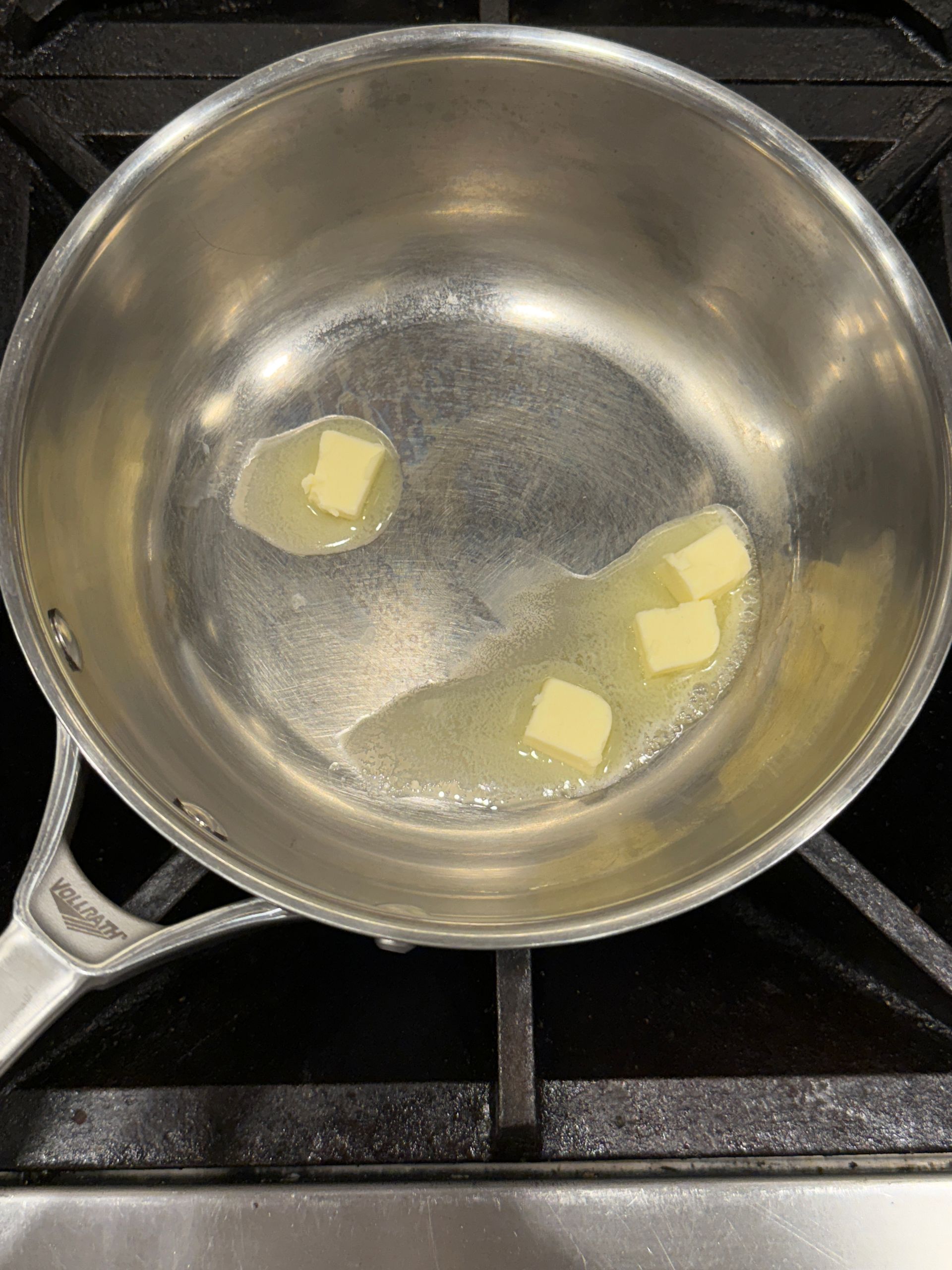
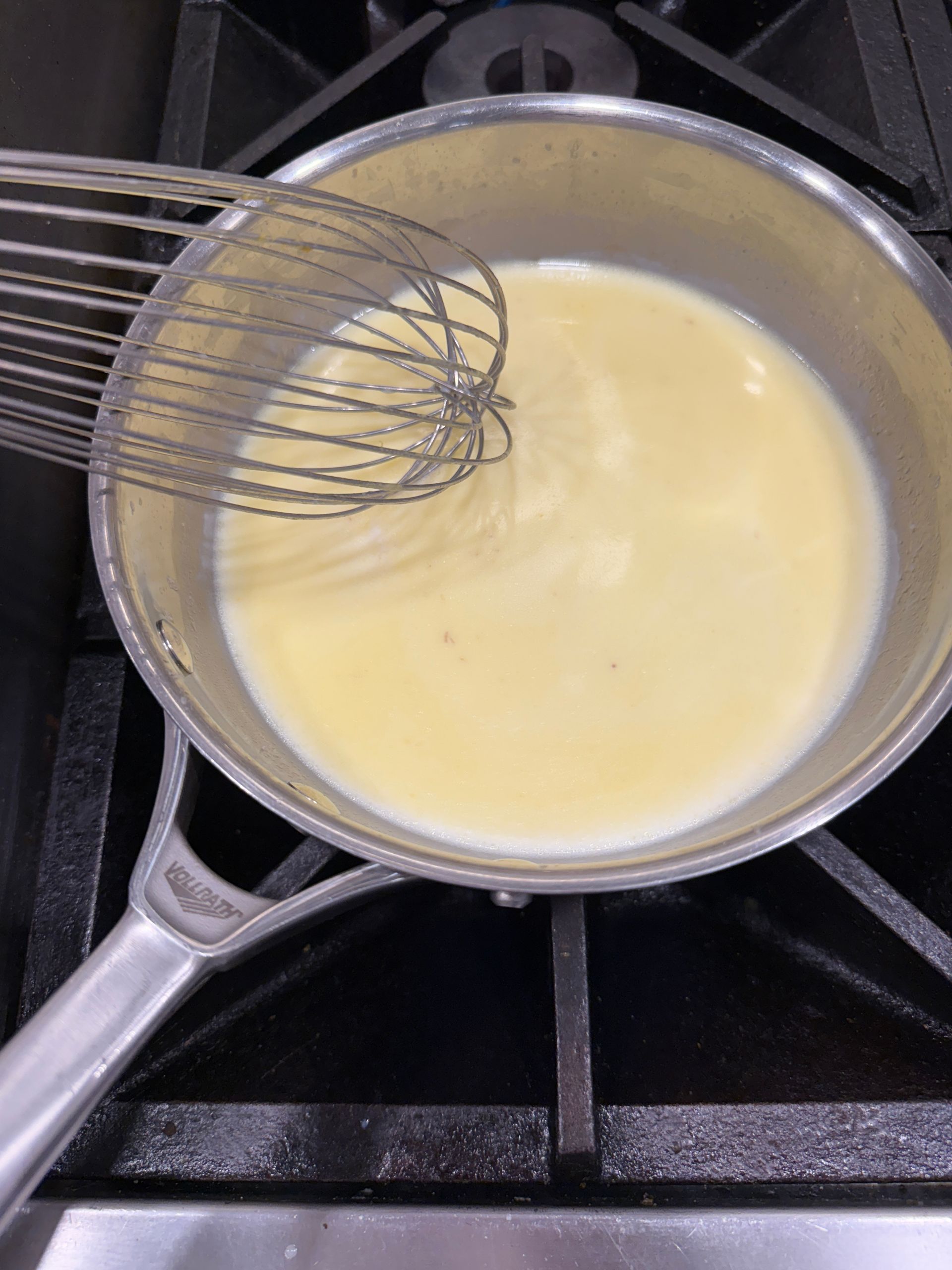
- Start by sautéing shallots in butter until fragrant. Add chicken base to milk until the milk tastes like cream of chicken. Add liquid to shallots and bring to a boil.
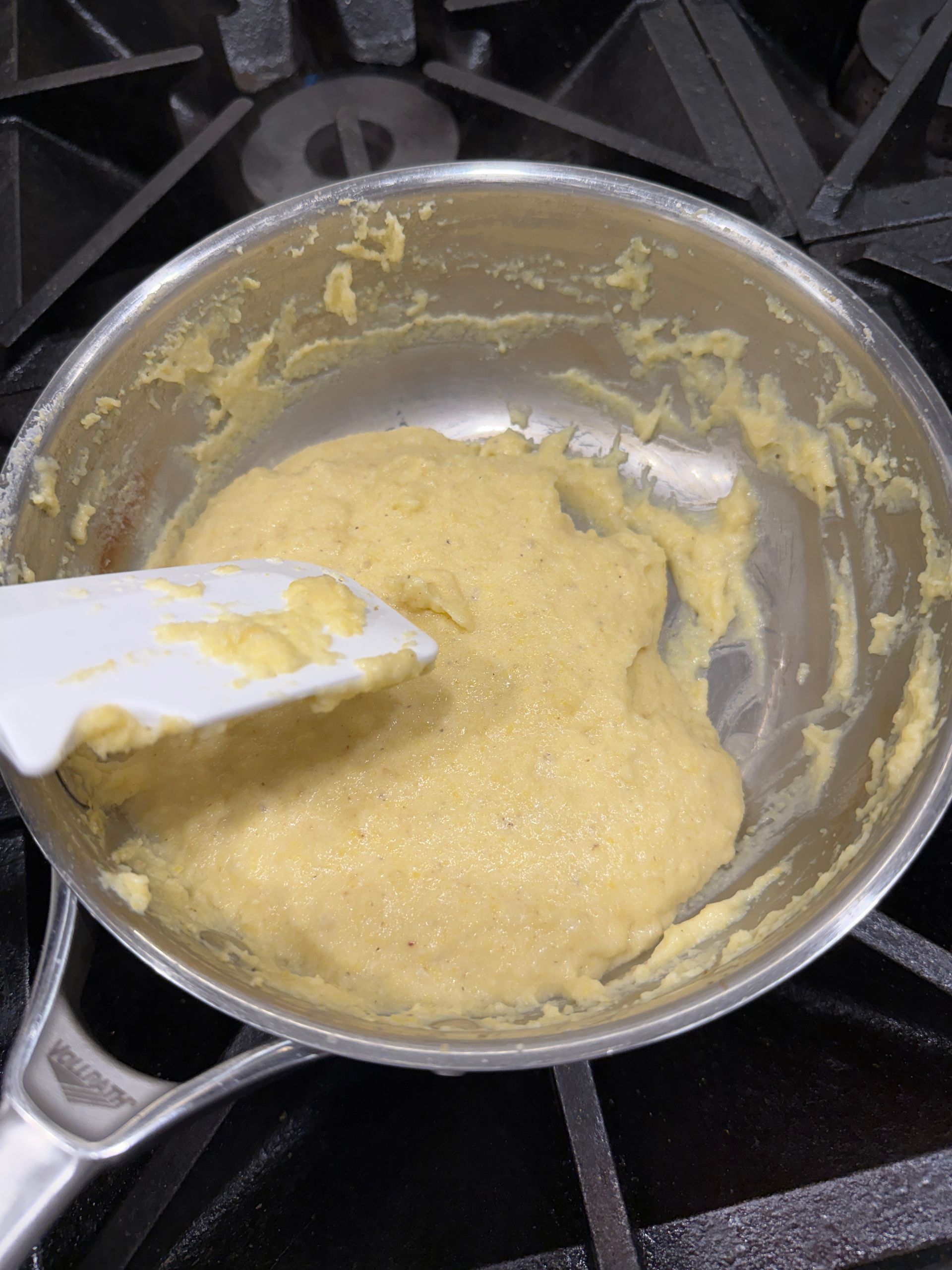
- Add cornmeal slowly to prevent lumps and simmer for 10 minutes.
- Transfer polenta to an oiled or buttered bowl, preferably glass, and spread into an even thickness. Chill.
- Unmold polenta and cut into shapes. Polenta can be grilled or sautéed. Sprinkle grated Parmesan cheese and heat under a broiler.
Pasta
The secret to boiling pasta successfully is to use amble amount of water. Use a saucepan or stock pot large enough to allow pasta to move freely in the boiling water, otherwise the starch released by the dough will make the pasta gummy and sticky.
Once the water comes to a quick boil, add the pasta all at once. Salt should be added to the water as pasta absorbs water and salt during cooking. Should oil be added? Some say yes, others say no. One theory is that the oil prevents the pasta from sticking, but that only works when added to cooked, drained pasta.
Procedure:
- Bring the appropriate amount of water to a boil over high heat.
- Add oil to the water if desired.
- Add the pasta and salt to the rapidly boiling water.
- Stir the pasta to prevent it from sticking together. Bring back to a boil and cook until pasta is done
- When properly cooked, immediately drain it through a colander. A small amount of oil can be tossed into pasta to prevent sticking.
- Serve hot pasta immediately, or refresh it in cold water for use in salads and other dishes.
Fresh pasta is so delicate that it only takes about 15 seconds to cook in some cases. Dried pasta can be cooked in advance for quantity service by stopping the cooking process when it is about 2/3 of the way done.
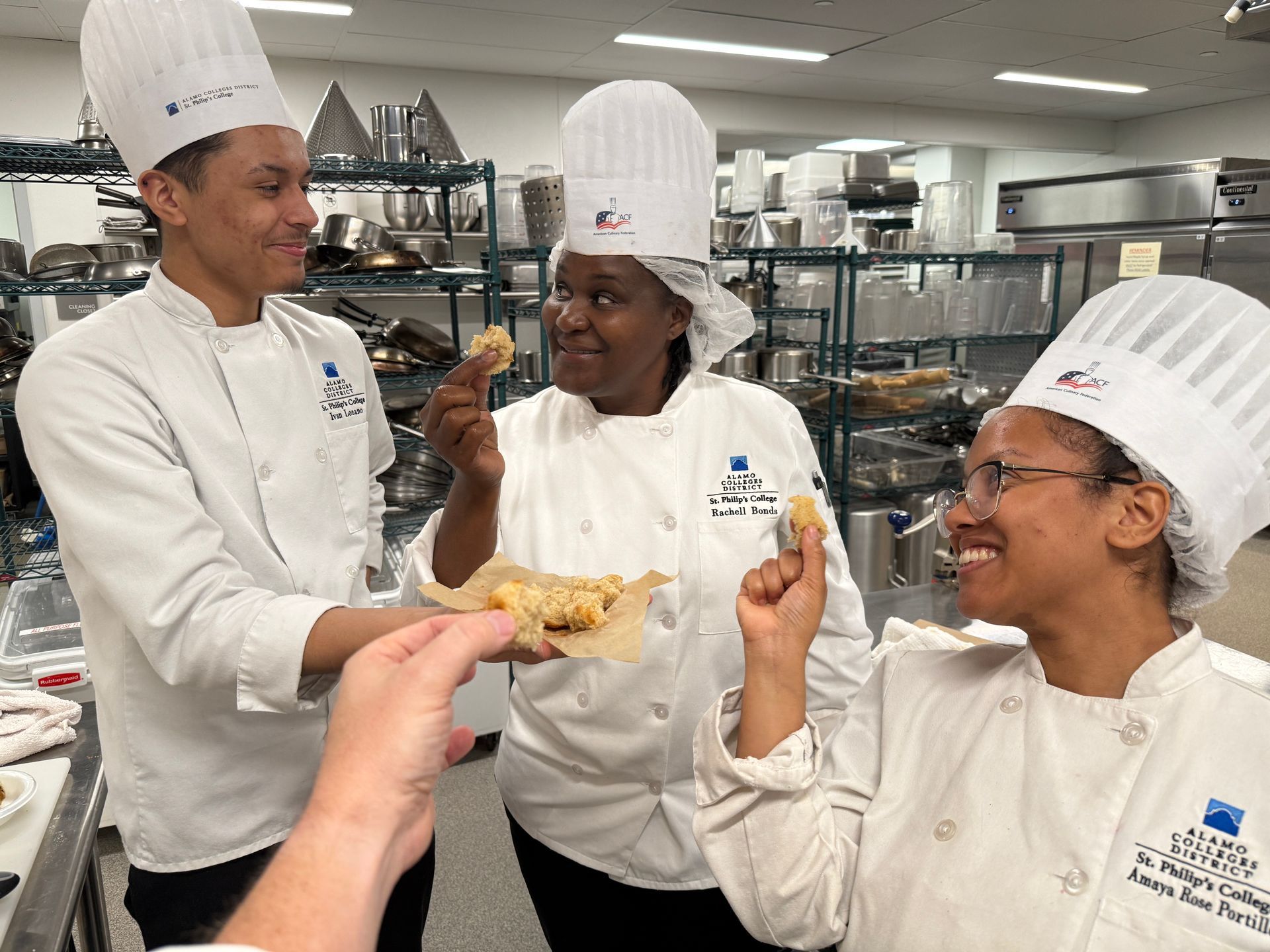
Baking & Desserts
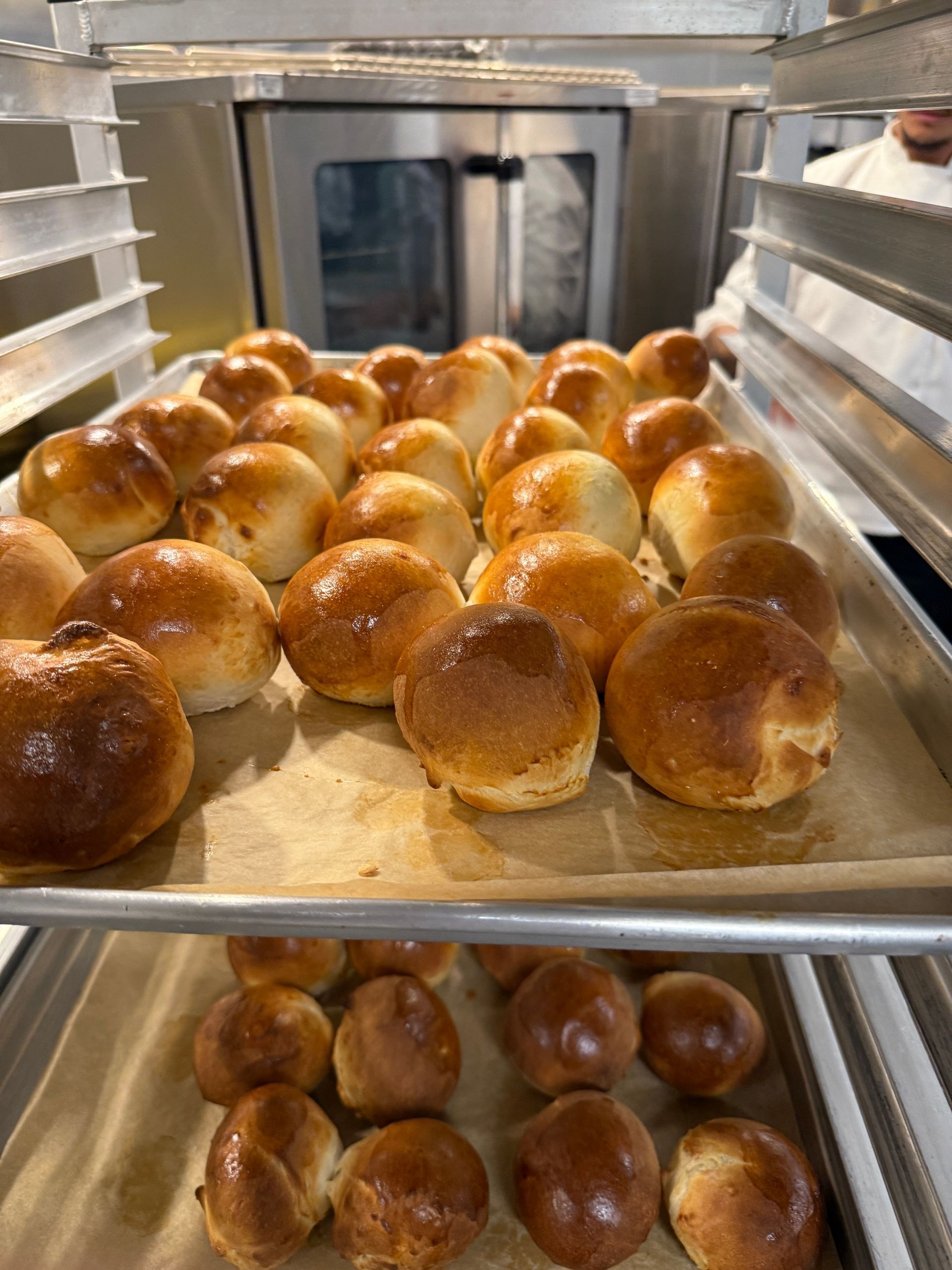
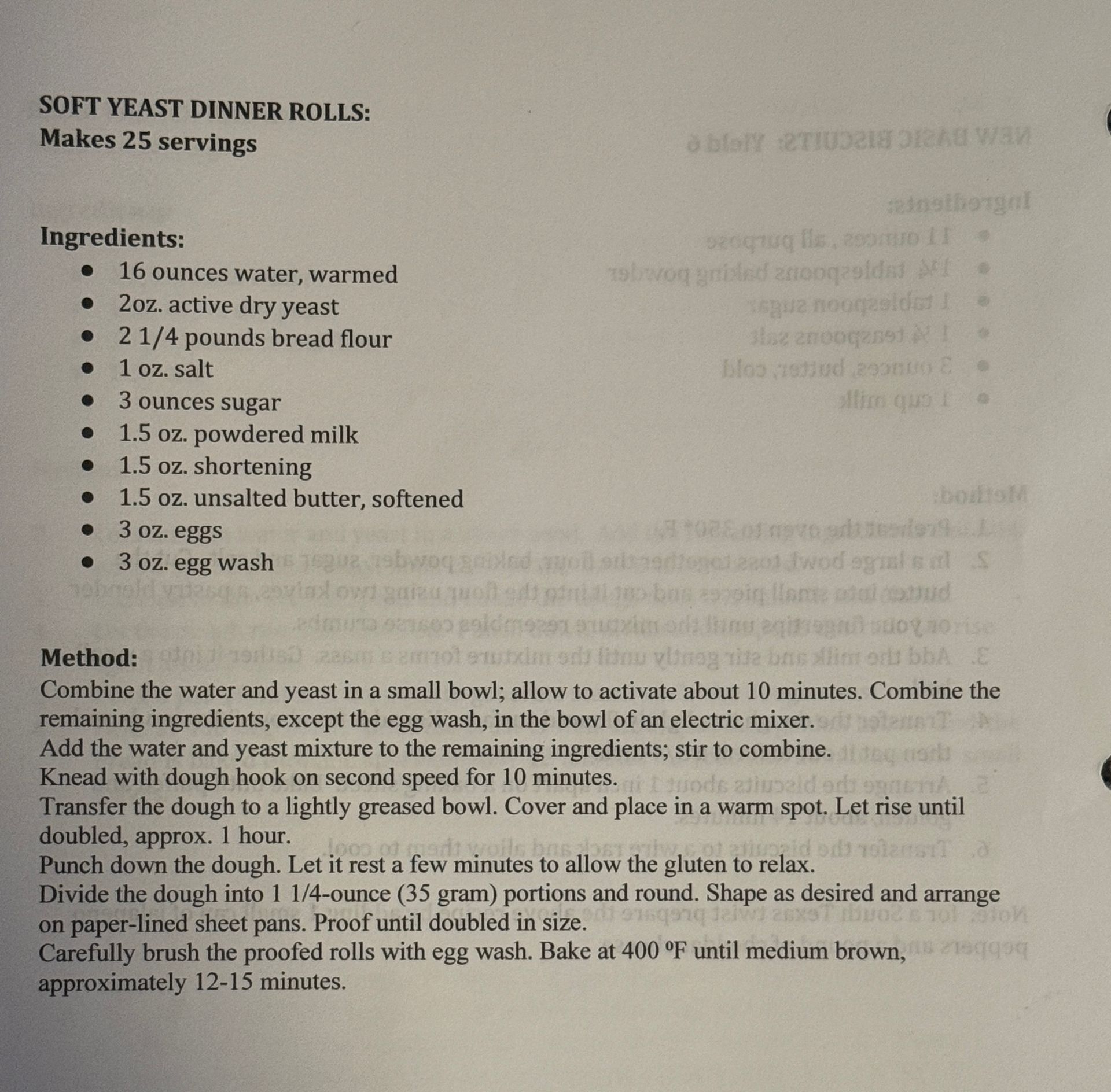
- Make yeast breads
- Demonstrate shaping
- Prepare egg wash
- Bake bread
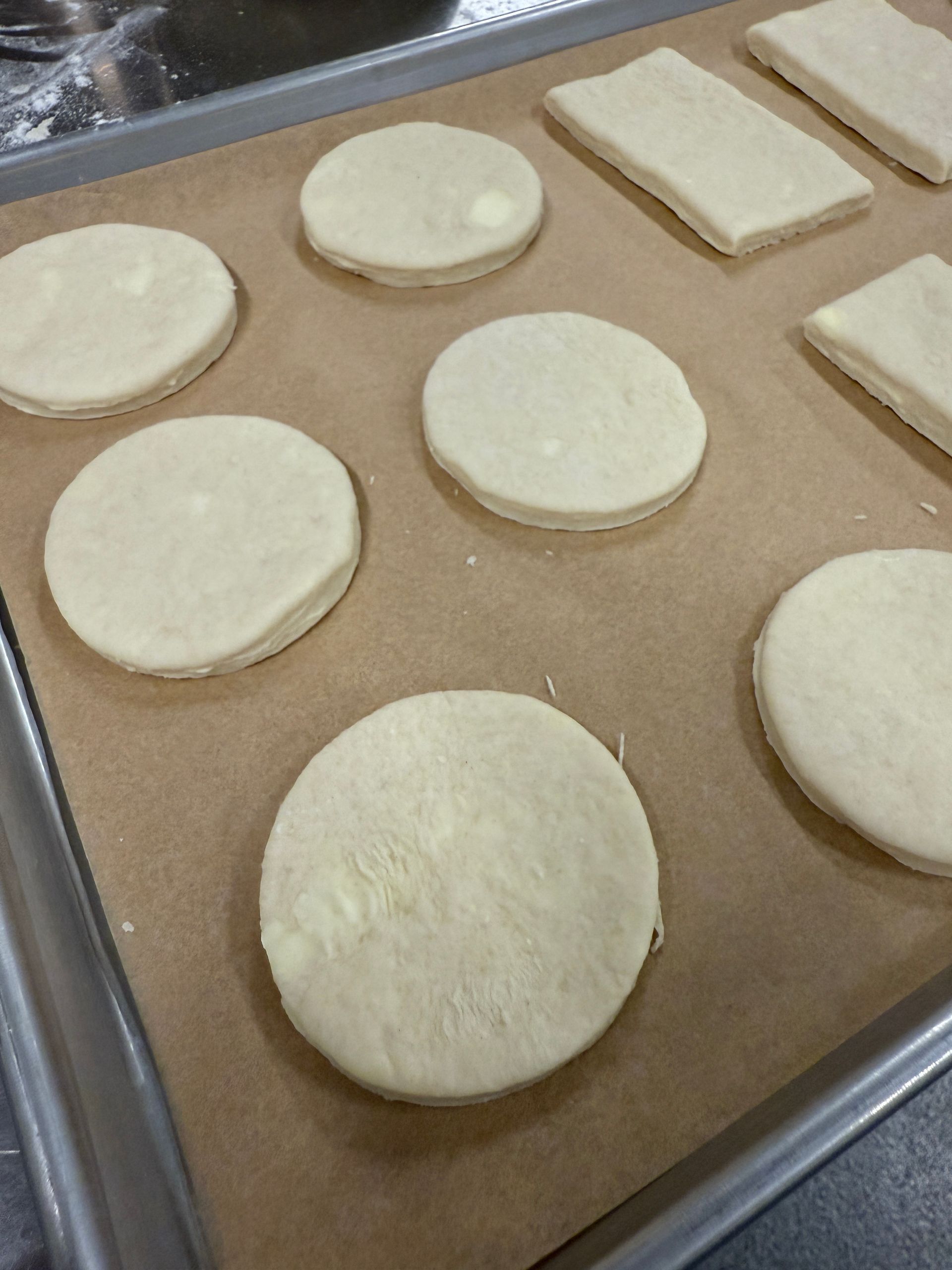
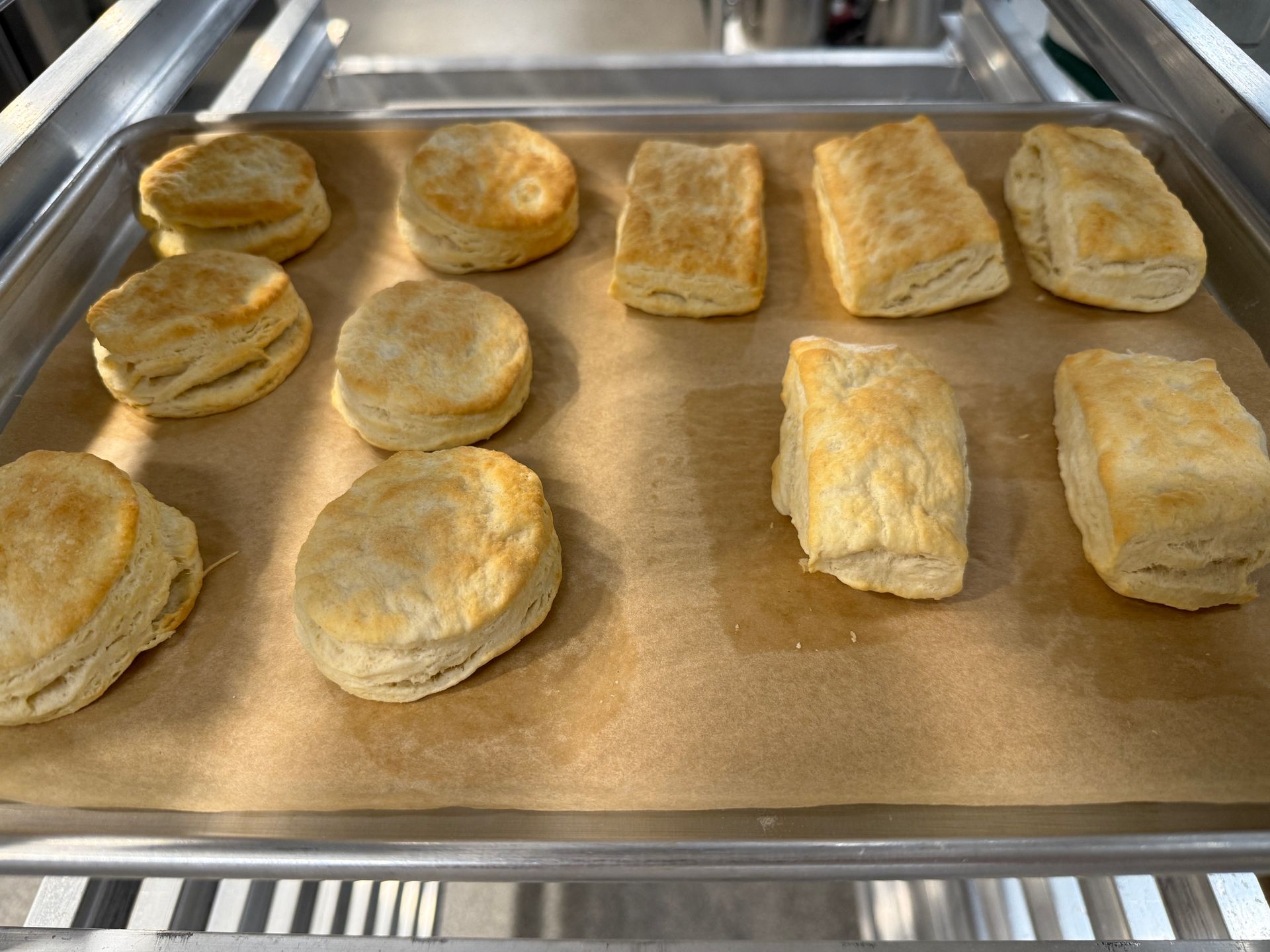
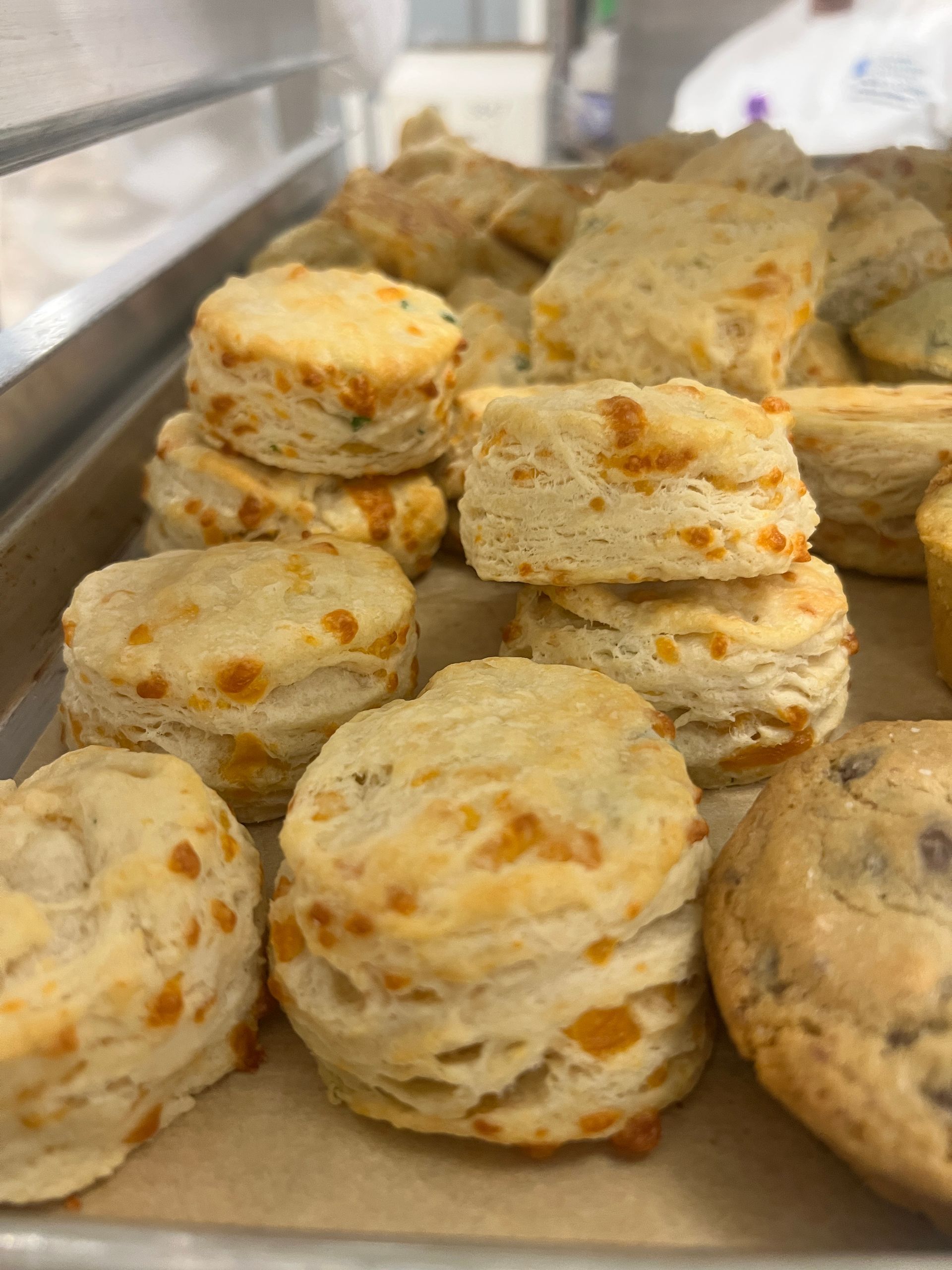
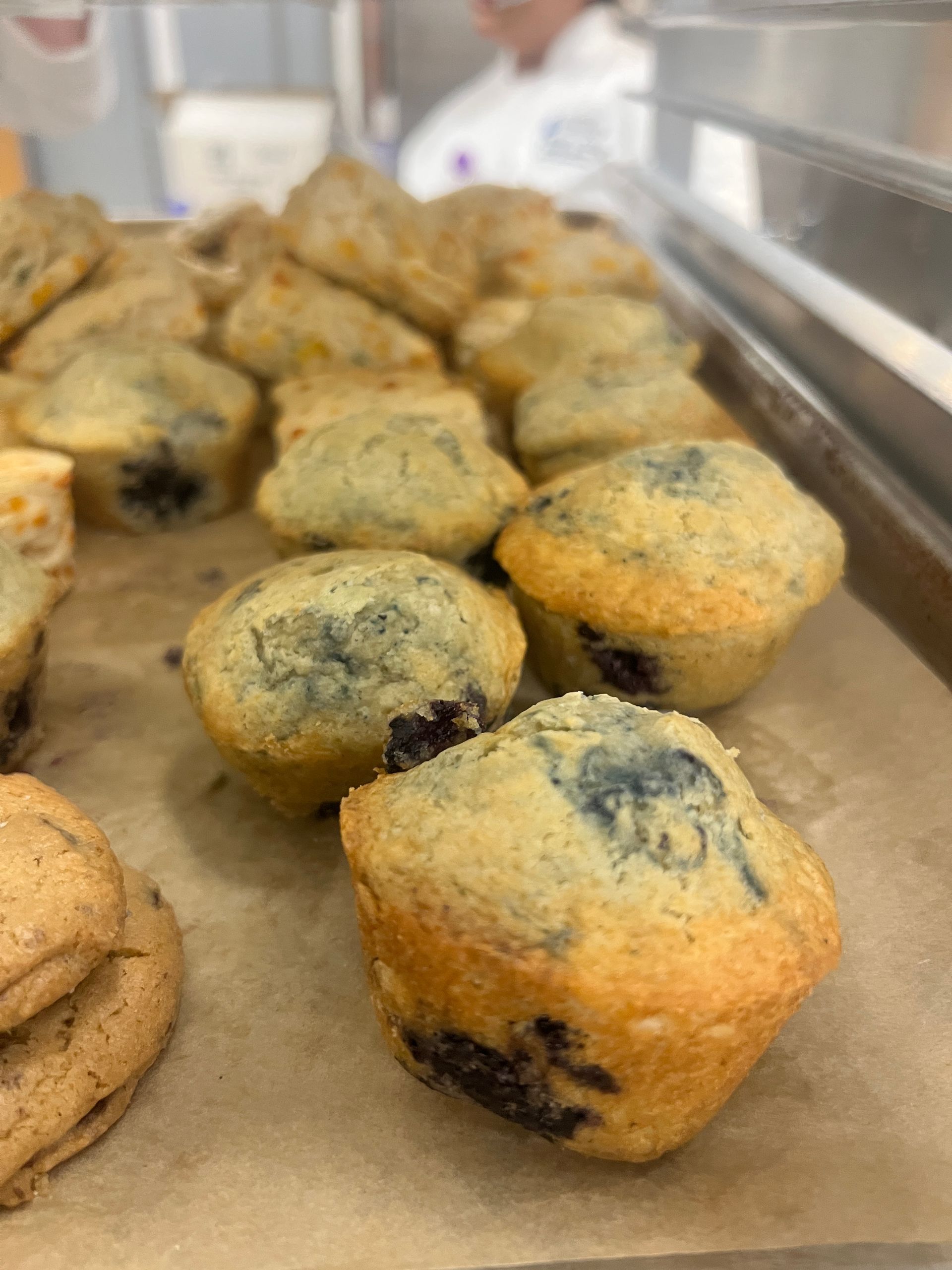
- Make biscuits
- Prepare a compound butter
- Make muffins
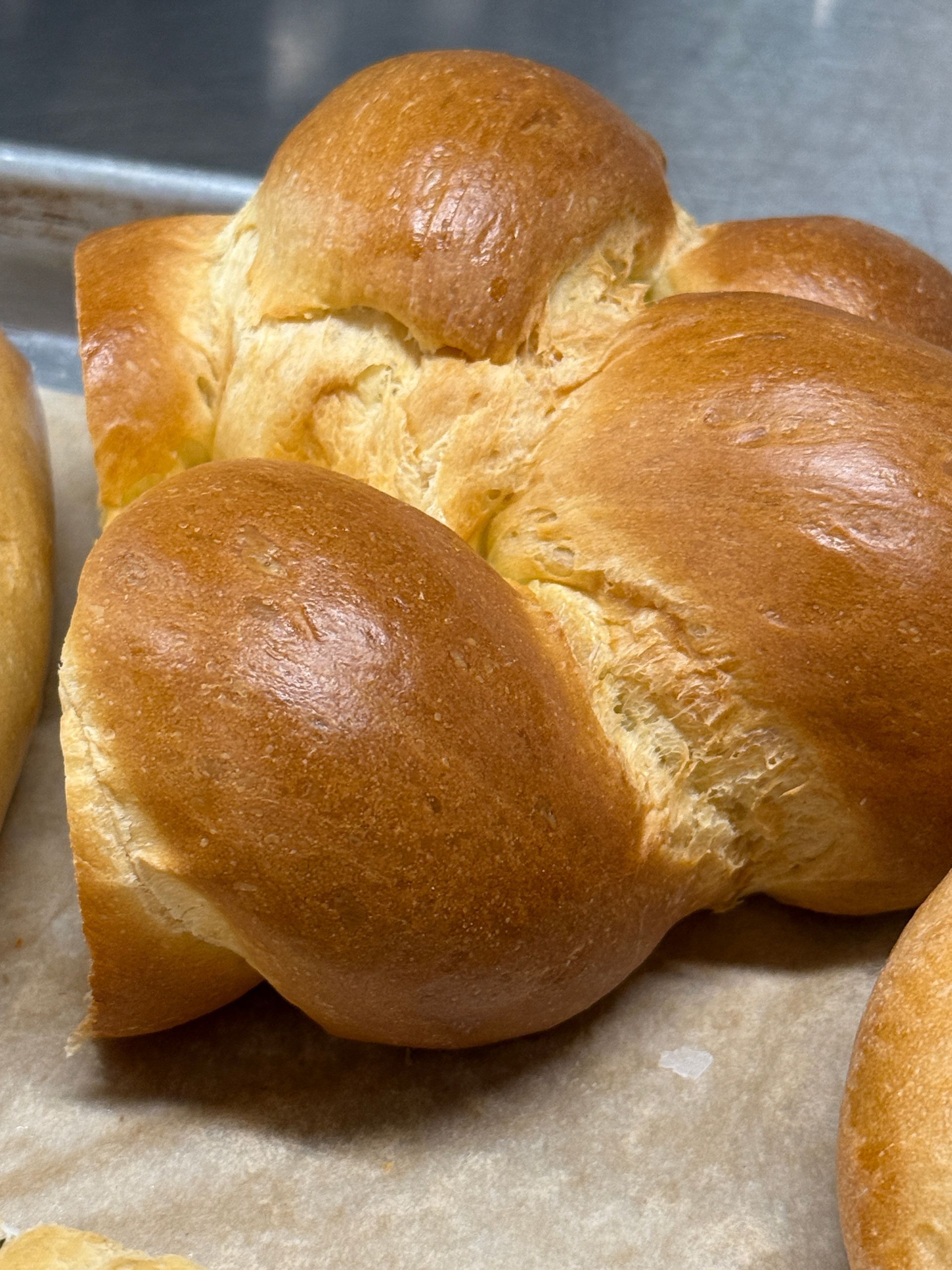
Basic White Bread
- 1 package active baker's yeast
- 1 tsp sugar
- 1 1/4 cups water, lukewarm
- 6 cups all-purpose flour
- 2 Tbsp sugar
- 2 tsp salt
- 1 cup milk
- 3 Tbsp butter
- Add one tsp sugar to 1/4 cup lukewarm water and stir to dissolve. Sprinkle yeast over water and let soften for one minute. Stir into water and "proof" for 15 minutes. Mixture should rise slightly and become bubbly.
- Heat remaining water with butter and milk until butter melts. Cool mixture to lukewarm. Mix three cups of flour, 2 Tbsp sugar, and salt in a large bowl. Beat in yeast mixture and buttermilk mixture. Gradually stir in enough of the remaining flour to form a soft dough, using about 5 1/5 to 6 1/2 cups all together.
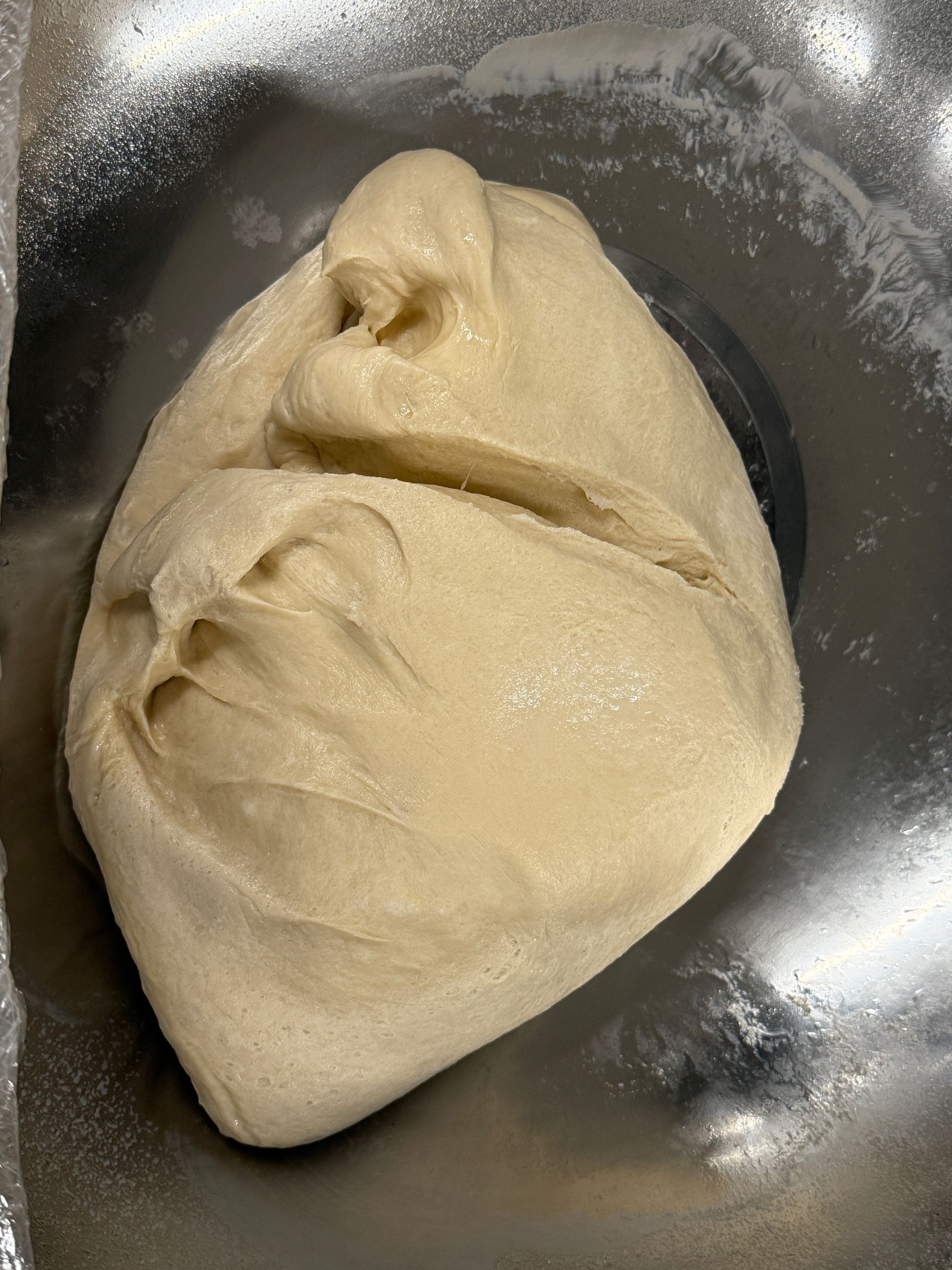
- Turn dough onto floured surface and allow to rest. Knead until smooth and elastic, about 10 minutes. Place in a greased bowl, cover, and allow to rise in a warm place until doubled in bulk, about an hour.
- Punch down dough, kneading it until it is about original size. Return to bowl, cover, and allow to rise again until doubled in bulk, about 1 1/2 hours. Turn onto lightly floured surface. Divide dough in half and shape each half into a loaf to fit an 8 1/2 by 4 1/2 pan. Place in greased pans, cover, and allow to rise in a warm place for one hour.
- Bake at 400 degrees for 25-30 minutes. When done, bread will be browned and shrunken in from sides.
- Remove from pans to cool on wire racks.
New Basic Biscuits
- 11 oz AP flour
- 1 1/4 Tbsp baking powder
- 1 Tbsp sugar
- 1 1/4 tsp salt
- 3 oz butter, cold
- 1 cup milk
- Preheat oven to 350 degrees F.
- In a large bowl, toss together the flour, baking powder, sugar, and salt. Cut the butter into small pieces and cut it into flour using two knives, pastry blender or fingers until mixture resembles crumbs.
- Add the milk and stir gently until the mixture forms a mass. Gather it into a small ball.
- Transfer dough to lightly floured surface. Knead for about 30-60 seconds, divide into 6 small balls and form 3/4 inch circles.
- Arrange the biscuits about 1 inch apart on baking sheet. Bake until puffed and golden, about 14 minutes.
- Transfer to wire rack and allow to cool.
Pastry
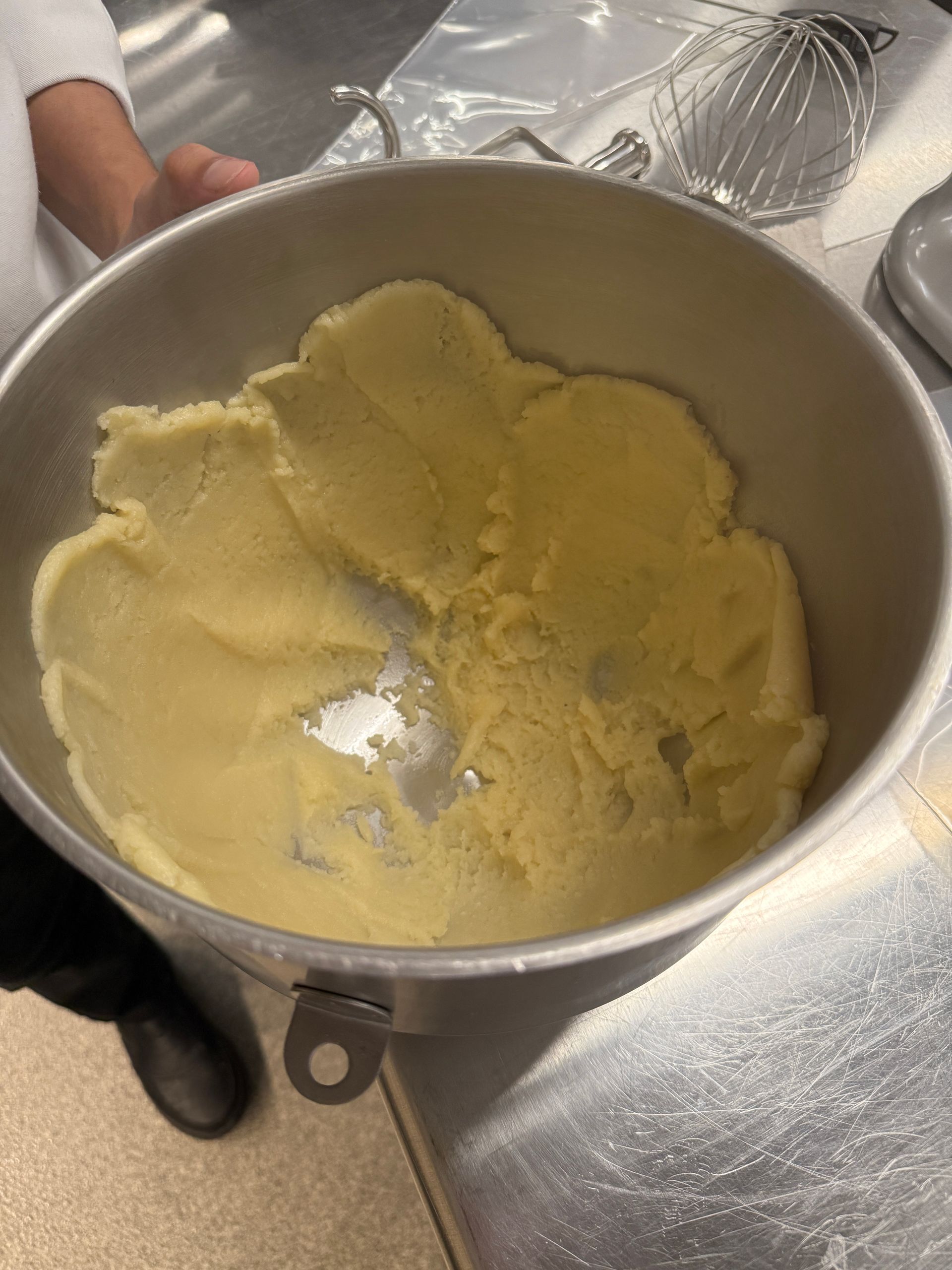
- Pâte a Choux
- Pastry Cream
- Eclair
- Bananas Foster
Pâte a Choux
Ingredients
- 8 oz milk
- 8 oz water
- 1 tsp salt
- 2 tsp granulated sugar
- 7 1/2 oz butter
- 12 oz bread flour
- 4-6 eggs
Method
- Preheat oven to 375 degrees F. Line a sheet pan with parchment. Have a pastry bag with a large plain tip ready.
- Place the milk, water, salt, sugar and bugger in a saucepan. Bring to a boil. Make sure the butter is fully melted.
- Remove from the heat and immediately add all the flour. Vigorously beat the dough by hand. Put the pan back on the heat and continue beating the dough until it comes away from the sides of the pan. The dough should look relatively dry.
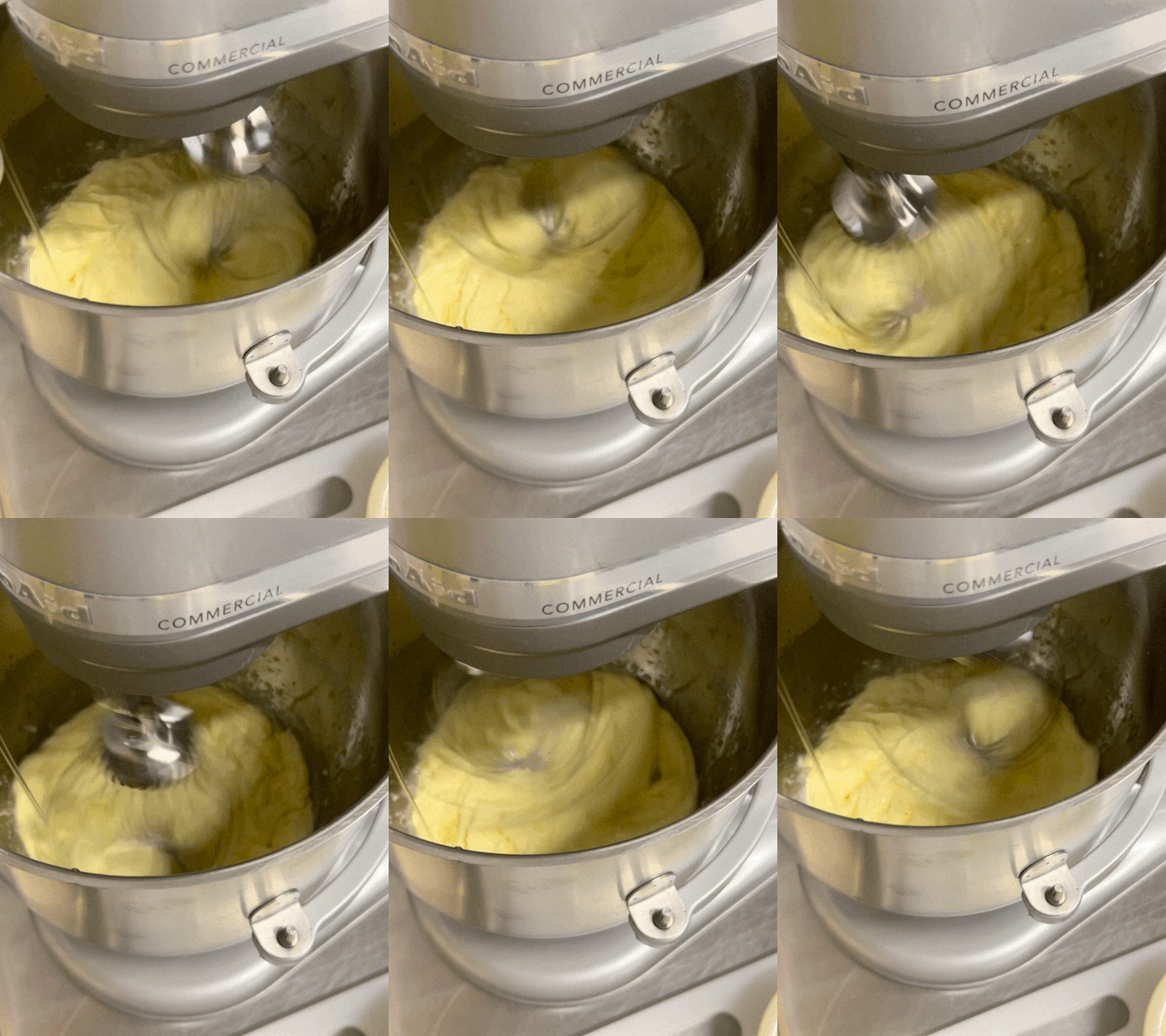
- Transfer the dough to the mixing bowl, allow it to cool briefly to about 130 degrees F or lower. Using the mixer's paddle attachment, begin beating in the eggs one at a time.
- Continue to add the eggs until the mixture in shiny but firm. It may not be necessary to use all 6 eggs. The dough should pull away from the sides of the bowl in thick threads: it will not clear the bowl.
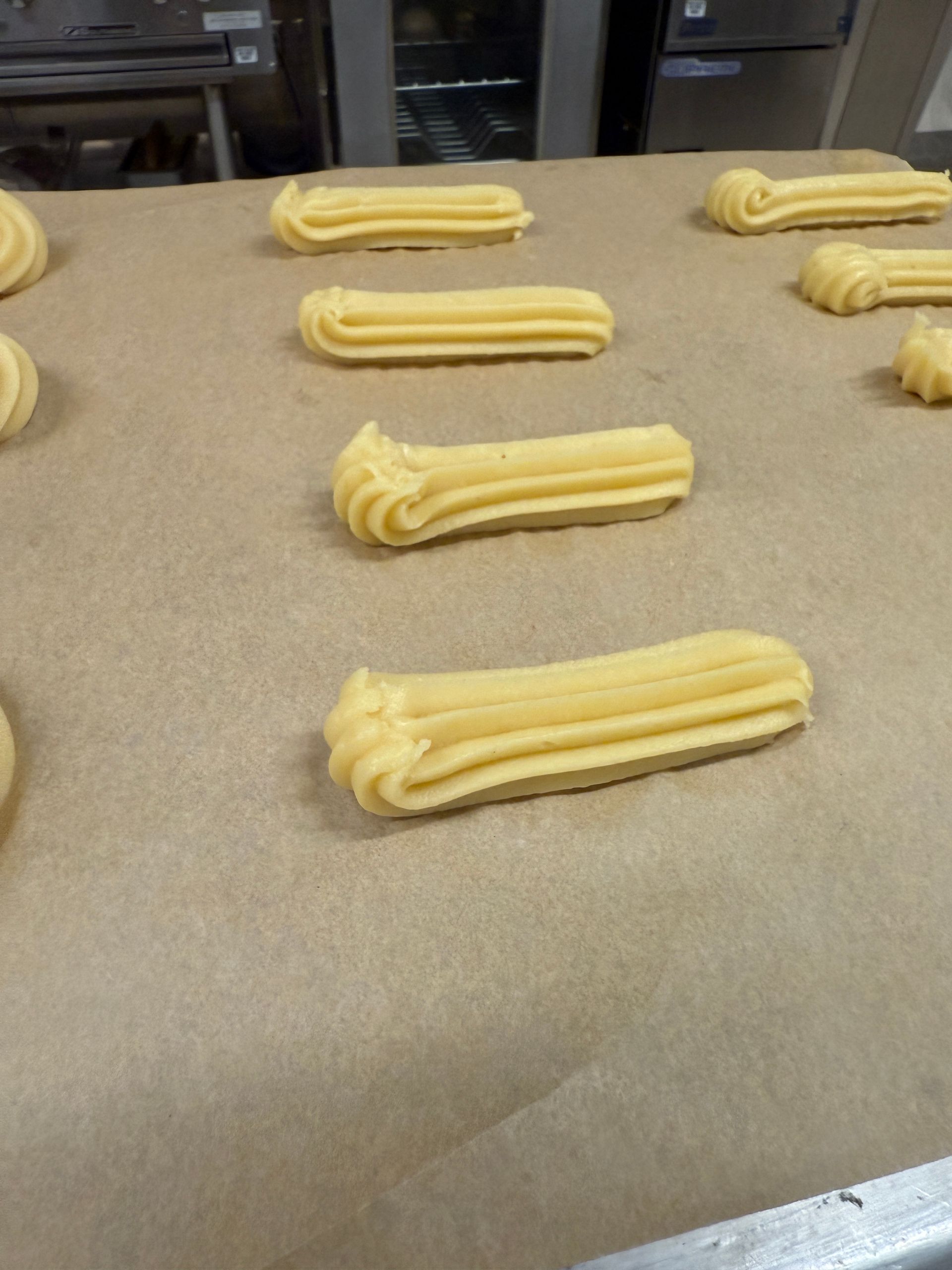
- Put a workable amount of dough into the pastry bag and pipe onto the sheet pan in the desired shapes at once.
- Bake immediately, beginning at 375 degrees F for 10 minutes, then lowering the heat to 365 degrees for another 10 minutes, and then 350 degrees until gold brown. Continue gradually lowering the oven temperature until the shapes are brown and dry inside. Open the oven door as little as possible to prevent rapid changes in the oven's temp.
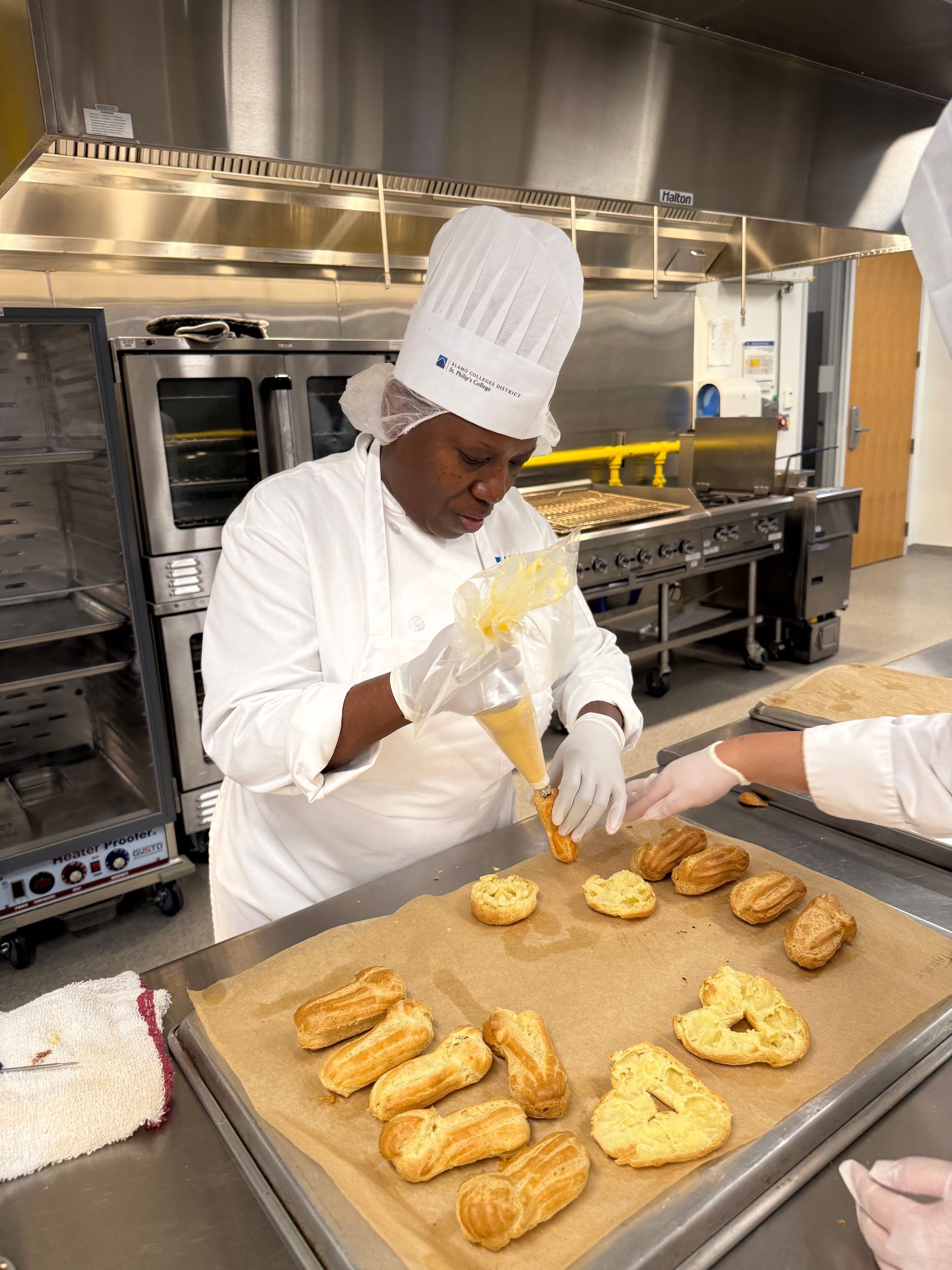
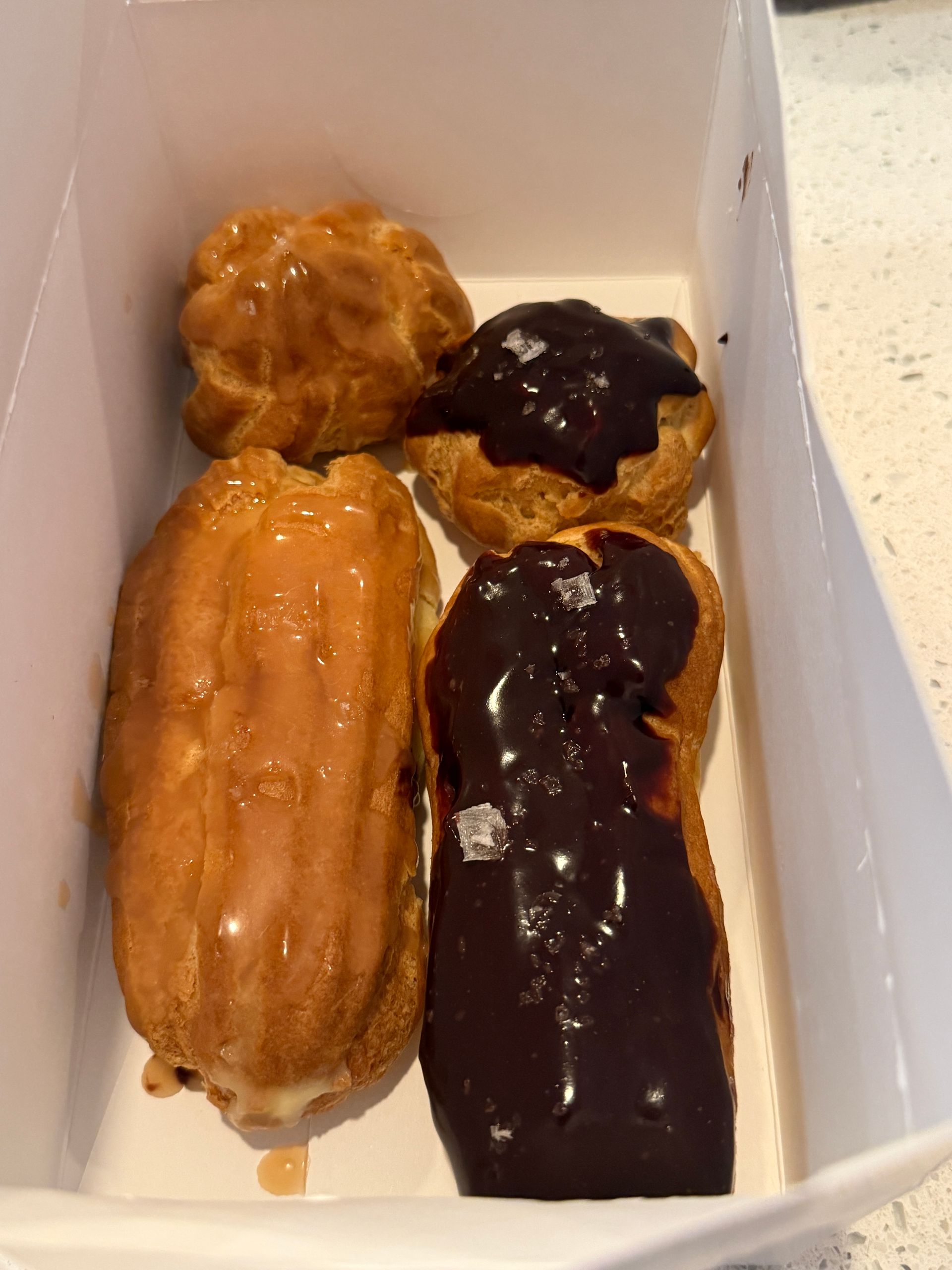
- Cool completely, then fill as desired. Lefovers can be frozen or stored at room temp.
Pastry Cream (makes 1 1/2 pints)
Ingredients
- 3 oz cake flower
- 1/2 pound sugar
- 1 1/2 pints milk
- 8 egg yolks (no whites)
- 1 Tbsp vanilla
- 1 1/2 oz butter
Method
- Sift flour and sugar together.
- Whisk 1/2 pint of the milk into the egg yolks, then add the flour and sugar and completely whisk until smooth.
- Heat the remaining milk in a heavy not-reactive saucepan. As soon as the milk comes to a boil, whisk approximately 1/3 of it into the egg and flour mixture and blend completely. Pour the egg mixture into the saucepan.
- Stir constantly until the mixture thickens. As it thickens, the custard will go through a lumpy stage. Although you should not be alarmed, you should increase the speed of your stirring. Continue to stir vigorously and it will smooth out and thicken just before coming to a boil.
- Allow the pastry cream to boil for about one minute, stirring constantly.
- Remove the pastry cream from the heat and immediately pour it into a clean mixing bowl.
- fold in the butter and the vanilla extract until combined and melted. Do not over mix as this will thin the custard.
- Brush with butter and cover by placing plastic wrap on the surface of the custard; hold over ice bath.
Measurements
1 cup= 8 oz
1 pint = 16 oz
1 qt = 32 oz
1 half gallon = 64 oz
1 gallon = 128 oz
3 tsp = 1 Tsbsp
2 Tbsp = 1 oz
16 pints = 2 gallons
8 pints = 1 gallon
4 pints = 1/2 gallon
2 pints = 1/4 gallon
1/4 gallon = 1 qt
2/4 gallon = 2 qt
3/4 gallon = 3 qt
4/4 gallon = 4 qt
16 oz = 1 lb
12 oz = 3/4 lb or .75
From Fundamentals of Baking
.16 oz = 1 tsp
.08 oz = 1/2 tsp
.04 oz = 1/4 tsp
.32 oz = 2 tsp
.50 oz = 1 Tbsp
8 oz = 1/2 lb or .5
4 oz = 1/4 lb or .25
3/4 gallon = 6 pints
1/2 gallon = 4 pints
64 oz = 4 pints
32 oz = 2 pints
128 oz = 8 pints
1/4 gallon = 32 oz
1/2 gallon = 2 qts
1/8 cup = 1 oz
2/8 cup = 2 oz
3/8 cup = 3 oz
4/8 cup = 4 oz
5/8 cup = 5 oz
6/8 cup = 6 oz
7/8 cup = 7 oz
8/8 cup = 8 oz
1 egg = 1.67 oz
1 egg yolk = .63 oz
1 egg white = 1.04 oz